

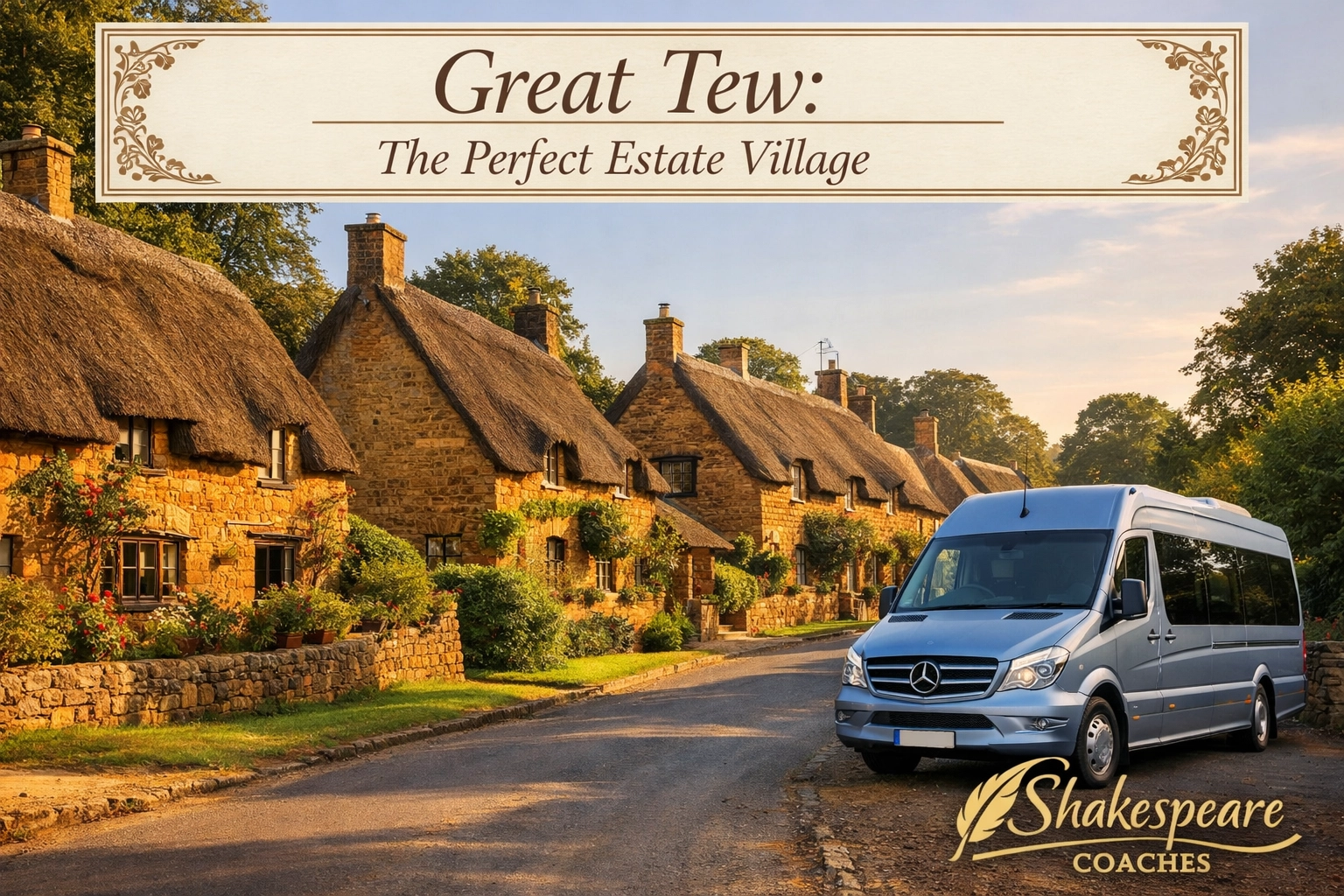
If you were to close your eyes and imagine the most "English" village possible: the kind you see on chocolate boxes or in high-budget period dramas: you’d probably end up imagining Great Tew.
I’m Paul, and today we’re talking about a place that feels less like a functioning village and more like a carefully curated movie set. But here’s the kicker: people actually live here, and the history is as rich as the golden ironstone the houses are built from.
Great Tew is often overlooked by the massive tour buses that clog up the streets of Bourton-on-the-Water, and that is exactly why we love it. It’s quiet, it’s thatched, and it’s unapologetically beautiful. Let’s dive into the no-nonsense guide to Great Tew.
The 3-Minute Snapshot: What You Need to Know
Don’t have time to read the full history? Here is the "too long; didn't read" version:
- Location: North Oxfordshire, about 5 miles from Chipping Norton.
- The Vibe: A manicured "estate village" with uniform golden-toffee ironstone cottages and thick thatch.
- Best For: Photography, a quiet pint, and feeling like you’ve stepped back into the 19th century.
- The Famous Spot: The Falkland Arms (one of the most photographed pubs in England).
- Pro Tip: It’s a conservation area, so keep your voice down and respect the residents: this isn’t a theme park, even if it looks like one.
Why Great Tew is Different from the Rest of the Cotswolds
Most Cotswold villages grew organically over hundreds of years. Farmers built what they needed, when they needed it, using whatever stone was nearby. Great Tew is a bit different. While it has ancient roots, the village you see today is largely the result of a massive 19th-century "makeover."
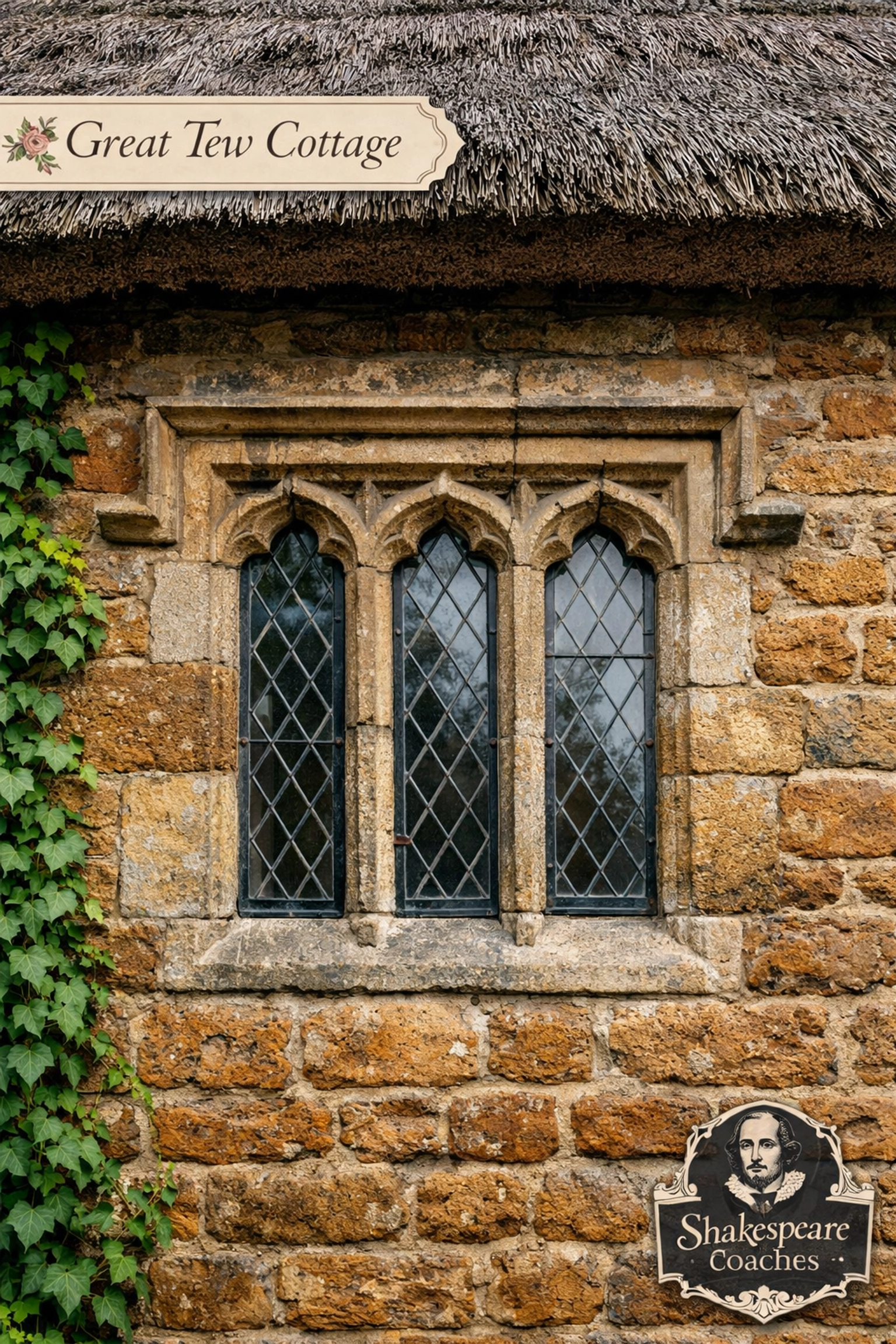
In the early 1800s, Matthew Robinson Boulton (the son of the famous industrialist who partnered with James Watt) decided he wanted his estate to look a certain way. He added the gothic mullioned windows, the specific style of thatch, and the uniform landscaping that gives the village its "perfect" look.
While some purists might call it "artificial," we call it stunning. The stone here isn't the pale honey-colored limestone you find in the southern Cotswolds; it’s a deep, warm ironstone that practically glows when the sun hits it. If you’re joining us on a Cotswolds tour in a day, you’ll notice the color shift as we move through the region.
A Brief History: From Ruin to Riches
It wasn't always this pretty. In fact, for a good chunk of the 20th century, Great Tew was falling apart. Many of the cottages were abandoned, the thatch was rotting, and the village was in a state of serious decline.
It was Major Eustace Robb, a descendant of the Boulton family, who spearheaded the restoration in the late 1970s and 80s. He fought to preserve the village's character, turning it from a decaying ruin into one of the most desirable postcodes in the UK. Today, the Great Tew Estate is massive, and the village is the crown jewel of that estate.
It’s also worth mentioning the "Great Tew Circle" from the 17th century. Lucius Carey, the 2nd Viscount Falkland, lived here and hosted a group of the brightest scholars, poets, and theologians of the day. It was a hub of intellectual life before the English Civil War. When you walk through the village, you’re walking in the footsteps of some of history’s most influential thinkers.
What to Do in Great Tew
Since this is a "no-nonsense" guide, I’m not going to give you a list of 50 things to do, because honestly, there aren't 50 things to do. The beauty of Great Tew is in the atmosphere.
1. The Falkland Arms
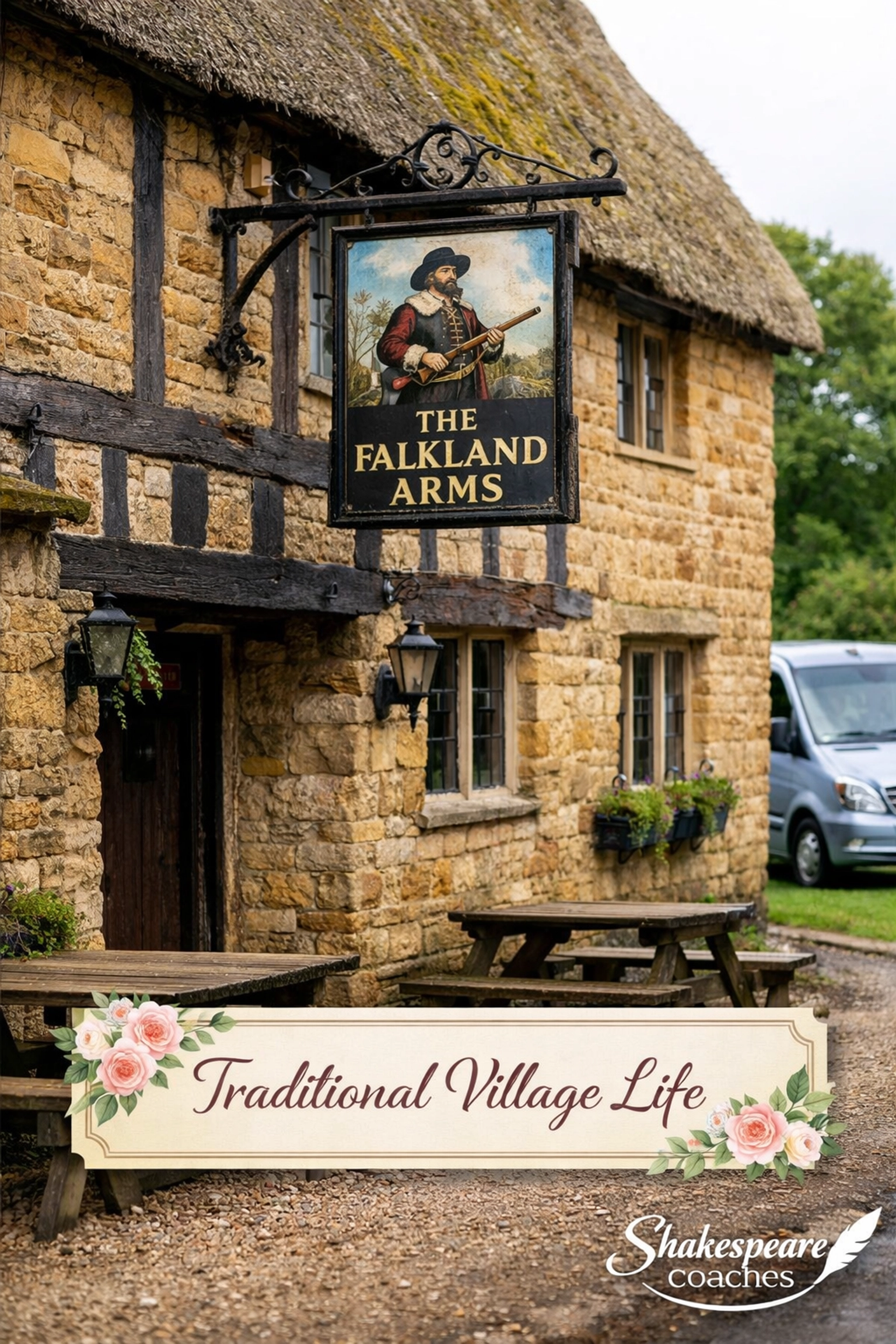
You cannot visit Great Tew without stopping at the Falkland Arms. This is the quintessential English pub. It has a thatched roof, low timber beams, and a collection of clay pipes hanging from the ceiling. Whether you want a full Sunday roast or just a quick pint of local ale, this is the place to be. It’s cozy in the winter with the fire roaring and perfect in the summer for sitting outside and people-watching.
2. St. Michael’s Church
Follow the path away from the main village green, and you’ll find the Church of St. Michael. It’s a bit of a hidden gem. Inside, you’ll find incredible wall paintings and 15th-century brasses. The walk to the church takes you through the estate lands, giving you a better sense of how integrated the village is with the surrounding countryside.
3. The Great Tew Estate
The village is part of a larger, working estate. There are plenty of public footpaths that crisscross the land. If you have an hour to spare, I highly recommend taking a walk. You’ll see ironstone quarries, rolling hills, and sheep: lots of sheep. It’s the perfect way to burn off that pub lunch.
4. Soak in the Architecture
Just walk. Seriously. Start at the top of the hill and walk down towards the school. Pay attention to the details: the intricate thatch work, the tiny gardens, and the lack of modern signs or streetlights. It’s one of the few places where you can genuinely forget what year it is.
The "Soho Farmhouse" Effect
We can't talk about Great Tew without mentioning its neighbor: Soho Farmhouse. Located on the edge of the estate, this ultra-exclusive members' club has brought a lot of "cool" (and a lot of Range Rovers) to the area.
While Great Tew remains a quiet village, the surrounding area has become a bit of a celebrity hotspot. You might spot a famous face at the pub, but the village manages to keep its dignity. It hasn't turned into a tourist trap, and the locals are keen to keep it that way.
Practical Tips for Your Visit
If you’re planning to visit on your own or as part of a private Cotswolds tour, here are a few things to keep in mind:
- Parking: It’s limited. There is a small car park near the entrance to the village, but it fills up fast. If you’re coming with us at Shakespeare Coaches, you don’t have to worry about the tight squeeze: we handle the logistics.
- Photography: It’s tempting to snap a photo of every single doorway, but remember these are private homes. Stay on the footpaths and be respectful.
- The School: The village has a primary school. During drop-off and pick-up times, the narrow roads can get a bit chaotic. Aim for mid-morning or early afternoon for the most peaceful experience.
Why Include Great Tew on Your Tour?
When we design our tours, we like to balance the "must-see" giants like Castle Combe with hidden gems like Great Tew.
Most people visit the Cotswolds and see the same three villages. By including Great Tew, you get a much broader understanding of the region's history: from the industrial wealth that funded these estates to the conservation efforts that keep them standing today. Plus, the ironstone is a nice break from the constant yellow limestone!
Final Thoughts
Great Tew is a masterclass in preservation. It’s a village that was saved from the brink of ruin and polished into a diamond. It’s not a place for high-octane adventure; it’s a place for a slow walk, a deep breath of country air, and a very good pint of beer.
Whether you’re a history buff, a photography enthusiast, or just someone who appreciates a really nice thatched roof, Great Tew needs to be on your list.
Ready to see it for yourself? Check out our Shakespeare’s Stratford and Cotswolds Tour to see how we can get you there in comfort and style. No stress, no maps, just the best of the English countryside.
Explore More Destination Guides
- Woodstock
- Northleach
- Great Tew
- Naunton
- Minster Lovell
- Moreton-in-Marsh
- Malmesbury
- Blockley
- Stanton
- Lacock
- Cirencester
- Winchcombe
- Painswick
- Tetbury
- Upper Slaughter
- Broadway
- Lower Slaughter
- Castle Combe
- Bibury
- Burford
- Bourton-on-the-Water
- Stow-on-the-Wold
- Snowshill
- Chipping Campden
- Stratford-upon-Avon