

If you’ve ever picked up a British passport or scrolled through a travel blog about England, you’ve seen Bibury. It is, quite literally, the poster child for the English countryside. William Morris, the famous 19th-century designer and writer, famously called Bibury "the most beautiful village in England," and honestly, not much has changed since he stood by the River Coln in the 1870s.
At Shakespeare Coaches, we visit Bibury frequently on our Cotswolds tours. We know that while it’s small, it can be overwhelming if you arrive at the wrong time or without a plan. This guide is designed to give you everything you need to know in about three minutes. No fluff, just the essentials for your next visit.
The Main Event: Arlington Row
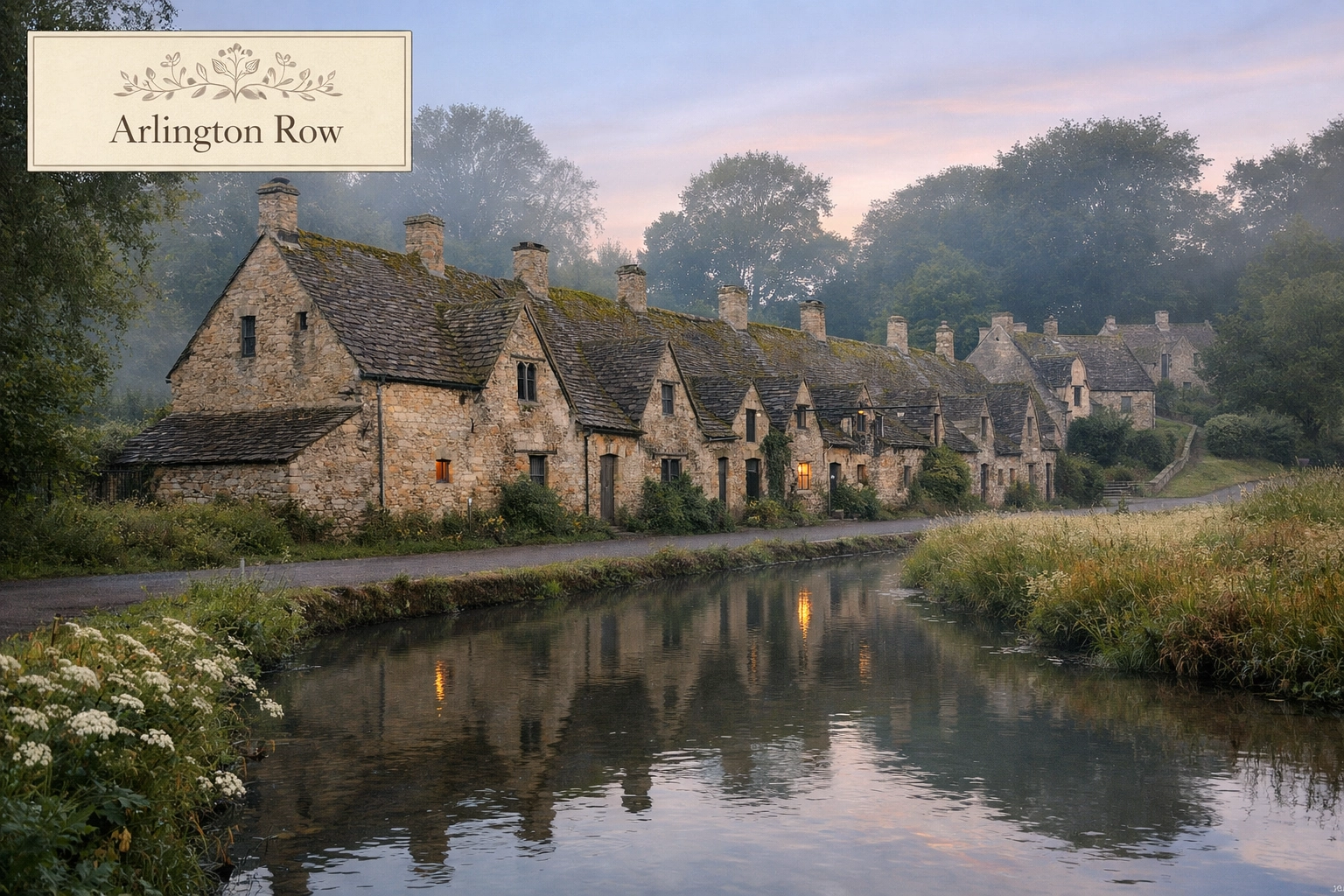
You can’t talk about Bibury without mentioning Arlington Row. It is arguably the most photographed street in the entire United Kingdom. These honey-colored stone cottages, with their steep pitched roofs and tiny windows, look like something out of a fairy tale.
A Bit of History (The Quick Version)
Arlington Row wasn't always a row of residential homes. It was originally built in 1380 as a monastic wool store. In the 17th century, it was converted into cottages for weavers who worked at the nearby Arlington Mill. Today, these homes are owned by the National Trust, and yes: people still live in them!
Photo Tip: Because this is one of the most famous Cotswolds tours stops, it gets busy. If you want that "deserted village" shot, you need to be here early in the morning or later in the afternoon. When you travel with us in our small groups (maximum 16 people), we aim to time our stops to avoid the massive "big bus" crowds that descend on the village at midday.
Bibury Trout Farm: More Than Just Fish
Just a short walk from Arlington Row is the Bibury Trout Farm. Founded in 1902, it is one of the oldest working trout farms in England. While it might sound like a niche attraction, it’s actually a beautiful spot to spend thirty minutes.
The farm spans several acres of landscaped grounds and spring-fed water. You can buy fish food to feed the thousands of trout (it’s surprisingly therapeutic) or, if you’re feeling adventurous, you can even catch your own dinner in the "Catch Your Own" area during the summer months.
If you aren't looking to fish, the onsite deli and gift shop are fantastic for picking up local Gloucestershire produce. It’s a great place to grab a quick snack or a high-quality souvenir that isn't a plastic keychain.
The Swan Hotel: The Heart of the Village
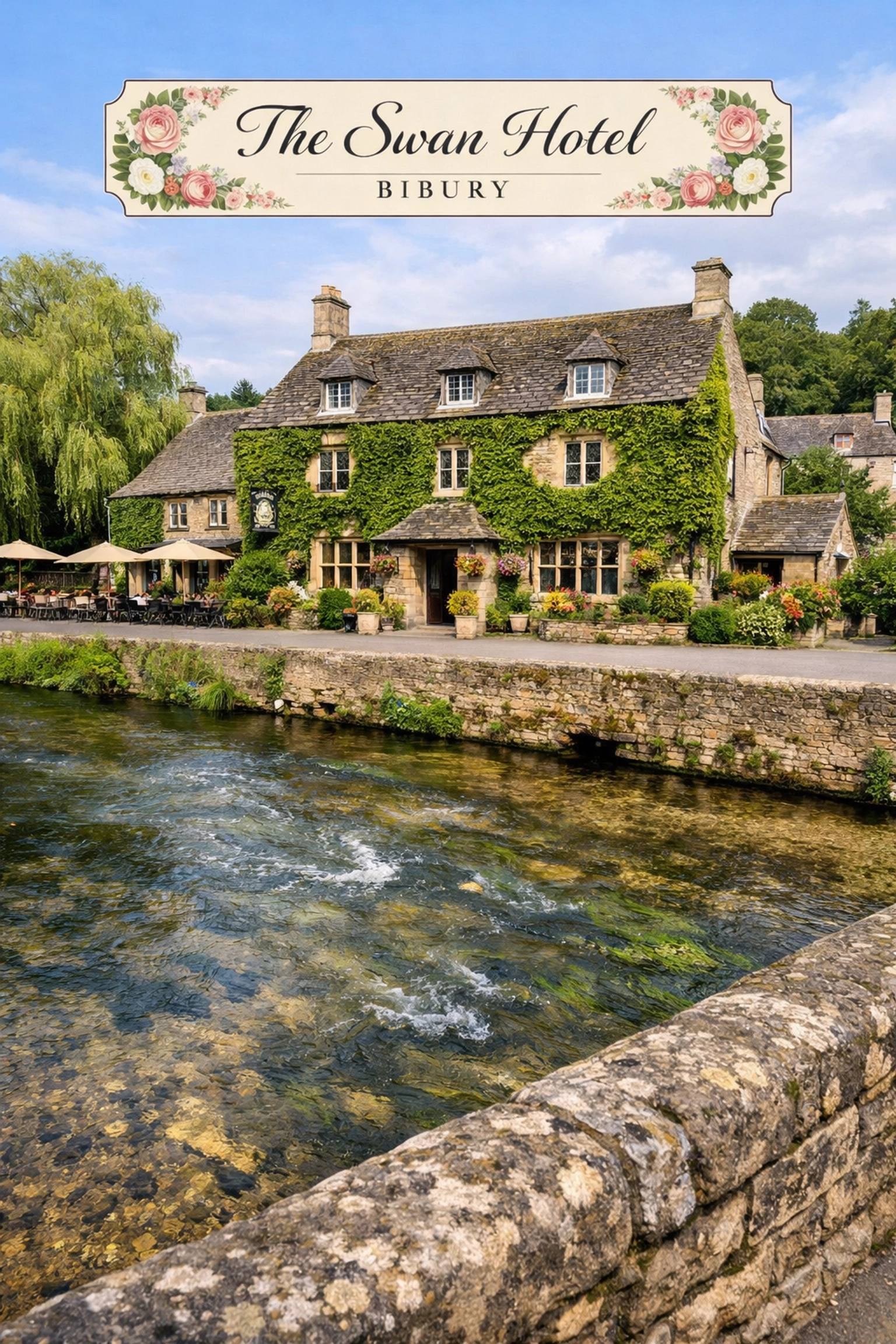
Sitting right by the bridge over the River Coln is The Swan Hotel. This 17th-century coaching inn is covered in ivy and looks spectacular in every season: vibrant green in the summer and deep red in the autumn.
For most visitors, The Swan is the go-to spot for a classic afternoon tea or a pint by the river. If you’re visiting on a chilly day, the roaring log fires inside are the perfect antidote to the English drizzle. It represents the quintessential Cotswolds hospitality that we love sharing with our guests.
Hidden Gems: Rack Isle and St. Mary’s Church
Most people walk to Arlington Row and then head back to their bus. If you have a few extra minutes, don't miss these two spots:
- Rack Isle: This is the boggy water meadow directly in front of Arlington Row. It’s called "Rack Isle" because this is where the weavers used to hang their cloth on wooden racks to dry. Today, it’s a protected wildlife habitat. Keep an eye out for dragonflies, kingfishers, and the occasional water vole.
- St. Mary’s Church: A short walk up the hill takes you to this beautiful Anglo-Saxon church. It features some incredible stained glass and a very peaceful churchyard. It’s a great place to escape the main tourist path for a moment of quiet.
How to Get to Bibury from London
Bibury is located in Gloucestershire, about 80 miles west of London. While you can try to navigate the trains and local buses, it is notoriously difficult to get to the heart of the Cotswolds using public transport. You often end up spending more time at bus stops than looking at cottages.
That’s where we come in. At Shakespeare Coaches, we specialize in London to Cotswolds tours that focus on small groups.
Why Choose a Small Group Tour?
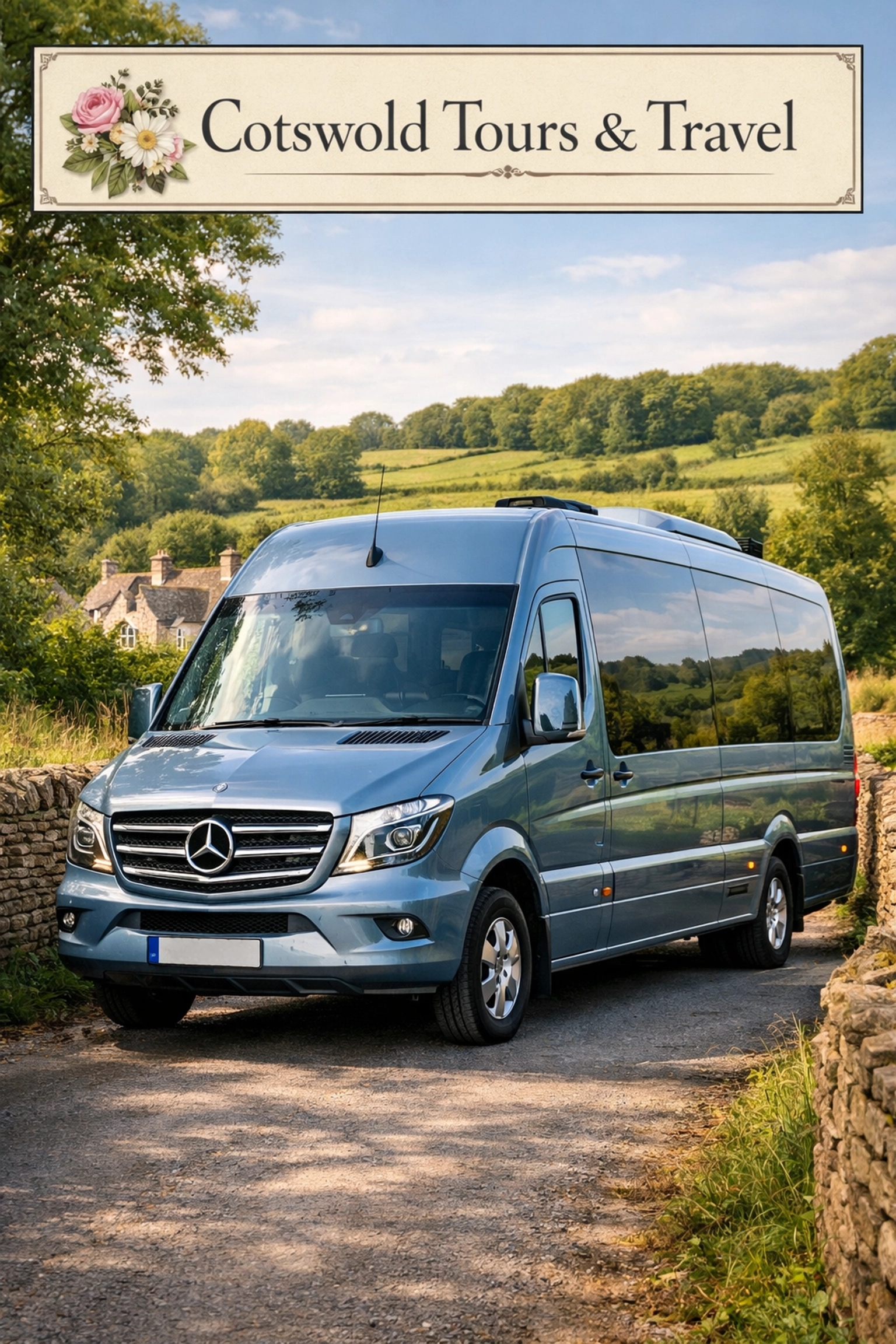
- Accessibility: Our smaller vehicles can navigate the narrow lanes that the big 50-seater coaches can't reach.
- Speed: We spend less time loading and unloading people, meaning you get more time in the villages.
- Personal Touch: You aren't just a number. Our drivers know the best photo spots and the quietest corners of Bibury.
- Stress-Free: We pick you up and drop you off, handling all the navigation so you can just enjoy the view.
Check out our Ultimate Guide to Cotswolds Day Tours to see how Bibury fits into a full day of exploring.
Essential Bibury Travel Tips
- Wear Comfortable Shoes: The paths around the river and Arlington Row can be uneven and occasionally muddy.
- Respect Privacy: Remember that Arlington Row is a residential street. While the exterior is fair game for photos, try to be mindful of the people living behind those famous front doors.
- Cash and Cards: Most places in Bibury (The Swan, the Trout Farm) take cards, but it’s always handy to have a few pounds for smaller purchases.
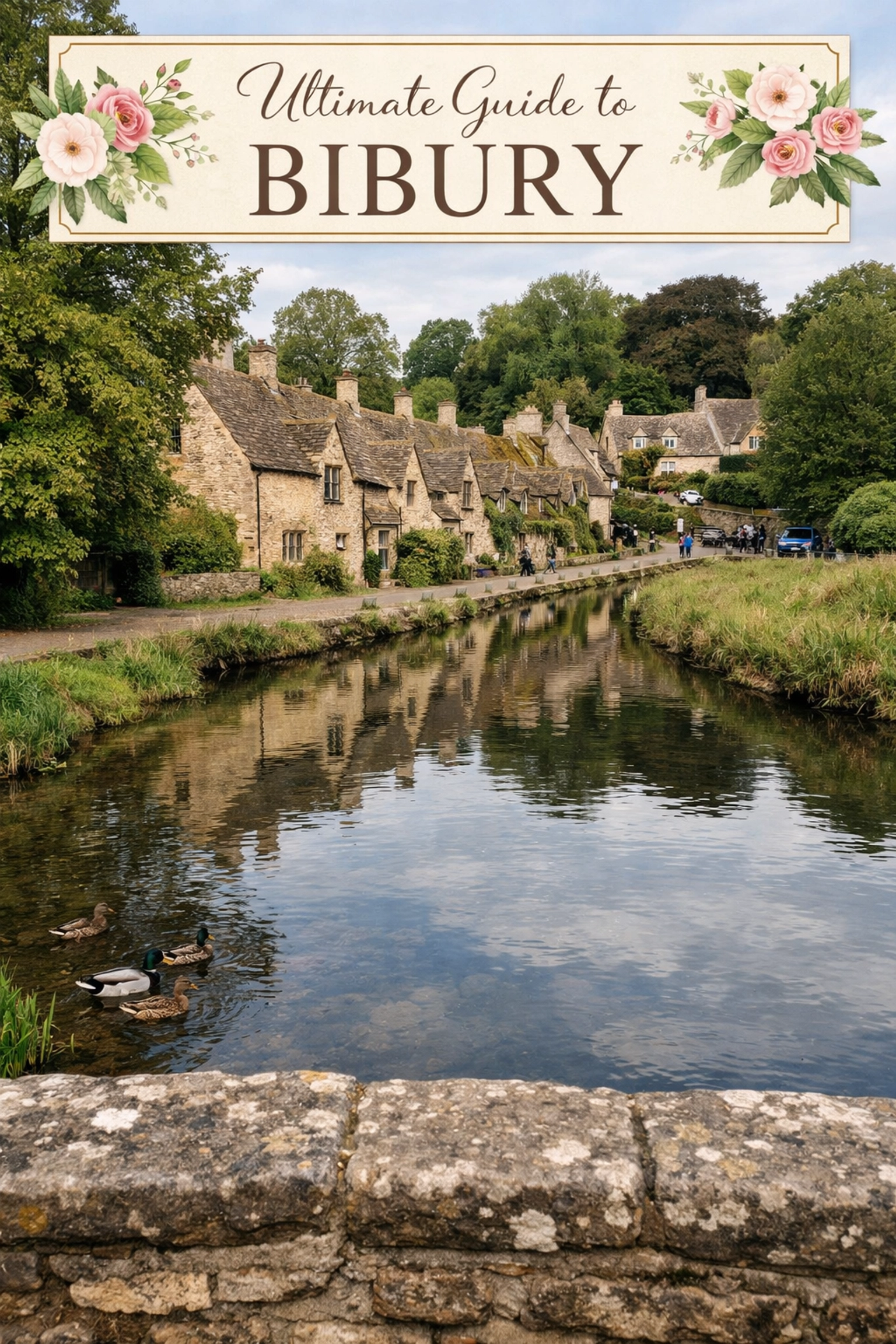
- The Best View: For the classic shot, stand on the bridge near the Swan Hotel and look back toward the Row. The reflection of the trees in the River Coln adds that extra layer of magic to your photos.
Ready to see Bibury for yourself? Skip the hassle of the train and join us for a day you won't forget. Book your spot on our Shakespeare's Stratford and Cotswolds Tour and let us show you the best of the English countryside.
Explore More of the Cotswolds
- Woodstock
- Northleach
- Great Tew
- Naunton
- Minster Lovell
- Moreton-in-Marsh
- Malmesbury
- Blockley
- Stanton
- Lacock
- Cirencester
- Winchcombe
- Painswick
- Tetbury
- Upper Slaughter
- Broadway
- Lower Slaughter
- Castle Combe
- Bibury
- Burford
- Bourton-on-the-Water
- Stow-on-the-Wold
- Snowshill
- Chipping Campden
- Stratford-upon-Avon