
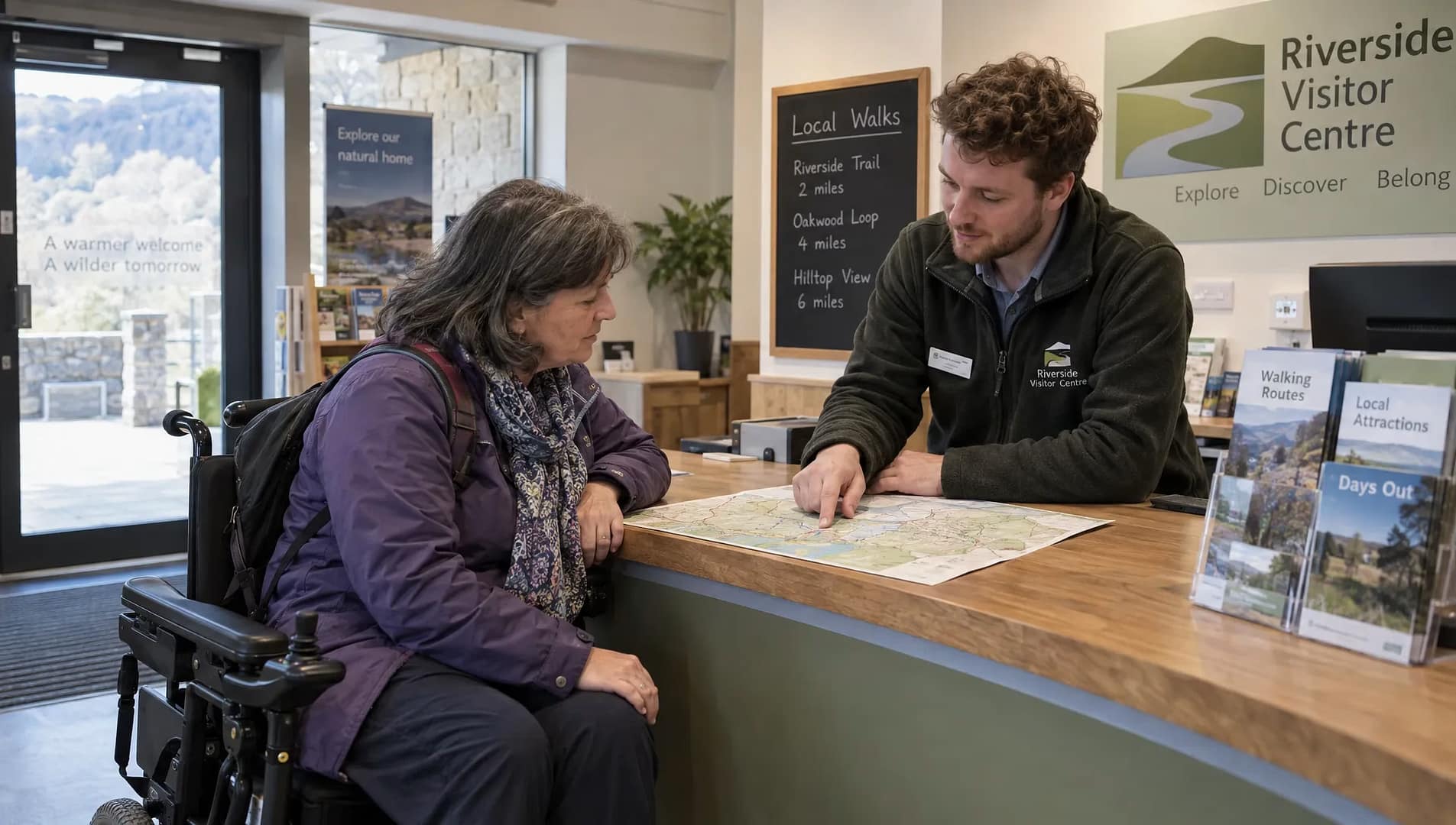
Private tours can be a good choice when you have limited mobility, but only if the vehicle, stops and assistance arrangements match your needs. A vehicle reserved for your group is not automatically wheelchair accessible, and a flexible itinerary is useful only when the agreed stops are manageable.
Before paying, confirm how you will board, how far you will need to walk or wheel, where you can rest and which toilets you can use. Get the essential arrangements in writing.
Decide whether a private day suits your needs
A private booking may give you more scope to agree fewer stops, longer breaks or a route built around particular interests. Those arrangements still depend on what the operator can provide, where the vehicle can legally stop and the opening hours of individual venues. Agree changes before booking rather than assuming they can be made on the day.
A scheduled minibus tour can also work well if its confirmed boarding arrangements, walking demands and timings suit you. Travelling privately is not necessarily the better option if the same access obstacle remains, such as steps into the vehicle.
Start with the practical requirements that would make or break your day. These might include avoiding vehicle steps, finding a toilet with a particular layout or limiting time spent standing. Our guide to choosing a trip that matches your travel pace helps with the broader decision about sightseeing time and travel demands.
Check vehicle access before booking private tours
Boarding and travelling in a passenger seat
If you can transfer from a wheelchair or mobility aid into a passenger seat, explain what that involves. Ask about the number and height of boarding steps, available handholds and the space needed to turn or sit down. Request photographs or measurements if a description is not enough.
Confirm what assistance is available and who will provide it. Do not plan around someone lifting you or your equipment unless a suitable arrangement has been explicitly agreed.
Remaining in your wheelchair during travel
Being able to store a folded wheelchair does not mean a vehicle can carry someone seated in it. If you need to remain in your wheelchair, ask whether the exact vehicle is designed and equipped for occupied-wheelchair travel, including suitable boarding equipment, wheelchair securement and occupant restraints.
Give the operator your wheelchair’s dimensions and weight, along with any relevant manufacturer’s transport guidance. If suitable transport cannot be confirmed, do not treat the booking as accessible.
Shakespeare Coaches uses 16-seat minibuses and 30-seat XL minibuses. These descriptions identify seating capacity, not accessibility equipment, actual attendance or a guaranteed vehicle for your booking. The arrangements for your particular journey need separate confirmation.
Check the complete journey at each stop
A destination name tells you little about the effort involved in visiting it. Assess the whole route from the vehicle to the sight, café or attraction, then back to the collection point.
Ask for distances in metres rather than accepting “a short walk”. Check gradients, kerbs, surfaces and opportunities to sit. A step-free route can still be tiring, and an alternative entrance may involve a longer journey.
| Part of the stop | What to confirm |
|---|---|
| Arrival | Closest permitted drop-off point, distance to the first sight and any steps or kerbs |
| Exploring | Surface conditions, gradients, seating and a shorter route if needed |
| Attraction entrance | Step-free access, alternative entrances and any advance assistance arrangements |
| Toilet break | Location, opening hours and whether the facilities meet your specific needs |
| Collection | Exact meeting point, return distance and what happens if you need to leave early |
Use a venue’s own access information first. Euan’s Guide accessibility reviews can add useful visitor perspectives, but a review does not replace confirmation of your particular requirements.
If you need a toilet with a hoist and adult-sized changing bench, check the Changing Places toilet directory. Do not assume that a standard accessible toilet has this equipment. Confirm access arrangements and opening hours directly, then allow for any detour in the day’s plan.
Choose a realistic Cotswolds itinerary
For private tours in the Cotswolds, plan around the experience you want rather than the greatest possible number of villages. Historic streets can include uneven paving, narrow sections and kerbs, so assess the proposed route through each stop rather than labelling an entire village accessible.
One manageable village visit, a comfortable lunch break and another carefully chosen stop may suit you better than repeated boarding and short sightseeing breaks. This is a planning example, not a confirmed Shakespeare Coaches itinerary.
Use the private Cotswolds tour from London as a starting point for a route discussion. Ask which proposed stops can realistically accommodate your requirements and what alternatives are possible.
Consider the full day, including travel to the pickup point and the journey home. If fatigue varies, agree what can happen if you need to shorten a visit. Staying in the minibus is not an automatic fallback: parking, supervision, temperature and access to toilets all need consideration.
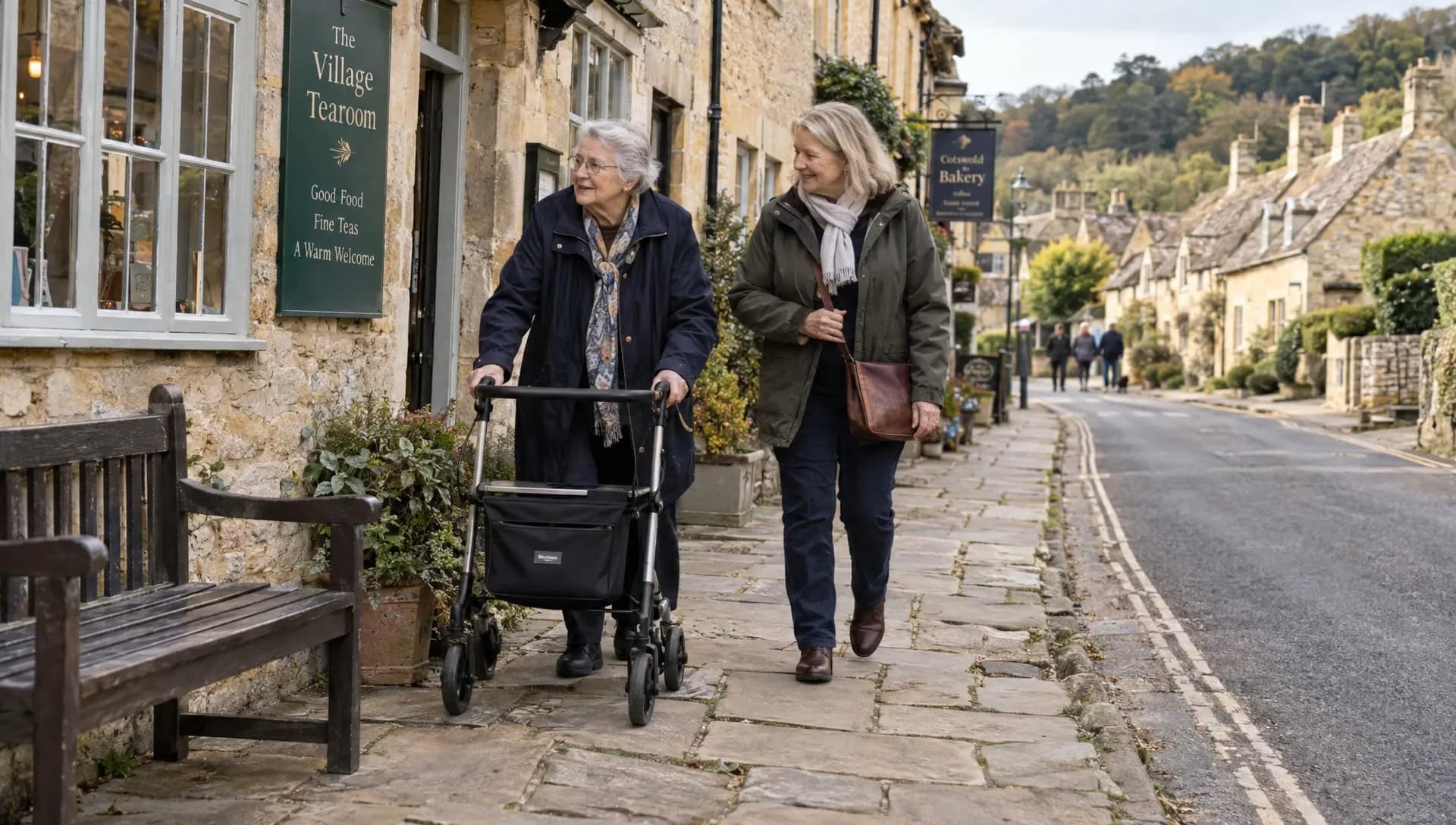
Illustrative scene, not a verified accessible route or Shakespeare Coaches tour stop.
Send an enquiry the operator can assess
Private tours are easier to assess when your enquiry describes practical tasks rather than simply saying “reduced mobility”. You do not need to send a detailed medical history. Explain what you need to do comfortably and safely throughout the day.
Include the information that affects transport and route planning:
- Your proposed trip: Date, preferred departure area, destination interests and number of travellers.
- Boarding requirements: Whether you can manage steps, transfer into a passenger seat or need to travel seated in your wheelchair.
- Walking and standing limits: Distances you find manageable, seating needs and whether these vary during the day.
- Mobility equipment: Type, dimensions, weight and folded size, plus battery details for powered equipment if requested.
- Support and facilities: What your companion can assist with, what help you need from the operator and any essential toilet requirements.
For a mobility scooter or powered wheelchair, ask specifically about loading, storage and battery arrangements. Do not assume that equipment will fit because it folds or dismantles.
Request a written response identifying the agreed vehicle arrangements, stops, assistance and any limitations. Check whether the quoted price is for the whole private booking or per person, what it includes and which cancellation terms apply. Keep those details with your booking confirmation.
Frequently asked questions
Are private tours always wheelchair accessible? No. Private use describes who the booking is for, not how the vehicle or destinations are equipped. Confirm boarding, seating or wheelchair securement, storage and access at every planned stop.
Will the driver-guide help me walk or transfer? Ask before booking. Driver-guide commentary does not establish that personal care, lifting or transfer assistance is available. Agree who will provide any support you need, including help away from the vehicle.
Can I skip a walk and meet the group later? Only if the operator confirms a workable arrangement. Check where you can wait, whether seating and toilets are available and how you will reach the collection point. Do not rely on being able to remain onboard.
Should I book attraction tickets before transport is confirmed? Confirm the essential transport and access arrangements first, then coordinate attraction entry times. Check each supplier’s booking and cancellation conditions before making non-refundable commitments.
Ask for a trip that matches your requirements
If you are considering Shakespeare Coaches, explore its private group day-tour options and send a practical outline of your mobility requirements. Ask the team to confirm what can be accommodated before you book. A useful answer should explain the vehicle, the manageable parts of the route and any limitations, not simply describe the day as accessible.