
Stow-on-the-Wold is a market town whose shape still tells the story of trade. Its broad square, narrow passages and substantial stone buildings invite a different sort of Cotswolds visit from a riverside stroll. Start with the square, then use the smaller streets to discover how the town fits together.
What Stow-on-the-Wold is known for
Stow’s position on historic routes helped it develop as a meeting place and trading centre. The town council records a market charter granted by Henry I in 1107, followed in later centuries by important fairs. Wool and sheep trading brought activity and wealth, leaving a legacy that remains visible around the Market Square.
The narrow passages known locally as “tures” are another clue. The civic society explains their connection with moving and counting sheep into the market. Looking at the contrast between a confined passage and the open square makes that older use easier to imagine. These are routes through a working town, however, so keep entrances and shop access clear while exploring.
Stow is also known for antiques, independent shops and the north doorway of St Edward’s Church. You can enjoy the town without making purchases: its street plan, stonework and churchyard offer plenty to notice on a short walk.
The town today
Begin by taking in the Market Square rather than heading immediately for a particular shop. Find the Market Cross and look at the surrounding buildings from more than one side. Traffic and parked vehicles are part of the modern scene, so use pavements and safe crossings rather than stepping backwards into the roadway for a photograph.
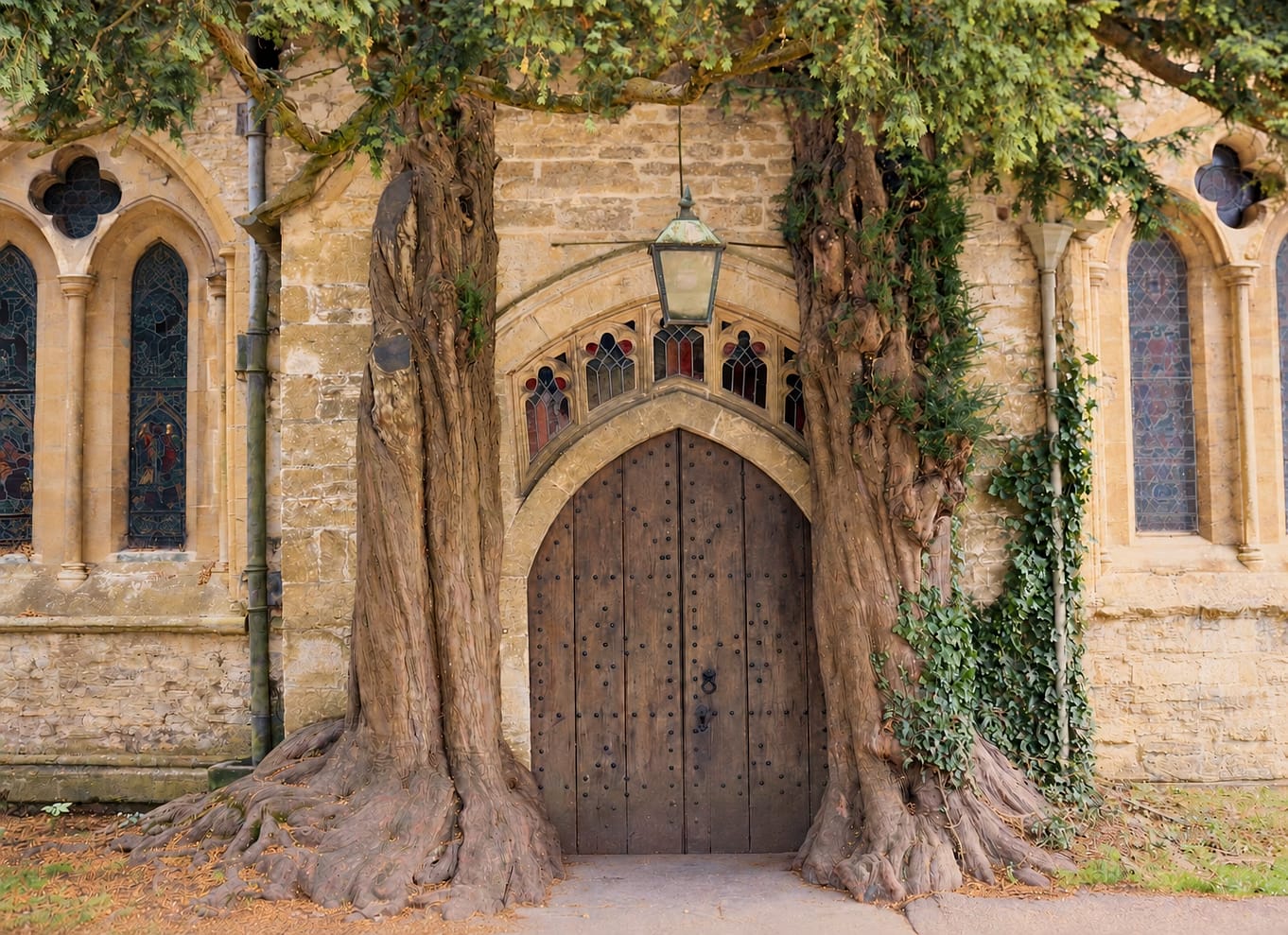
St Edward’s Church is close to the square. Its north porch is framed by two old yew trees, creating the doorway that appears in so many photographs. Give it a few minutes, but allow other people to approach and avoid blocking the route. A churchyard is a place of remembrance, not simply a backdrop.
The doorway is sometimes connected with Tolkien’s Doors of Durin. The local civic society describes this as an unauthenticated rumour. Enjoy the resemblance if it appeals to you, while keeping the distinction between an attractive story and established history.
Elsewhere, follow a court or passage that is clearly open to the public and notice how quickly the scale changes away from the square. Browsing one or two shops, pausing for a drink, or looking more closely at a building can make a satisfying visit without a long list of stops.
Visiting Stow-on-the-Wold on a day tour
The Stow-on-the-Wold day tour from London places the town within Shakespeare Coaches’ Cotswolds Day Tour from London. Departure is from London Paddington at 7:30 am, with a return around 6:00 pm. The published route allows approximately one hour in Stow, subject to changes in traffic, weather and local conditions.
Tours carry 16–30 guests, depending on the assigned vehicle. The stop gives an introduction to the square, church surroundings and independent shops. Decide which matters most to you, then keep enough time to return to the agreed meeting point. Entry to any optional attraction and personal purchases are separate from the transport itinerary.
From £69 per person · standard price £99
4.9 from 2,031 reviews across Google, GetYourGuide and Tripadvisor (as at October 2026)
Practical notes
Bring a layer for changeable weather: an exposed town-centre walk can feel different from time spent inside the vehicle. Shoes with a reliable grip help on wet paving. Check individual premises if steps, narrow entrances or standing for long periods would affect your visit.
For independent travel, confirm parking restrictions or your return transport before setting off. Do not assume that a central space will be available on arrival. Build in time for the walk from your parking place, refreshments and finding the correct departure point.
Shops and places of worship have their own opening arrangements. If seeing a particular interior is essential, confirm access for your date rather than relying on a general village itinerary. Services and other church activities take priority over sightseeing.
Frequently asked questions
Is Stow-on-the-Wold a village or a town?
It is a historic market town. The Market Square and trading history are central to understanding it, even though visitors often group it with nearby Cotswolds villages.
Where is the famous yew-tree doorway?
It is at the north porch of St Edward’s Church, close to the Market Square. Respect worshippers, the churchyard and anyone else using the approach.
What can I see in about an hour?
Choose a compact walk around the square and church surroundings, with time for one personal priority. A detailed shopping trip or a longer walk needs a more generous independent visit.