

The Station They Forgot to Ruin
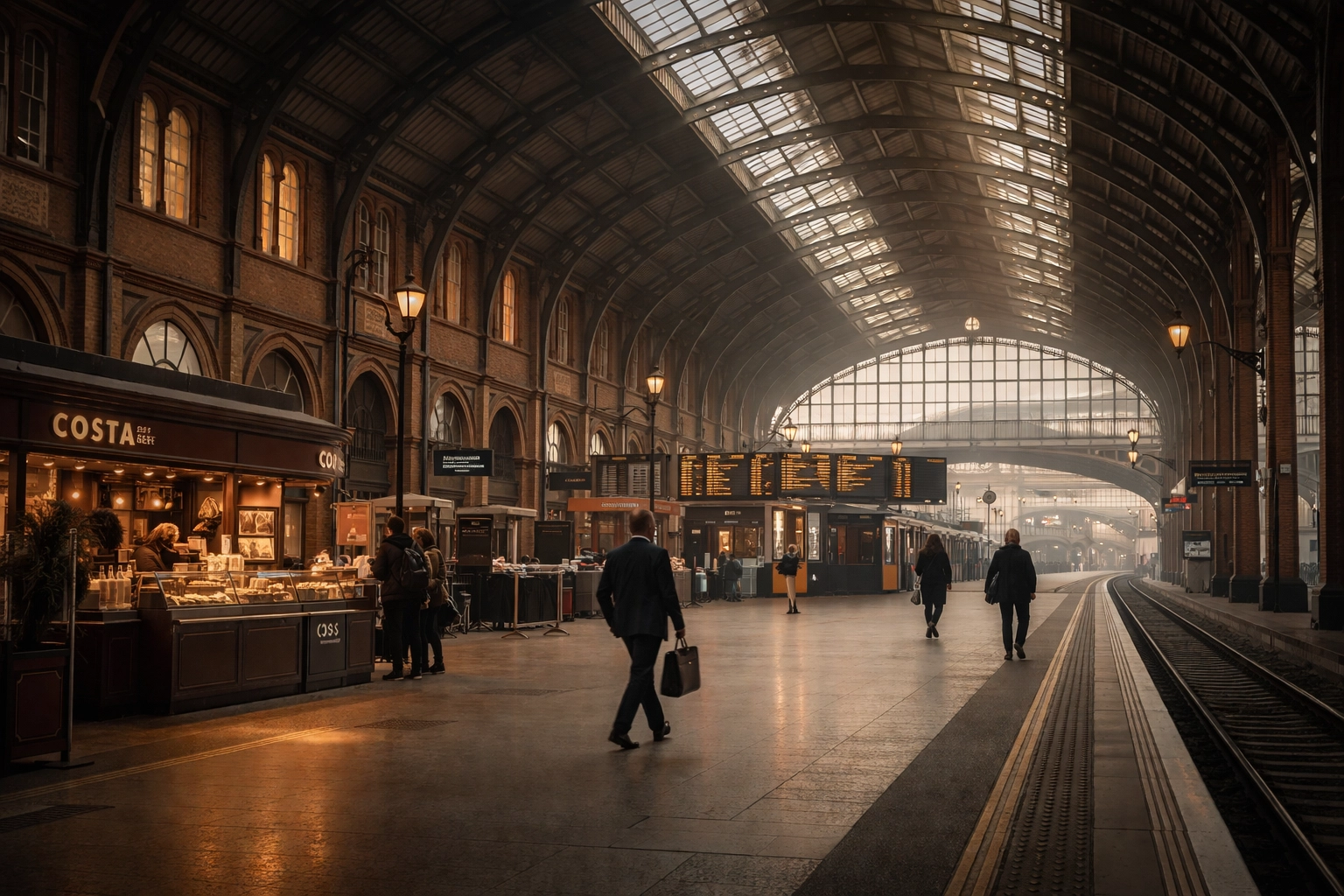
Marylebone is the underdog of London terminals. While Kings Cross preens for its Harry Potter photo ops and Victoria heaves with suitcase-wielding masses heading to Gatwick, Marylebone sits quietly at the top of the Edgware Road like a gentleman who's seen better days but still knows how to knot a tie.
It's the smallest of London's major stations. That's not a complaint: it's a feature.
You walk in and the first thing you notice is what's missing: the chaos. No endless announcements barking platform changes. No crush of commuters treating you like an obstacle. Just a Victorian-era terminus with a curved roof, a decent coffee stand, and the faint sense that you've stepped slightly outside of time.
This is where your journey to Shakespeare's town begins. Not from the gleaming circus of Paddington or the bureaucratic sprawl of Euston. From here. A station that still feels like it belongs to actual humans.
Understanding the Mission
Let's be clear about something: you're not going to Stratford in East London. That's a twenty-minute Tube ride and a very different postcode. You're going to Stratford-upon-Avon: 81 miles northwest, in the belly of Warwickshire, where the River Avon bends through medieval streets and a glover's son once scribbled down some plays that changed everything.
The journey takes two hours and six minutes if you're lucky. Closer to two and a half if you're not. Sometimes longer. British rail operates on a logic all its own: part timetable, part weather forecast, part collective prayer.
Chiltern Railways runs this route. They're decent, as these things go. The trains are relatively modern, the seats are passable, and the Wi-Fi works often enough that you won't throw your phone out the window. But let's not pretend this is the Orient Express. You're getting from A to B. The romance is optional.
The Choreography of the Change
Here's where it gets interesting.
There's no direct train from Marylebone to Stratford-upon-Avon. You'll need to change. Usually at Leamington Spa, sometimes at Dorridge or Solihull. The app will tell you one thing; the announcement will tell you another; the conductor will shrug in a way that suggests both are correct and neither matters.
This is British rail in its purest form. A system built in the Victorian era, privatised in the nineties, and now held together by optimism and strong tea.
The change itself isn't difficult. Platforms are well-marked, staff are helpful, and there's usually enough time between connections that you won't need to sprint. But there's a mental tax to it: the vigilance of watching departure boards, listening for garbled announcements, wondering if you're on the right train.
For seasoned travellers, this is background noise. For someone visiting from overseas, jet-lagged and clutching a paper ticket they're not quite sure how to use, it's an unnecessary layer of stress on what should be a day of discovery.
The View from the Window
Once you're settled, though, the journey has its moments.
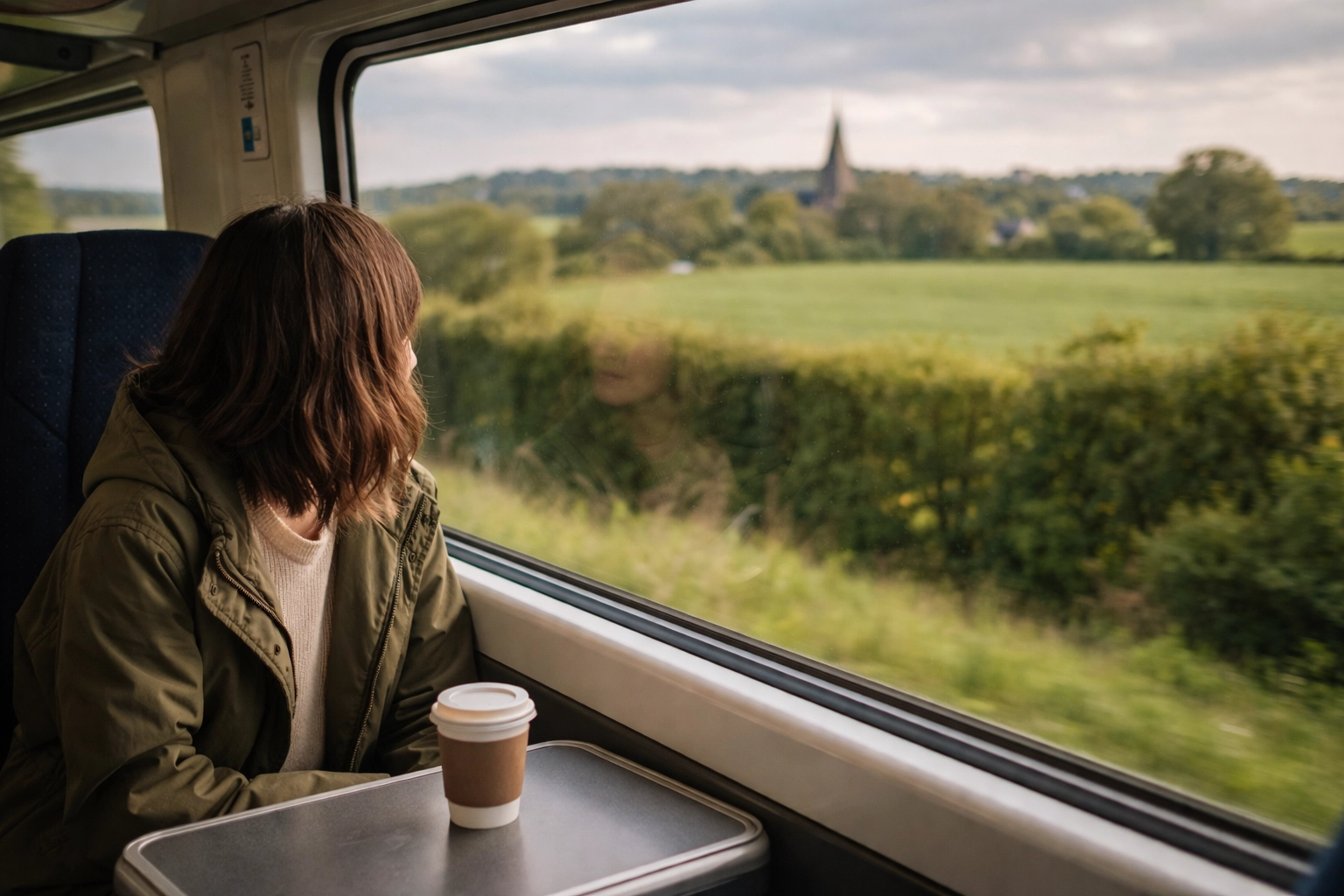
The train pulls out through northwest London: terraced houses giving way to suburbs, then the grey-green sprawl of the Chiltern Hills. You'll pass through High Wycombe, Banbury, and eventually into the Warwickshire countryside where the fields open up and the hedgerows get serious.
It's not dramatic landscape. This isn't the Lake District or the Scottish Highlands. But there's a quiet honesty to it: working farmland, church spires poking above treelines, the kind of England that exists between postcards. If you're paying attention, you'll catch glimpses of canal boats, grazing sheep, the occasional crumbling manor house that someone's grandmother probably remembers as grand.
The problem is attention. Two hours is a long time to stare out a window. Most people end up on their phones, scrolling through whatever algorithm they've trained to distract them. The landscape becomes background. The journey becomes commute.
Arrival: The Anticlimactic Truth
Stratford-upon-Avon station sits about a fifteen-minute walk from the town centre. It's a modest terminus: single platform, small car park, a bus stop that may or may not have a service running when you need it.
You step off the train and you're… somewhere. Not quite in the heart of things. Not yet immersed in the timber-framed streets or the river walks or the theatre district. You're on the edge, orientation uncertain, Google Maps loading slowly on the patchy signal.
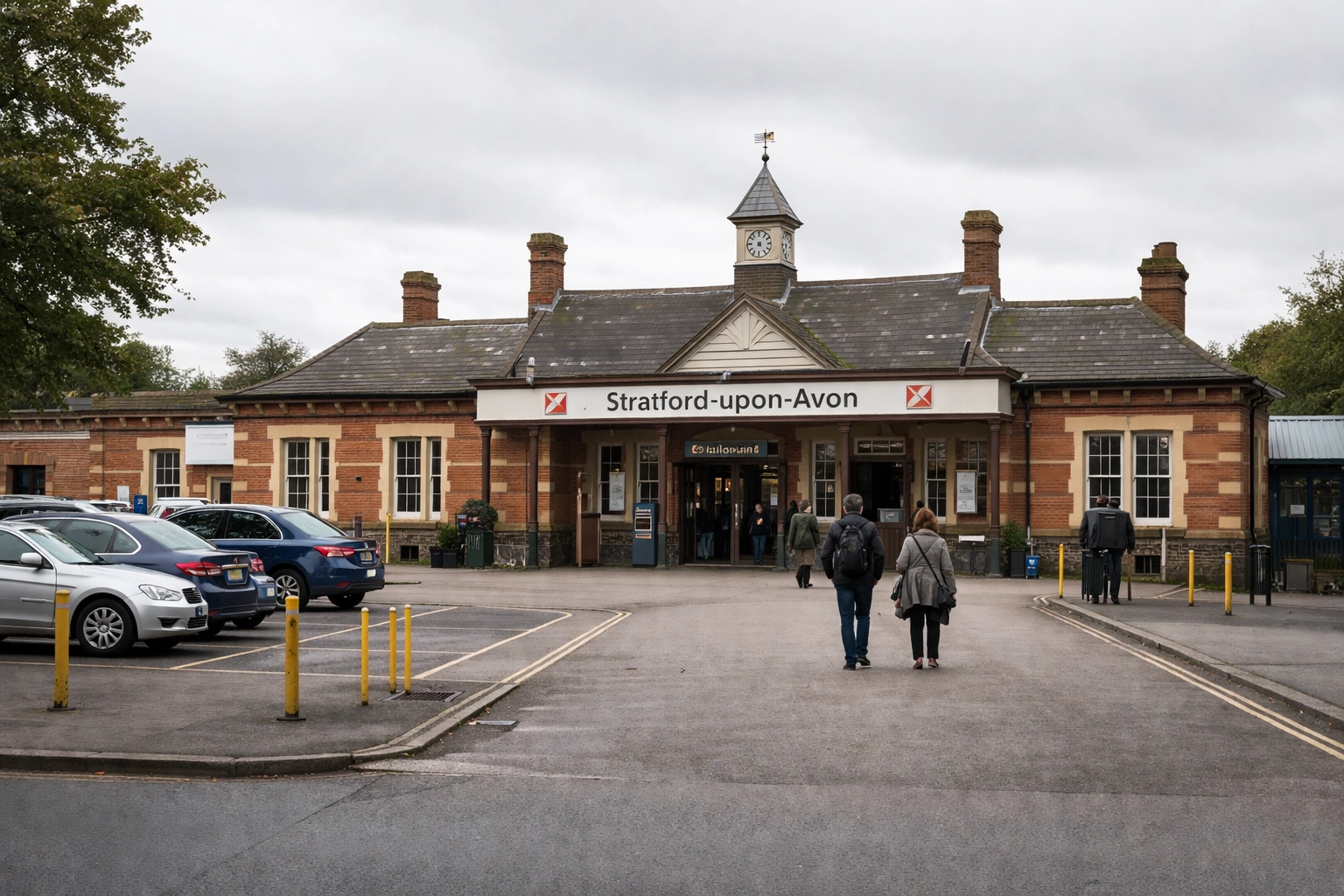
This is the reality of independent rail travel to a tourist destination. You've arrived, but you haven't arrived. There's still the walk, the wayfinding, the mental recalibration of figuring out where everything is in relation to where you're standing.
It's not bad. It's just… logistical. And logistics, while necessary, aren't exactly what you came here for.
The Mathematics of Your Day
Let's do the honest accounting.
Two hours and change on the train, each way. That's four-plus hours of your day spent in transit. Add in the Tube to Marylebone, the change at Leamington, the walk from the station, and you're looking at five hours of getting there and back. From a single day in England.
The ticket costs £10-30 depending on when you book and how the pricing gods are feeling. Not expensive, but not nothing. And you're arriving cold: no context, no guide, no one to point out the pub where the actors drink after performances or the garden where the locals actually go.
You can absolutely do it this way. Thousands of people do. They have perfectly nice days and take perfectly nice photos and check Stratford off their list.
But there's another version of this story.
The Case for Being Driven
Imagine, for a moment, stepping onto a sixteen-seater coach at a central London pickup. Coffee in hand. Someone else worrying about the route, the traffic, the timing.
You roll out through the same countryside: except now you're actually seeing it. Someone's explaining why those hedgerows matter, pointing out the Iron Age hill fort you'd have missed, noting the village where they filmed that scene from that show you watched last year.
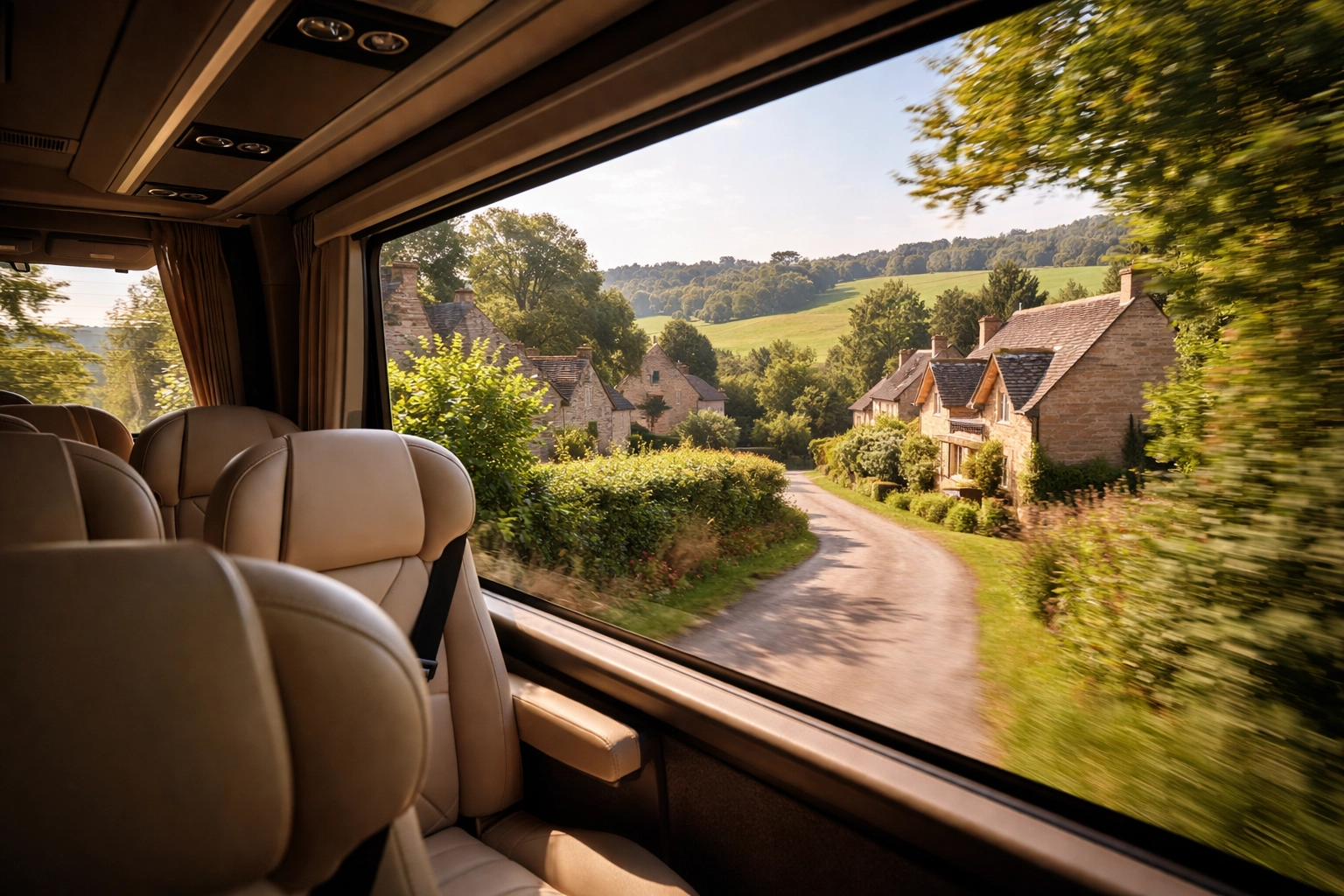
You stop in the Cotswolds on the way because you can. Because the coach fits down those narrow lanes that regular tour buses avoid. Because the driver knows which tea room does the best scones and which viewpoint isn't overrun with crowds.
You arrive in Stratford oriented, informed, ready. And when the day's done, you're driven back: no platform anxiety, no missed connections, no navigating the night service because dinner ran long.
This is what a small-group tour actually offers. Not just transport, but a different relationship with the journey itself. The travel becomes part of the experience rather than an obstacle to it.
The Verdict, Honestly
I'm not going to tell you the train is terrible. It's not. Marylebone is lovely, Chiltern Railways is competent, and there's something satisfying about navigating British infrastructure on your own terms.
But here's what I've learned: time is the only resource you can't buy more of. And when you're visiting somewhere as layered and storied as Stratford-upon-Avon, how you spend those hours matters.
You can spend them watching departure boards and checking connections. Or you can spend them watching the English countryside unfurl through a window while someone who actually knows the land shares what makes it sing.
Both get you there. Only one gets you there well.
The train to Stratford runs every hour, thirty-one times a day. It's reliable, affordable, and utterly fine.
But fine was never really the point, was it?