

The Plain
You feel it before you see it.
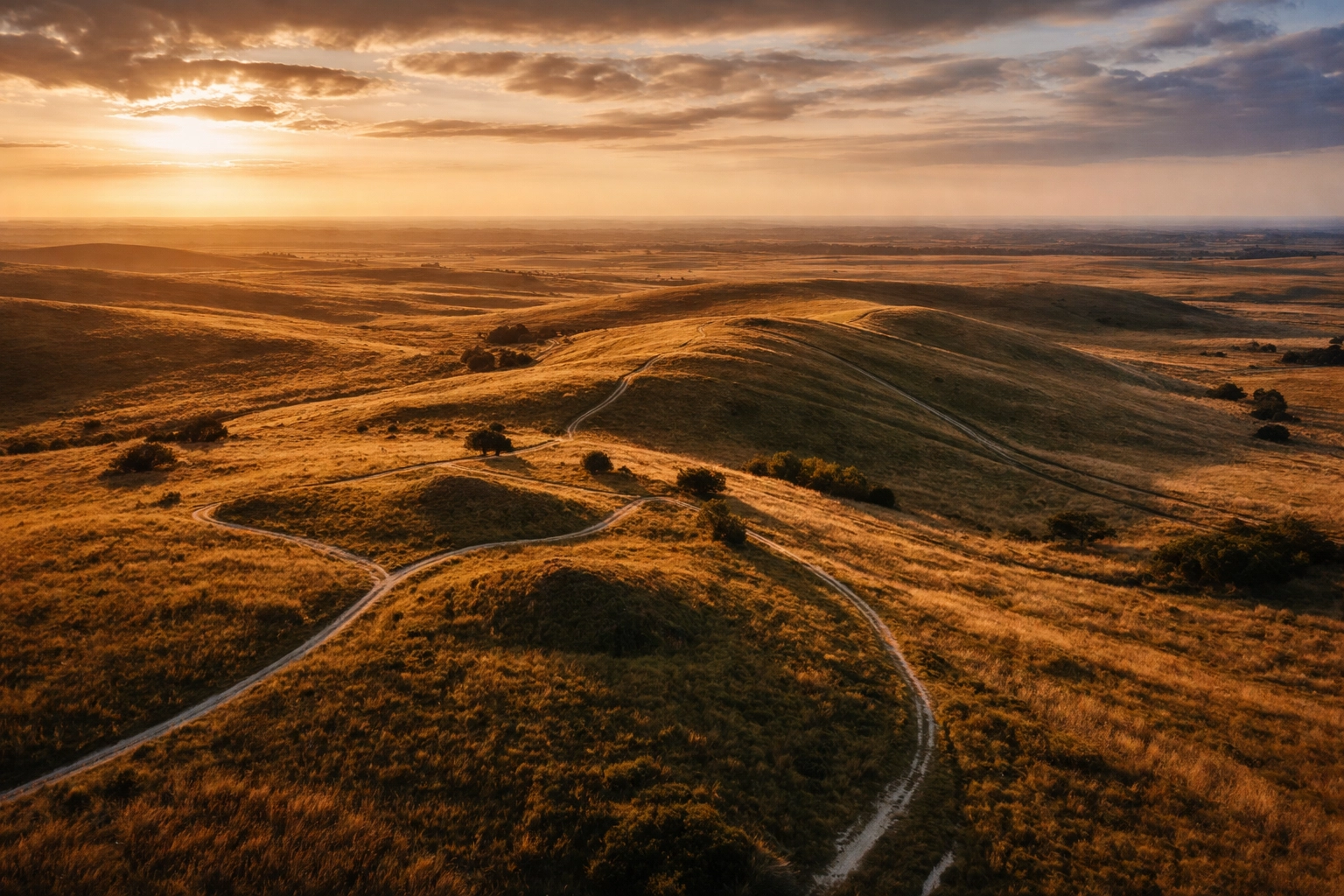
The Salisbury Plain opens up like a held breath: miles of grass, low and windswept, stretching toward a sky that seems too big for this small island. No trees to break the line. No buildings. Just the land, rolling out in every direction, and the wind coming off it cold and constant, carrying nothing but the smell of wet chalk and old earth.
This is not a comfortable place. It wasn't meant to be.
And somewhere out there, rising from the grass like broken teeth, are the stones. The ones you've seen on postcards and in documentaries and on the covers of prog-rock albums your uncle used to play. Stonehenge. The bones of Britain, standing in the silence of a landscape that hasn't fundamentally changed in five thousand years.
A Stonehenge day trip from London takes you about two hours west, into Wiltshire, and the shift is jarring. You leave the noise and the concrete and the crush of bodies, and then: nothing. Just the plain, and the sky, and the weight of something you can't quite name pressing down on your chest.
The Problem with Famous Things
Here's the thing about Stonehenge: it's been loved nearly to death.
Millions of people come here every year. They park in the massive lot, shuffle through the visitor centre, buy a coffee and a keychain with a druid on it, then walk the prescribed path to the rope barrier that keeps them a respectful distance from the stones. They listen to the audio guide. They take the photo. They leave.
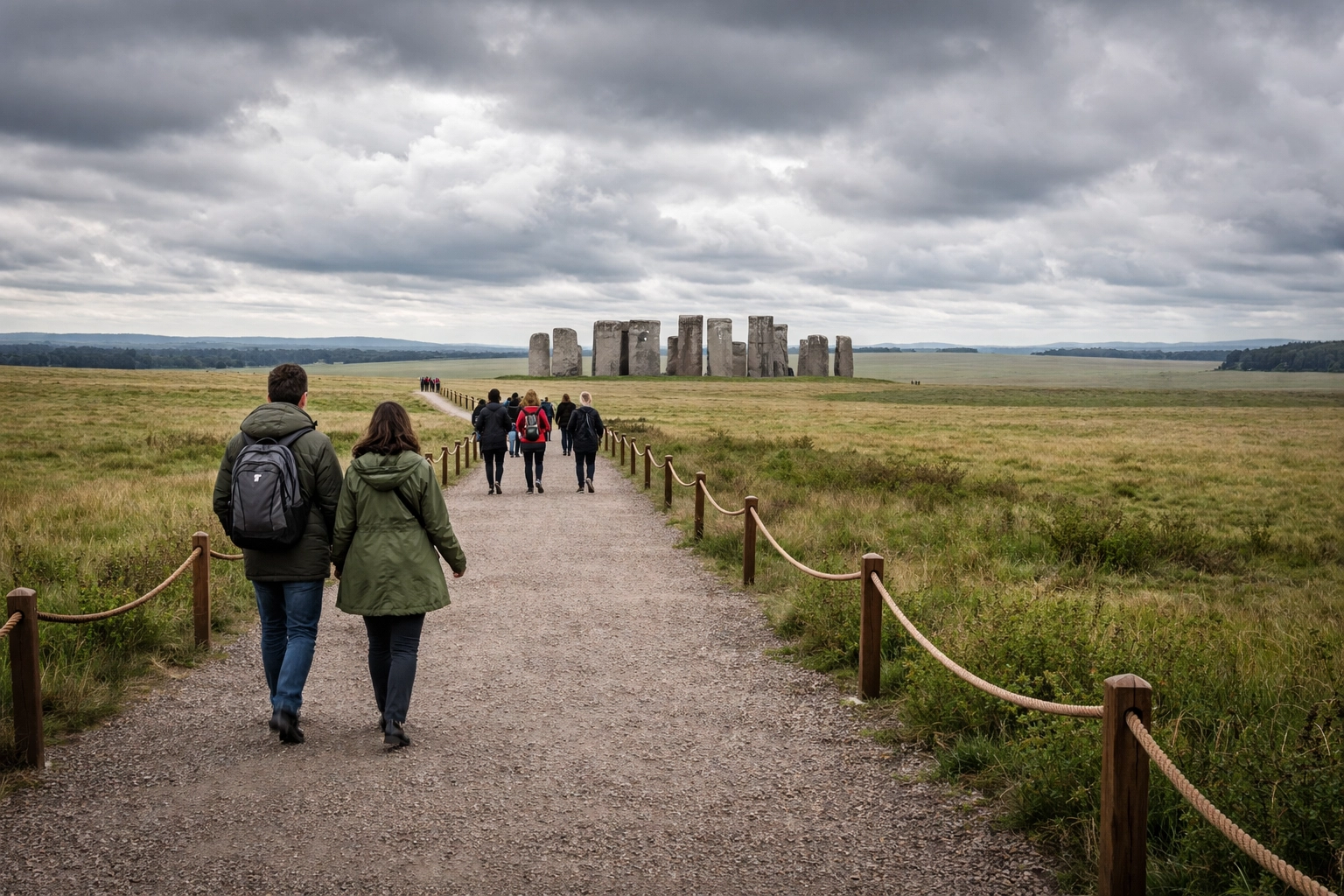
And I get it. You can't let people climb all over a 5,000-year-old monument. The barriers are there for a reason. The gift shop exists because people need somewhere to pee and buy a postcard for their grandmother.
But there's a danger in all that management. The danger is that you see Stonehenge the way you see a stuffed animal in a museum: something dead, something preserved, something behind glass. You check it off the list. You move on.
And you miss the whole point.
Because the thing about Stonehenge isn't the stones themselves. It's what they represent. It's the question that hangs in the air, unanswered after thousands of years of asking: Why is this here?
The Weight of the Work
Let's talk about what it took to build this thing.
Around 3100 BC: before the wheel was common in Britain, before metal tools, before written language: people started digging. They carved a circular ditch into the chalk with antler picks and shoulder blades of cattle. They piled the earth into a bank. They dug 56 pits around the perimeter, now called the Aubrey Holes, and they started burying their dead.
Sixty cremated individuals have been found so far. Men, women, children. Nearly equal numbers. Some of them traveled incredible distances to be buried here: one teenage boy grew up near the Mediterranean. The "Amesbury Archer" was a metalworker from the Alpine regions of what's now Germany. The "Boscombe Bowmen" came from Wales or Brittany.
People crossed continents to die here. To be placed here. That tells you something about what this site meant.
Then came the stones.
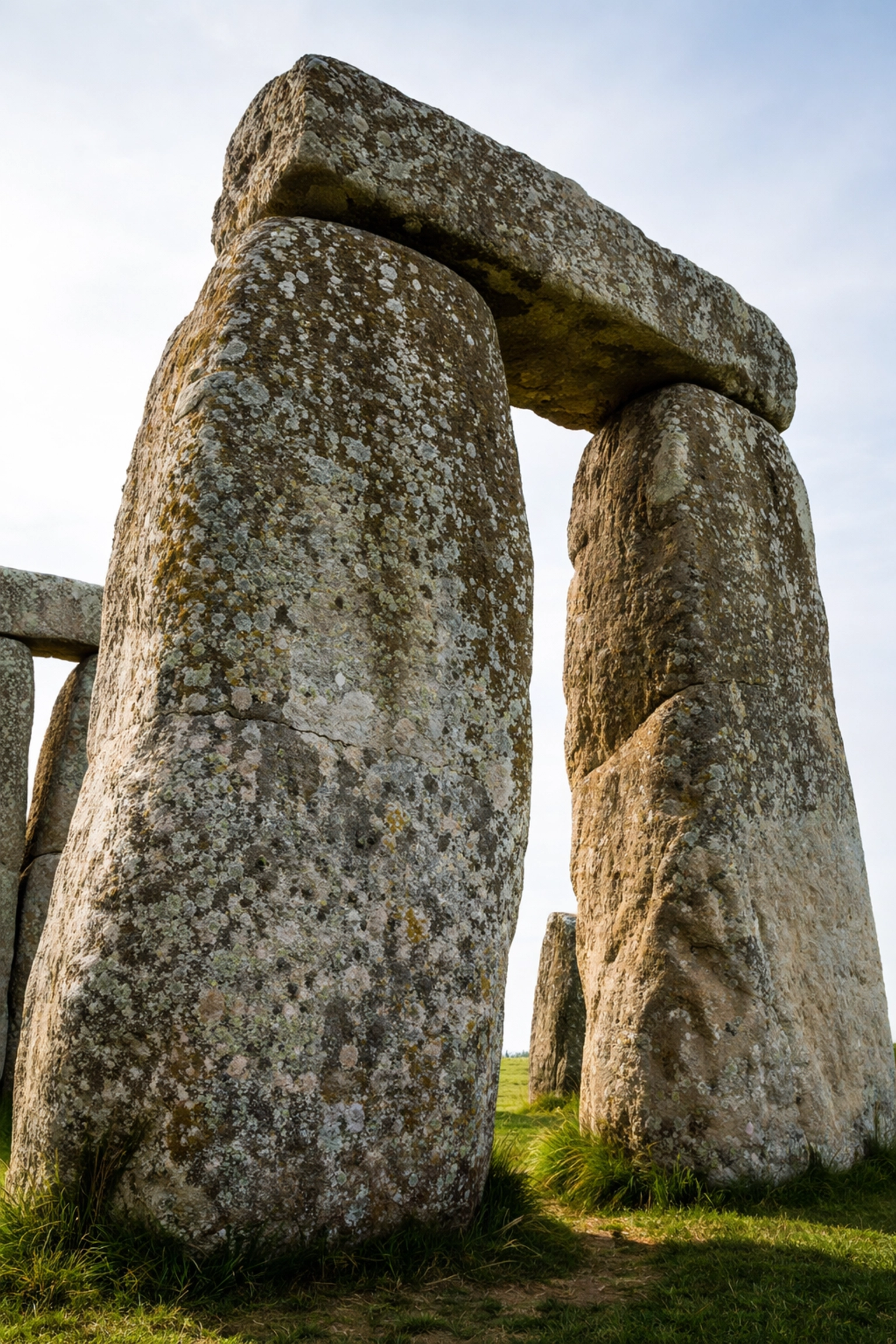
The sarsens: the big ones, the ones that form the outer ring and the famous trilithons: weigh up to 25 tons each. They were dragged from Marlborough Downs, about 25 miles north. No wheels. No horses strong enough to pull that weight. Just human muscle, rope, wood, and time.
But it's the bluestones that break your heart.
These smaller stones: still massive by any reasonable standard: came from the Preseli Hills in Wales. That's 150 miles away, over mountains and rivers, through forests that no longer exist. Some archaeologists think they were floated on rafts, hauled on sledges, rolled on logs. Others think glaciers moved them partway, and humans finished the job.
Either way, the effort was staggering. And the question remains: why these specific stones?
The answer might be sound. The bluestones are "ringing rocks": strike them and they resonate, almost like bells. In cultures around the world, rocks that sing are considered sacred, magical, alive. Maybe the people who built Stonehenge believed these stones held power. Maybe they heard music in the landscape and dragged it home.
We don't know. We'll probably never know. But standing on the plain, watching the wind move the grass, you can feel the weight of that devotion. The years of labor. The generations who worked and died and never saw it finished.
The Alignment
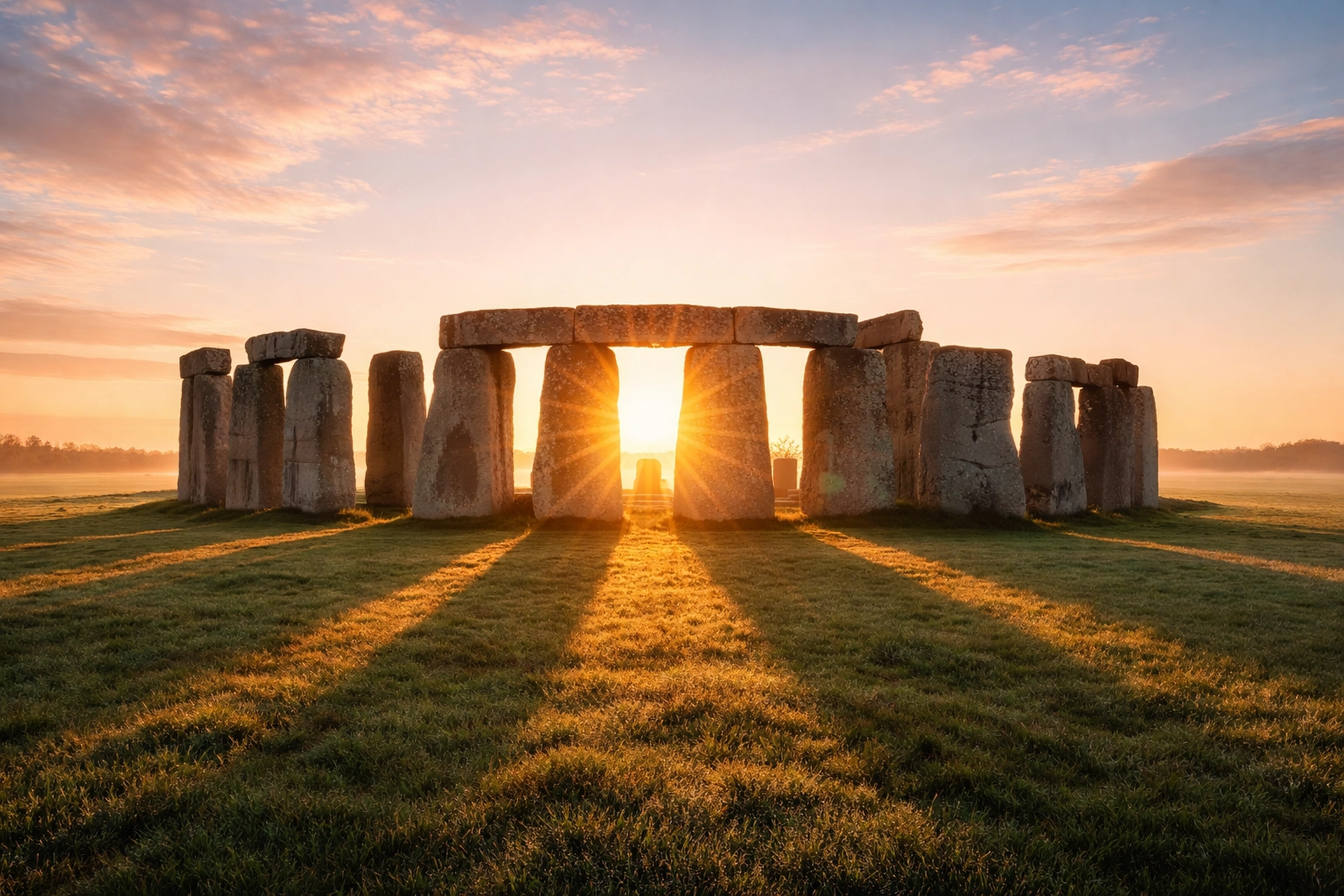
Stonehenge isn't random. The stones are precisely positioned to align with the midsummer sunrise and the midwinter sunset.
On the longest day of the year, if you stand in the centre and look northeast, the sun rises directly over the Heel Stone, flooding the monument with light. On the shortest day, the sun sets through the great trilithon, dropping into the gap between the uprights like it was built for exactly that purpose.
Because it was.
This was a calendar. A clock. A way of marking the turning of the year, the death of the light, the promise of its return. When you visit Stonehenge, you're standing in a place where people gathered to watch the sun rise five thousand years ago, to celebrate or mourn or pray in ways we can only guess at.
The audio guide will tell you this. But hearing it through headphones, shuffling along with three hundred other tourists, it's hard to feel it.
A Different Way
This is why how you arrive matters.
There's a difference between being processed and being present. Between checking a box and actually standing still long enough to let a place work on you.
Mass tourism: the big coaches, the timed tickets, the crowds pressing against the barriers: creates a kind of numbing effect. You're so busy navigating the logistics that you forget to look up. You forget to listen to the wind. You forget that this place held meaning for people who died thousands of years before anyone wrote down what that meaning was.
A smaller group changes things. Sixteen people in a luxury coach instead of fifty on a bus with sticky seats and a broken air conditioner. You arrive without the travel hangover. You're not exhausted before you even start.
And when you step out onto the plain, you have space. Space to walk slowly. Space to find a quiet spot away from the main crowd. Space to stand there and let the wind hit you and think about the people who hauled those bluestones across Wales, who buried their dead in the chalk, who watched the sun rise over the Heel Stone and felt something we can only imagine.
The Bones
When you plan a trip to visit Stonehenge, you'll find no shortage of options. Stonehenge tours from London run daily, in every price range, with every possible add-on. You can combine it with Bath, with Salisbury Cathedral, with Windsor Castle. You can do it in half a day if you're in a hurry.
But I'd ask you this: why rush?
The ancient sites of England aren't going anywhere. They've been standing for millennia. They can wait for you to slow down.
Stonehenge isn't a photo op. It's a burial ground. A calendar. A monument to human stubbornness and devotion and the desperate need to make something that lasts. The people who built it are still there, in a sense: their cremated remains mixed into the chalk, their bones part of the earth.
The bones of Britain.
Stand on the plain. Let the wind cut through your jacket. Watch the light change over the stones. And remember that you're standing where people have stood for five thousand years, looking at the same sky, asking the same questions.
Why are we here? What does it mean? What will we leave behind?
Stonehenge doesn't answer those questions. But it holds them. And sometimes, holding the question is enough.
Shakespeare Coaches offers intimate Stonehenge tours from London in 16-seater luxury vehicles: a quieter, more thoughtful way to experience one of the world's most ancient places. Explore our destinations and find your own way to the stones.