

Let’s not kid ourselves about what happens on most tours.
You’re poured out of a 53-seater at 10:47 AM like somebody cracked a can. The air smells like hot brakes and perfume and somebody’s anxiety. You get ninety minutes to “explore” a village that took centuries to become itself, and then you’re hustled back on board because Margaret needs the loo and Derek’s already cranky about lunch. The driver doesn’t care about that 15th-century pub you spotted down the lane. The itinerary was printed six months ago. You’re cargo.
I’ve seen it more times than I can count. Coaches disgorging people onto pavements like a production line—everyone gripping the same laminated map, photographing the same five angles of the same three buildings, then vanishing before they’ve tasted anything, talked to anyone, or felt the weight of where they actually are.
That’s not travel. That’s logistics with scenery.
The Tyranny of Other People's Schedules
Here’s the thing the industry doesn’t like saying out loud: the magic isn’t the vehicle. It’s not “luxury.” It’s not leather seats or a flute of something fizzy you didn’t ask for. The magic is the absence of strangers. The quiet. The space to be curious without having to negotiate your curiosity with a committee.
When you’re sharing a coach with forty-seven people you’ve never met, every decision becomes a low-grade argument in the background. Somebody wants more time at Anne Hathaway’s Cottage. Somebody else couldn’t care less about Shakespeare and wants cream tea—now. The guide “splits the difference,” which means everybody gets a watered-down version of what they came for.
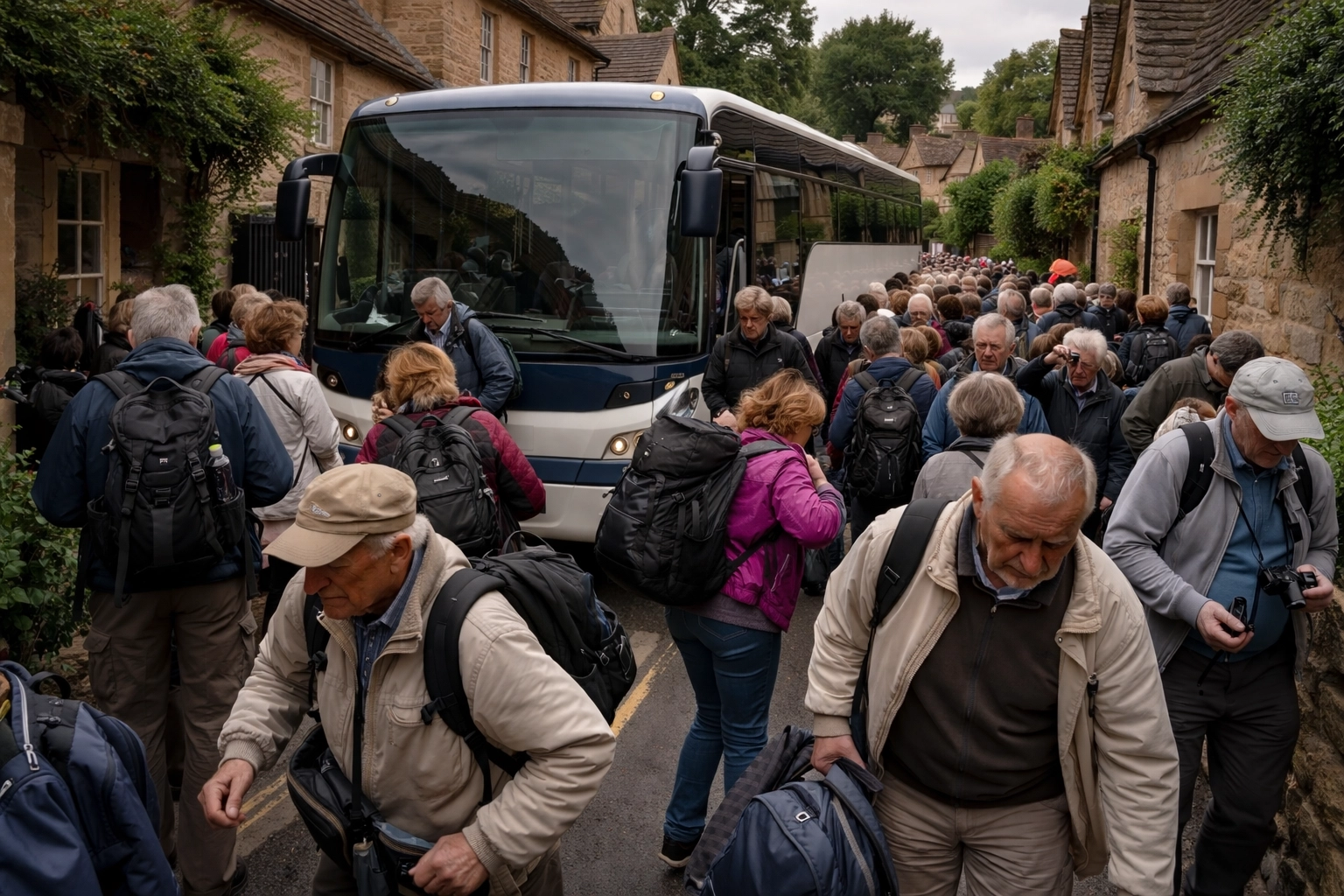
The bus full of strangers is a necessary evil for some people—cheap, efficient, predictable. For the curious, it’s a tragedy. Because curiosity doesn’t run on a timetable. It runs on smell and light and a half-glimpsed sign down an unpromising lane.
With your own van—a proper sixteen-seater with just your people—the whole temperature changes. Your driver mentions there’s a pub in Mickleton that does a pie worth the detour. You stop. You eat the pie. The gravy’s too hot, you burn your tongue, you laugh, you drink something cold, and nobody’s checking their watch like it’s a life-support machine.
You pass a field of sheep backlit by late sun and somebody says, “Pull over.” So you pull over. You stand in wet grass and wind and silence, and you take a photo that actually means something because you chose that moment. It wasn’t allocated.
That’s the real luxury. Not the shiny stuff. Time that belongs to you—and the freedom to waste it properly.
The Driver Who Actually Knows
There’s a particular kind of knowledge you can’t Google. It lives in the person who’s driven these lanes for years—who knows the A44 clogs up on Saturdays, but the back road through Ilmington is clear. Who knows which farm shop got their delivery in this morning. Who knows that the light hits Broadway Tower just right at a certain hour, in a certain season, when the air’s got teeth and the sky looks scrubbed clean.
On a big coach tour, you get a microphone and a script. Somebody reciting facts about when Shakespeare was born, like you couldn’t find it in ten seconds on your phone. The driver is separate from the experience. They’re a mechanism. Point A to point B.
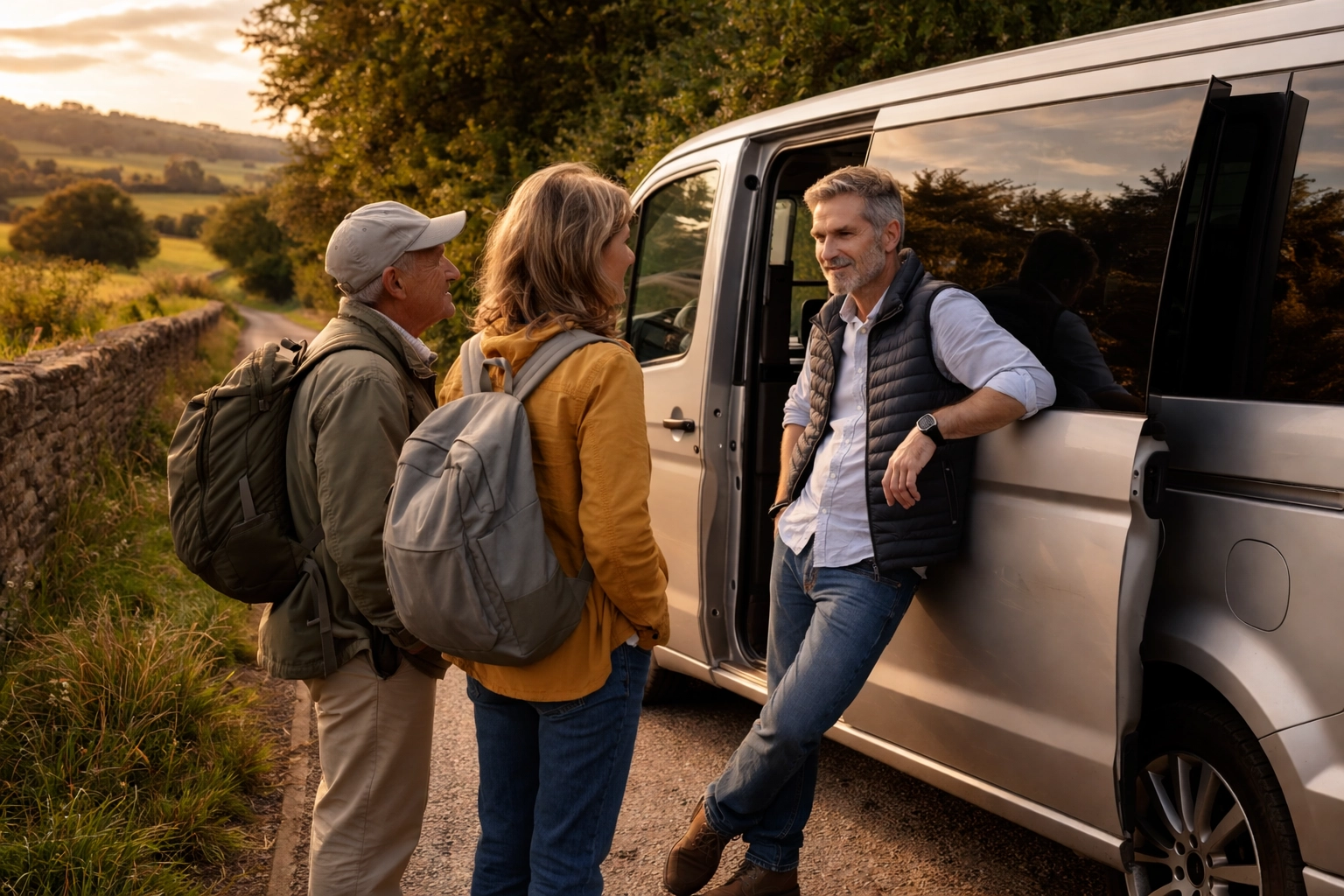
With a private group, the driver becomes something else. A translator of place. Somebody who can answer “Where do the locals actually drink?” without flinching. Somebody who’ll tell you the National Trust tearoom is fine, sure—but there’s a woman in Chipping Campden who makes scones that’ll ruin you for all other scones.
And here’s the part nobody puts on the brochure: you’re allowed to be awkward. You’re allowed to ask dumb questions. You’re allowed to chase a hunch.
“I’m not afraid to look like an idiot.”
That’s the price of getting somewhere real. On a coach, looking like an idiot slows everyone down. In a small van, it’s just Tuesday.
The Freedom to Change Your Mind
Last month, a group booking through Shakespeare Coaches was supposed to hit four villages. Standard route. Stratford-upon-Avon in the morning, swing through Bourton-on-the-Water, finish up in Stow-on-the-Wold.
Except they wandered into an antique shop in Stow and found a Georgian writing desk one of them had been hunting for years. The kind of thing you don’t “just see.” The kind of thing you keep thinking about years later. They spent two hours in that shop. Bought the desk. Had it shipped home. Missed Bourton entirely.
Best tour they’d ever taken, they said.
Try doing that with fifty strangers waiting on a coach. Try telling Derek and Margaret you’re skipping the water village because someone found furniture and time suddenly stopped being theoretical.
The ability to pivot is everything. Weather shifts. Mood shifts. Appetite shifts. The road offers you something—smoke from a chimney, church bells, the smell of rain on stone—and if you’re in a big coach, you don’t get to take the offer. You stick to the plan. You keep rolling.
A private tour absorbs the messiness of real travel. A group tour can’t. It’s not designed to. It’s designed for throughput: maximum bodies, maximum attractions, minimum time.
There’s a reason the best meals of your life weren’t planned six months in advance. Same with the best moments in England. Some of the finest seconds in the Cotswolds happen when you turn down a road that wasn’t on the itinerary because something caught your eye—and you had the freedom to follow it.
The Economics Nobody Mentions
People assume private tours are dramatically more expensive. Sometimes they are. But run the numbers honestly.
A large group tour charges per head. Multiply that by six or eight people, and you're often approaching what a private vehicle costs anyway. Except now you're sharing it only with people you actually want to spend time with. You're not subsidising Derek's need for frequent toilet breaks or Margaret's insistence on photographing every thatched roof from three angles.
Factor in what you gain: the ability to start when you want, end when you want, eat where you want. No queueing behind forty-seven people at the gift shop. No racing to the "designated lunch spot" that was chosen because it could seat fifty, not because the food was any good.
The maths often works out closer than you'd expect. And even when it doesn't, the question becomes: what's your time worth? What's the experience worth?
What This Actually Looks Like
A private Cotswolds tour with Shakespeare Coaches runs something like this:
You're collected from London: or wherever suits you: in a sixteen-seater that's comfortable without being ostentatious. The driver knows the route but also knows how to deviate from it. You hit Stratford-upon-Avon when it's quiet, before the big coaches arrive. You walk the streets where Shakespeare actually walked, not fighting through crowds but actually present in the space.
From there, the Cotswolds open up. Honey-coloured stone. Lanes that wind through fields older than most nations. Villages that haven't changed much in centuries: not because they're preserved as museums, but because nobody saw a reason to change them.
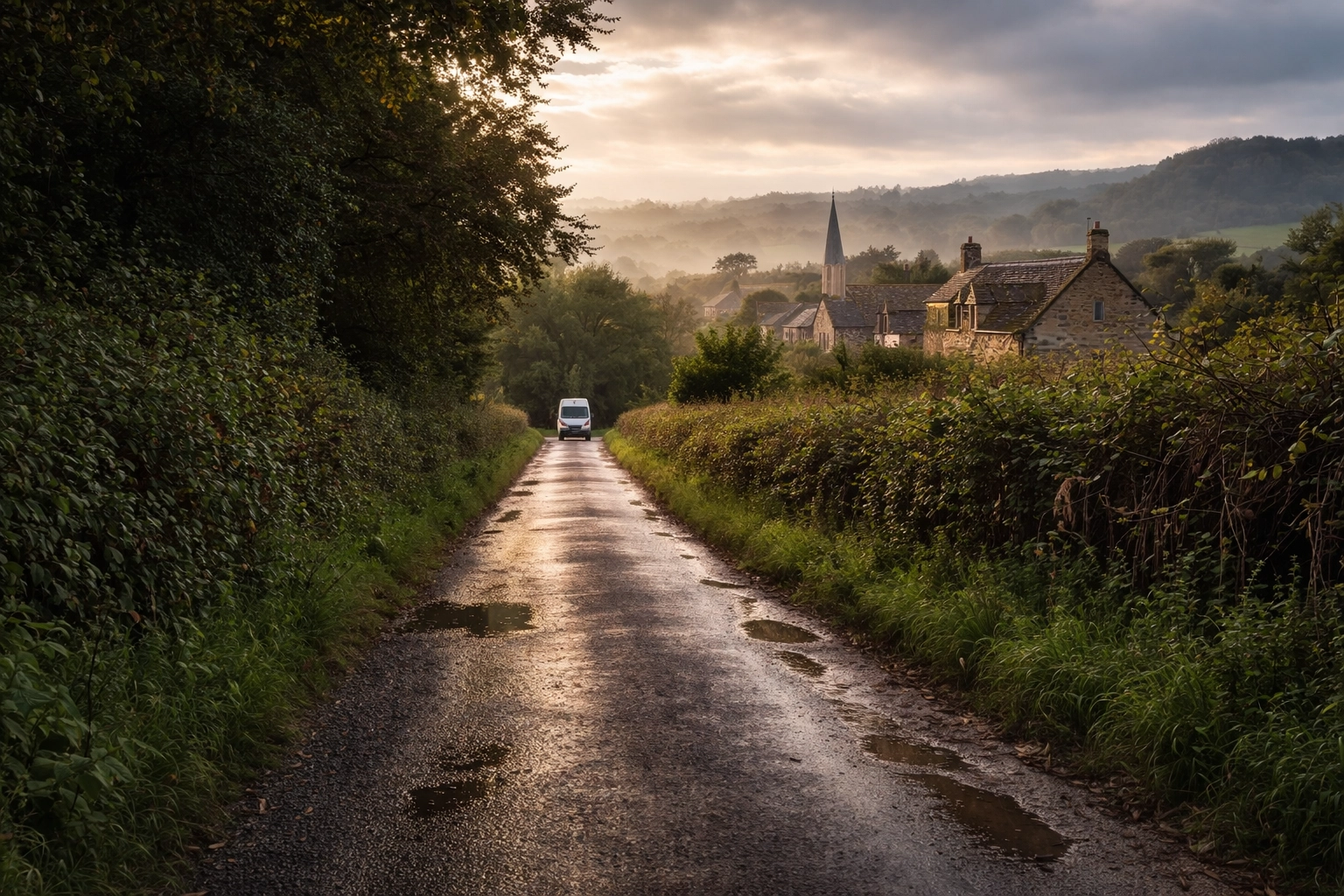
You stop when something hits you in the chest. You linger when the light turns the stone gold and the world goes quiet for a second. You eat lunch somewhere chosen because it smells right, not because it can process fifty people in an hour.
And at the end of it, you’re dropped back without the zombie shuffle off a crowded coach, without the vague disappointment of having “seen” a lot but touched almost none of it.
The Anti-Tour Manifesto
Travel should leave a mark. Not just photographs on your phone, but something that shifts how you see things. That only happens when you're present, when you're paying attention, when you're not being managed.
The large group tour industry exists because it's efficient and it's cheap. Those aren't inherently bad things. But efficiency and cheapness are not the same as meaningful. They're often the opposite.
A private tour is an anti-tour. It's a rejection of the herd mentality, the prescribed experience, the illusion that you can see a place by being funnelled through its greatest hits in six hours.
You can't. Nobody can. But you can see enough to fall in love with it. Enough to want to come back. Enough to understand why people have lived in these hills and valleys for thousands of years and never wanted to leave.
That requires time. It requires flexibility. It requires being with people you've chosen, in a vehicle that answers to you, driven by someone who knows more than the script allows.
Explore private tour options and find out what it means to actually see a place instead of just visiting it.