

Bath is a polite city with filthy origins. That’s not an insult. It’s the point.
Excerpt: Built on a hot spring that never clocks off, Bath is equal parts Roman steam and Georgian stone—primal heat under rigid elegance. Come for the Roman Baths, the golden crescents, and a slow afternoon in long shadows. Stay for the mineral tang in the air and the truth behind the Jane Austen façade.
Everything you came for—those clean Georgian lines, the honey-coloured Bath stone, the crescents laid out like they were designed by a man with a ruler and a grudge—sits on top of something older and wetter and weirder. A hot spring that never clocks off. Water that’s been underground so long it comes back up tasting like rock and time and old pennies. Water that built a town, bankrolled an empire of leisure, and has been pulling the same trick on visitors for two thousand years: come closer. Put your face in the steam. Believe in something.
This is a pillar guide to Bath with the water as the main character—ancient, hot, mineral-heavy—and the city as its costume changes. Roman grit below. Georgian choreography above. And in between: the Art of the Slow Afternoon, where you stop trying to “see everything” and let the stone and steam do what they’ve always done—work on you.
If you’re looking at tours to Bath, or weighing up a Bath day tour from London, understand what you’re buying: not just a photogenic town, but a collision of primal heat and rigid elegance you can feel in your lungs.
The Water: Bath’s Oldest Resident (and the Only One Who Doesn’t Lie)
Bath’s spring doesn’t care about your itinerary. It rises at around 46°C, day after day, dragging minerals up through limestone like a confession you can’t take back.
You smell it before you see it: a faint sulphur tang, a metallic edge, the kind of aroma that says medicine and money in the same breath. This is not “refreshing.” It’s heavy. It’s persuasive. It coats the back of your throat. It lingers.
The Celts were the first to treat it like a god. They called this place Aquae Sulis and offered devotion to Sulis, the local power in the water. Then the Romans arrived around 70 CE, took one look at the spring and did what Romans always do when they meet something sacred: they organised it. Engineered it. Put stone walls around it. Charged admission in spirit, if not in coin.
You can pretend Bath is just a pretty set of Georgian streets. But the water’s been here longer than the manners. It’s the reason any of this exists.
The Roman Baths: Steam, Lead, and the Original Wellness Scam (That Still Works)
Then you step into the Roman Baths complex and the temperature changes. Not dramatically—this isn’t a sauna—but just enough to remind you that the earth underneath Bath is alive.
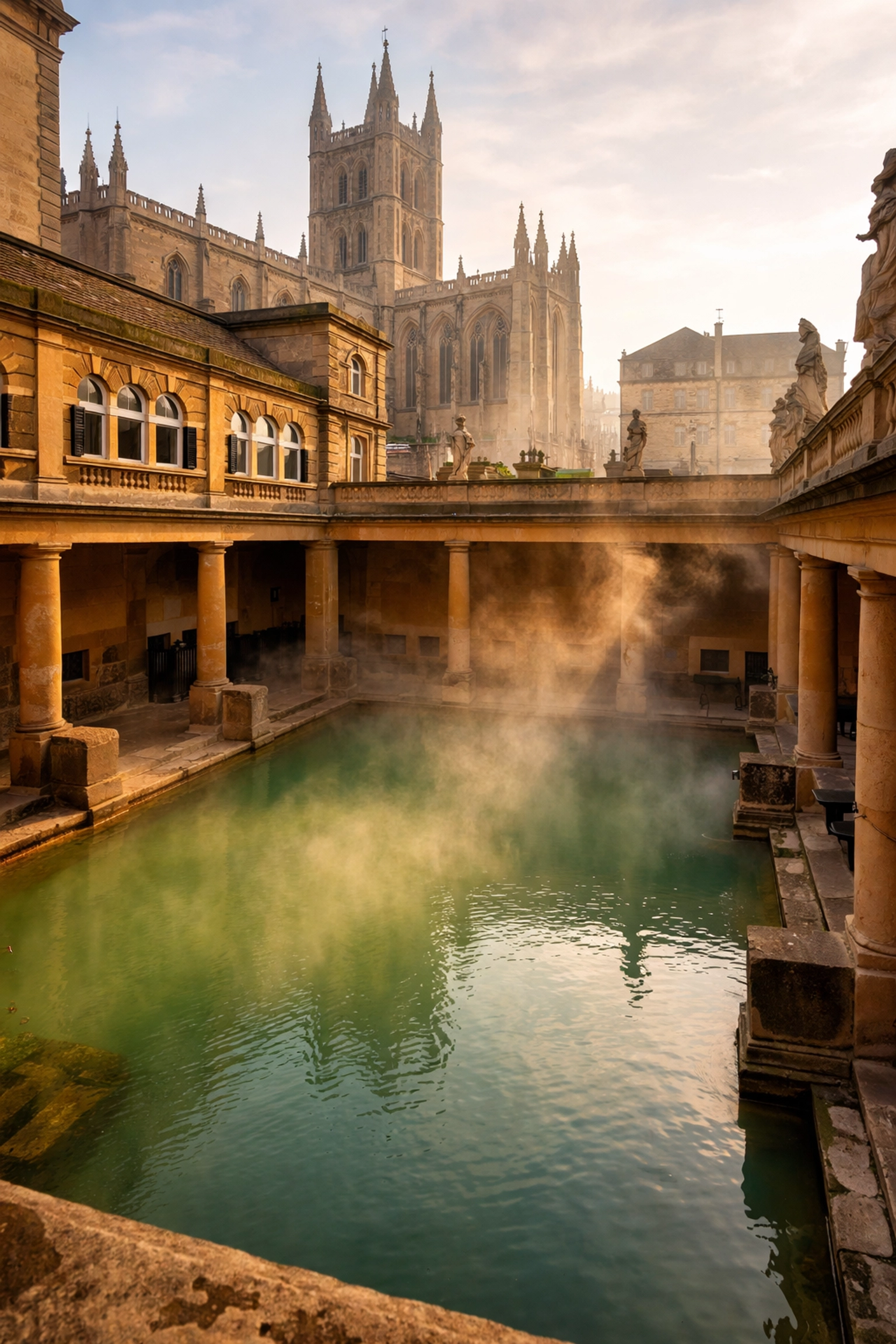
The Great Bath sits there like a green eye. Steam lifts off it in lazy sheets, the way cigarette smoke used to hang in kitchens before everyone decided to live forever. The water is the same source, the same heat, the same mineral punch. Two thousand years of continuity in a country that can’t keep a pub open for ten.
The Romans turned this into a machine for hygiene, gossip, business, and power—part temple, part health club, part social sorting hat. There were hot rooms and warm rooms and cold plunges. There were lead-lined pipes and stone drains and a system that makes you feel slightly ashamed of modern plumbing.
Underneath the polite museum lighting, the place is still brutal. Stone slicked by centuries of feet. Walls that held heat and breath and the stink of bodies. People came here to feel better, to look important, to be seen. Same as now—just with fewer phones and more knives.
And then there are the curse tablets: thin sheets of lead scratched with grievances. Not grand, operatic tragedy—small, human rage. Someone stole a cloak. Someone wronged someone. Someone wants Sulis Minerva to take a stranger’s eyes. It’s petty. It’s perfect. It’s history without the varnish.
Bath Abbey: Light on Stone, and the Weight Under Your Shoes
A few steps away, Bath Abbey rises up, pale and confident, like it’s trying to launder the whole neighbourhood.
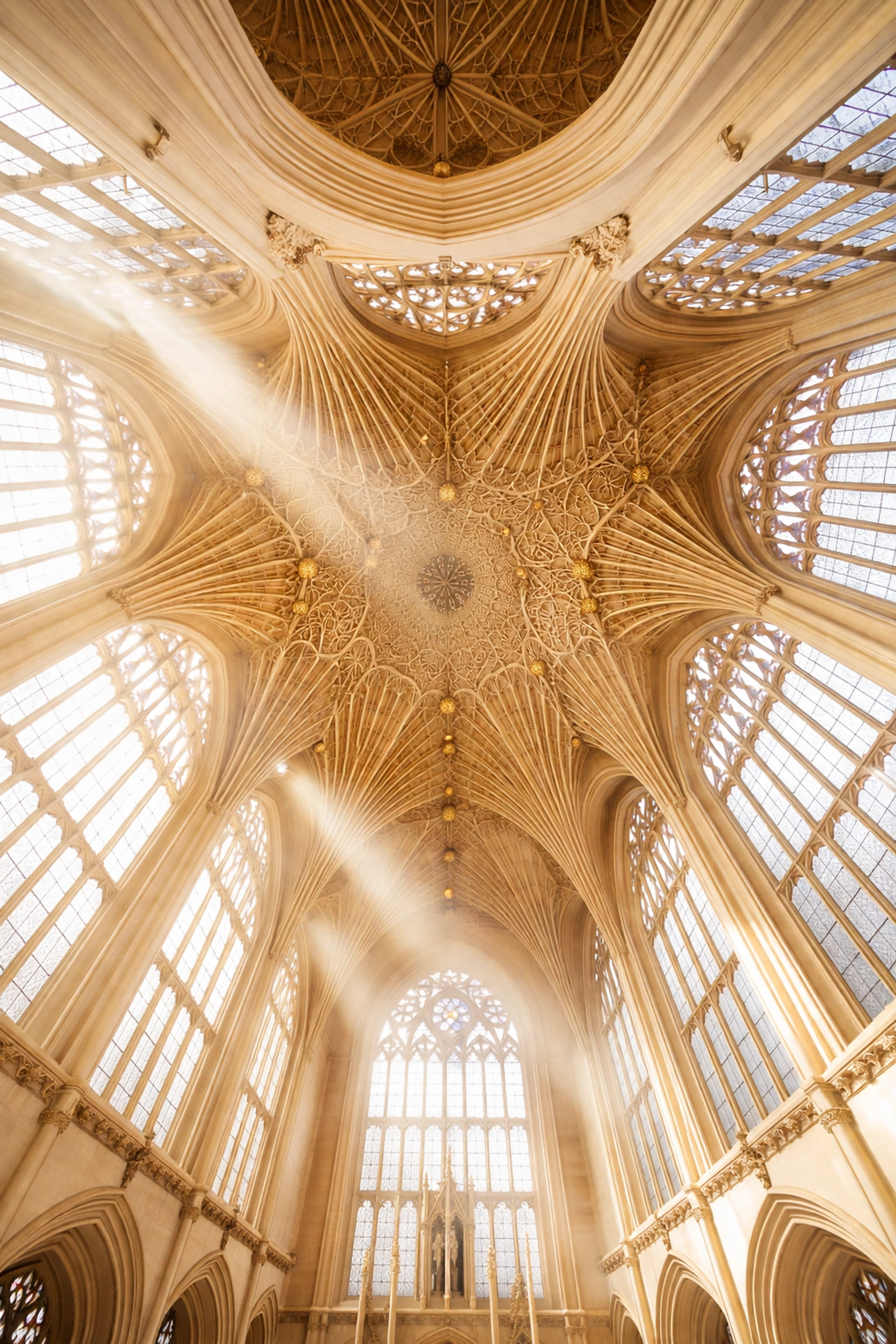
Inside, the light is generous—52 windows pouring it down onto the nave—so bright it almost feels like an argument. The fan vaulting overhead is a reminder that people once devoted lifetimes to making stone do impossible things.
But look down. Always look down in Bath.
The floor is packed with memorial stones—names, dates, professions, little carved announcements of ambition and belonging. You’re walking on the evidence. The city’s been selling relief—spiritual, physical, social—for centuries. The Abbey is the clean version of that story. The Baths are the sweaty version. Both are true.
Georgian Bath: Golden Stone, Rigid Lines, and the Theatre of Respectability
Bath’s Georgian face is what most people come for—the Instagram crescent, the symmetrical terraces, the colour of toasted bread when the sun hits right.
The thing about Bath stone is that it photographs like a dream and ages like a human. In the afternoon, it warms up. It throws long shadows. It’s soft enough to carve, and hard enough to last. It makes the whole city look expensive even when you’re standing next to a bin that smells like last night.
The Royal Crescent is the crown jewel—thirty houses arranged in a sweep of controlled grandeur, a façade so disciplined it feels like it could slap you if you stood up straight wrong. From the front it’s one unified statement; from the back it’s messy, individual, compromised—because people are messy and individual and compromised. Bath just prefers you don’t show it from the street.
The Circus is the same idea, but tighter. A perfect ring of townhouses with details most people never notice because they’re too busy taking the wide shot. Look up at the frieze: symbols and little obsessions carved into stone. The 18th century had its own conspiracies, its own secret clubs, its own coded language. They just dressed it better.
And then there’s Pulteney Bridge, shops built right onto the crossing like commerce couldn’t bear to waste the view.
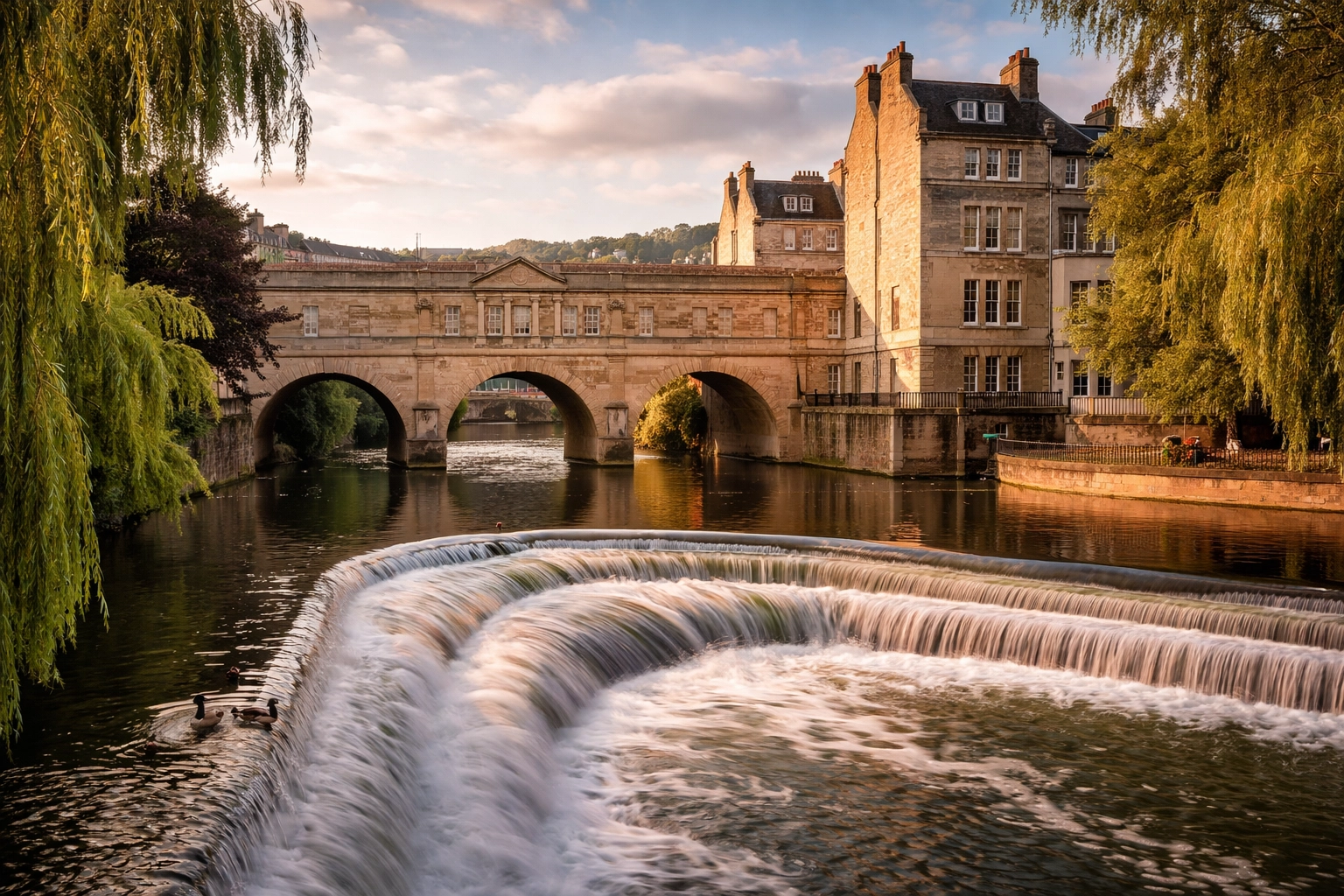
Stand by the weir and listen to the water battering itself into white noise. That sound has been here through fashions, wars, scandals, and renovations. The city keeps rearranging its costume. The river just keeps moving.
Regency Scandals: The Grit Behind the Jane Austen Facade
People like to talk about Bath like it’s all gloves and manners. Like it’s all Jane Austen strolls and polite conversation in rooms that smell faintly of tea.
Sure. That’s the brochure version.
The Regency economy of Bath was built on leisure, which means it was built on other people’s labour—and on a social scene that ran on surveillance, money, and reputation. You came to Bath to be seen, to marry well, to hide what you couldn’t fix, to cure what wasn’t curable, to gamble on a new version of yourself. The city was a stage, and the tickets were expensive.
Those Assembly Rooms weren’t just places to dance; they were places to be judged. The Pump Room wasn’t just a “pleasant stop”; it was a ritual of belonging: you drank the water because everyone else did, because tradition has a way of turning discomfort into virtue.
And yes, you can still drink it.
The spa water is warm and mineral-heavy and tastes like you’re licking a clean coin. There’s a sulphur note that makes you think of old plumbing and distant thunder. It’s not delicious. It’s not meant to be. It’s a handshake with the city’s oldest power source.
Jane Austen hated Bath’s performance of itself. Too many people playing roles. Too much money anxiety dressed up as elegance. She saw the cracks in the golden stone—and wrote them into fiction with a smile sharp enough to draw blood.
The Art of the Slow Afternoon: Stone Crescents, Long Shadows, and Doing Less on Purpose
Bath is not a city you conquer. It’s a city you drift through.
This is where the slow afternoon matters. Not the “relaxation” the wellness industry sells you—more honest than that. A deliberate loosening. You walk without hunting. You let the streets pull you.
Start around the Roman Baths when the morning crowds thin, then climb toward the Georgian heights. The streets narrow and open again. The stone changes colour as the light turns. Those crescents up on the hill can feel like a film set—too perfect, too composed—until you remember they were built by hands that blistered and bled, by men who died young, by a city spending money it had because the water kept printing it.
Find a bench on the Royal Crescent lawn. Let the shadows lengthen. Watch the city do what it does best: look composed while it sweats history out through the cracks.
This is Bath’s luxury—real luxury. Not the price tag. The permission to take time.
Hidden Grit and Small Pleasures (The Bath You’ll Remember)
Most London to Bath tours will deliver you to the icons: Baths, Abbey, Crescent. Fair. They’re worth it. But the city’s flavour lives in the in-between.
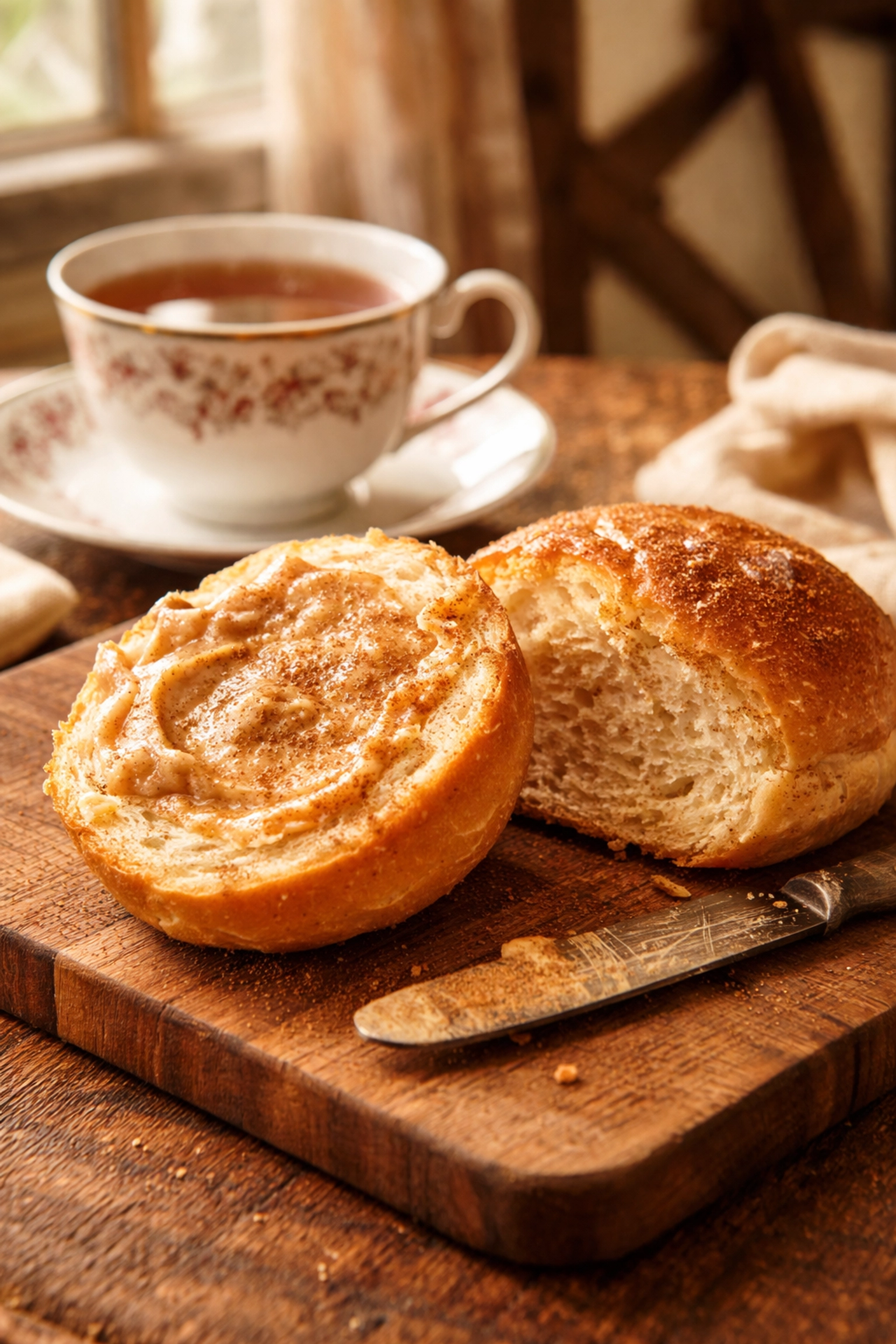
Sally Lunn’s is the kind of place that survives because it feeds people, not because it’s cute. An old building with low ceilings and a sense of continuity you can taste. Order the bun. It’s soft, slightly sweet, and absurdly comforting—exactly the kind of food that makes a damp English afternoon feel like it has a point.
If you need air, walk out to Prior Park Landscape Garden and look back at Bath from a distance. The city becomes a spill of stone in a bowl of green, less perfect, more human.
Logistics: Getting to Bath From London Without Ruining Your Day
Bath sits about 115 miles west of London, and the way you arrive shapes the whole experience.
- Train (London Paddington to Bath Spa): fast, easy, and you’ll share it with a lot of other people with the same idea. When you step off, the city centre can feel like a funnel.
- Car: doable, but Bath was not built for modern driving or parking. One-way streets, restricted zones, and the slow grind of finding a space can drain the pleasure out of the day.
- Small-group day tour: if you’re booking a Bath day tour from London and you want the city’s calm without the logistical bruises, this is the sweet spot. Shakespeare Coaches runs small group tours from London on a luxury 16-seater—more breathing room, less herding, and you arrive like a human instead of a commuter. See options for a London to Bath tour.
When to Go (Because Light Changes Everything Here)
Bath looks different depending on the season because Bath is basically a city made of light-reactive stone.
- Spring (April–May): cleaner air, longer days, fewer queues.
- Autumn (September–October): the best light—gold on gold—without peak summer crowds.
- Winter: cold air, steam rising harder, and that rooftop-spa feeling if you do Thermae.
- Summer: busy, but if you start early and slow down late, you can still find your own version of quiet.
Leave With the Water in Your Mouth
Bath isn’t just “a pretty place to visit.” It’s a city where ancient heat keeps pushing up through the ground, and everyone—Romans, Georgians, modern spa-goers—has tried to turn that heat into a story they can sell.
But if you do it right, the city doesn’t feel sold. It feels earned.
You’ll remember the smell of minerals. The hiss of steam. The way Bath stone holds the last light of the day. The shadows under Georgian cornices. The sense that under all this elegance, something older is still breathing.
If you want Bath without the hassle, our tours to Bath run as luxury small-group tours from London (max 16 seats), so you get the slow afternoon without the logistical bruising.