

There's a moment: you know the one: when the glass arrives. The barkeep sets it down, and the foam settles into a crown, and the amber catches whatever light the room has to offer. Maybe it's a shaft of afternoon sun through a leaded window. Maybe it's the glow of a fire that's been burning since morning. You haven't taken a sip yet, but something in you already exhales.
This is why we travel. Not for the postcard views, though those come too. But for these small, accumulated rituals. The weight of a proper pint glass. The cool condensation on your palm. The first taste after a morning spent wandering cobblestones and standing in churchyards where the dead outnumber the living.
The Cotswolds understands this. The region has been brewing ale since monks first figured out that barley, water, and time could produce something close to grace. And while the tour buses crowd the car parks of the obvious villages, there's a quieter route through these hills: one that threads through places where the pint in your hand was brewed a few miles down the road, where the cellar temperature hasn't changed in a century, and where nobody's in any particular hurry.
This is a guide to seven of those pints. Seven stops on our Shakespeare's Stratford & Cotswolds Tour. Seven reasons to let someone else do the driving: past the Lavender Farm’s tidy rows and the distant lump of Broadway Tower, seen through the coach glass in those quiet stretches where nobody talks much, and you can actually hear yourself think.
1. Stratford-upon-Avon — The Garrick Inn: Where It Begins
You start where Shakespeare drank. Or at least, where he almost certainly drank: the Garrick Inn has stood on High Street since the fourteenth century, and the Bard lived just around the corner. The timbers are black with age. The ceilings are low enough to make you duck.
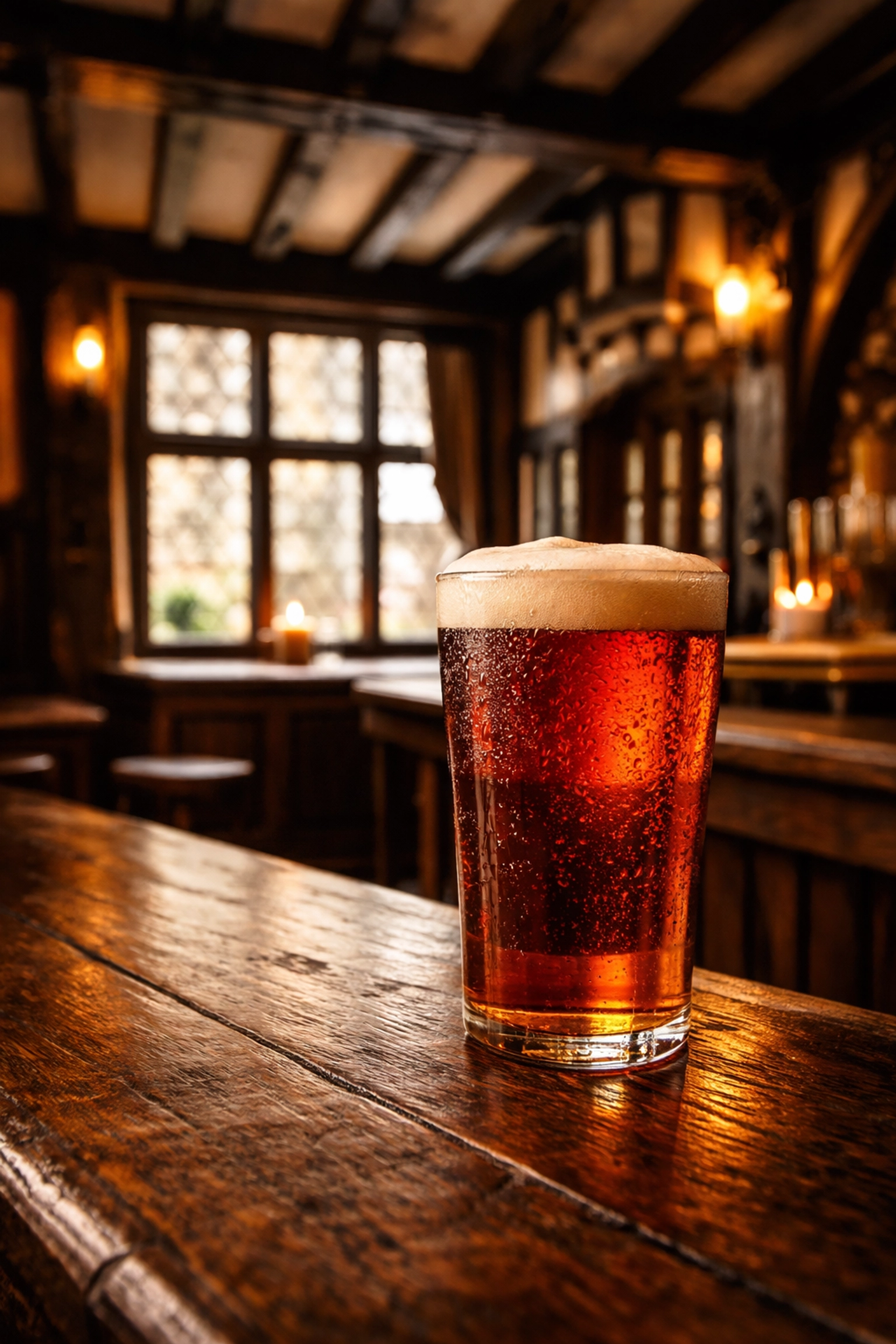
The pint here sets the tone. Order whatever's pulled from the hand pump: usually a proper English bitter, copper-coloured and sessionable, with that characteristic earthiness that mass-produced lagers have spent decades trying to engineer out of existence. It arrives at cellar temperature, which means cool but not cold. This is important. Cold numbs. Cellar temperature lets you taste the malt, the subtle bitterness, the faint sweetness underneath.
This is the first ritual of the day. Time to recalibrate your mouth and your mind. Sit near the window if you can. Watch the tourists flow past on their way to Anne Hathaway's cottage. You’re not rushing anywhere. The coach is waiting, and the driver knows the back roads.
2. Chipping Campden — The Eight Bells: The Quiet Corner
Chipping Campden is one of those villages that feels preserved in amber. The high street curves gently, lined with honey-stone buildings that haven't changed much since wool merchants made this place rich. The Eight Bells sits at the edge of it all, next to the church with its soaring perpendicular tower.
The ales here tend toward the traditional. You might find something from a Gloucestershire brewery, or a guest ale that the landlord liked enough to put on. The room is low-lit and unhurried. There's usually a corner where you can disappear with your thoughts and your glass.
What strikes you, sitting here, is the continuity of it. People have been doing exactly this: sitting in this kind of room, drinking this kind of beer: for five hundred years. The recipe might vary. The ritual doesn't. You drink. You think. You watch the light change through the old glass.
3. Snowshill Village — The Snowshill Arms: The Donnington SBA
Now we get to the heart of it.
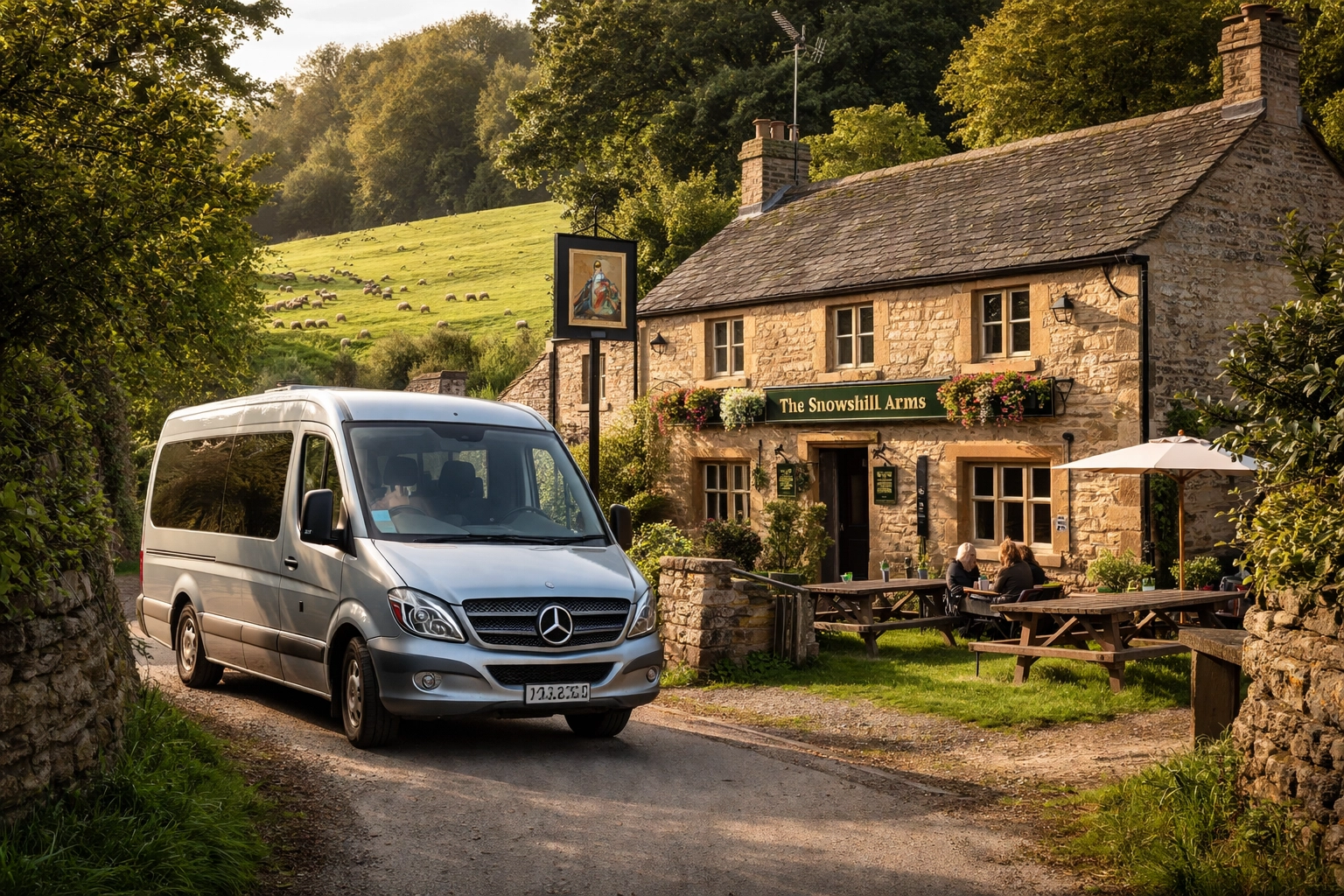
Snowshill is a village that most visitors never see. The roads narrow to single-track lanes. The tour coaches physically cannot fit. Which is precisely why our 16-seater exists: to slip through the gaps, to reach the quiet taproom that rewards the extra effort. This is one of those places you don’t “swing by” in a big bus. You arrive the way you’re meant to arrive: small, contained, and slightly humbled by the lanes.
The Snowshill Arms is a Donnington pub. If you don't know Donnington Brewery, you're about to have a conversion experience. They've been brewing in Stow-on-the-Wold since 1865, using water from a spring-fed lake and methods that haven't fundamentally changed since Victoria sat on the throne. They don't advertise. They don't need to. They supply about fifteen pubs in the Cotswolds, and that's enough.
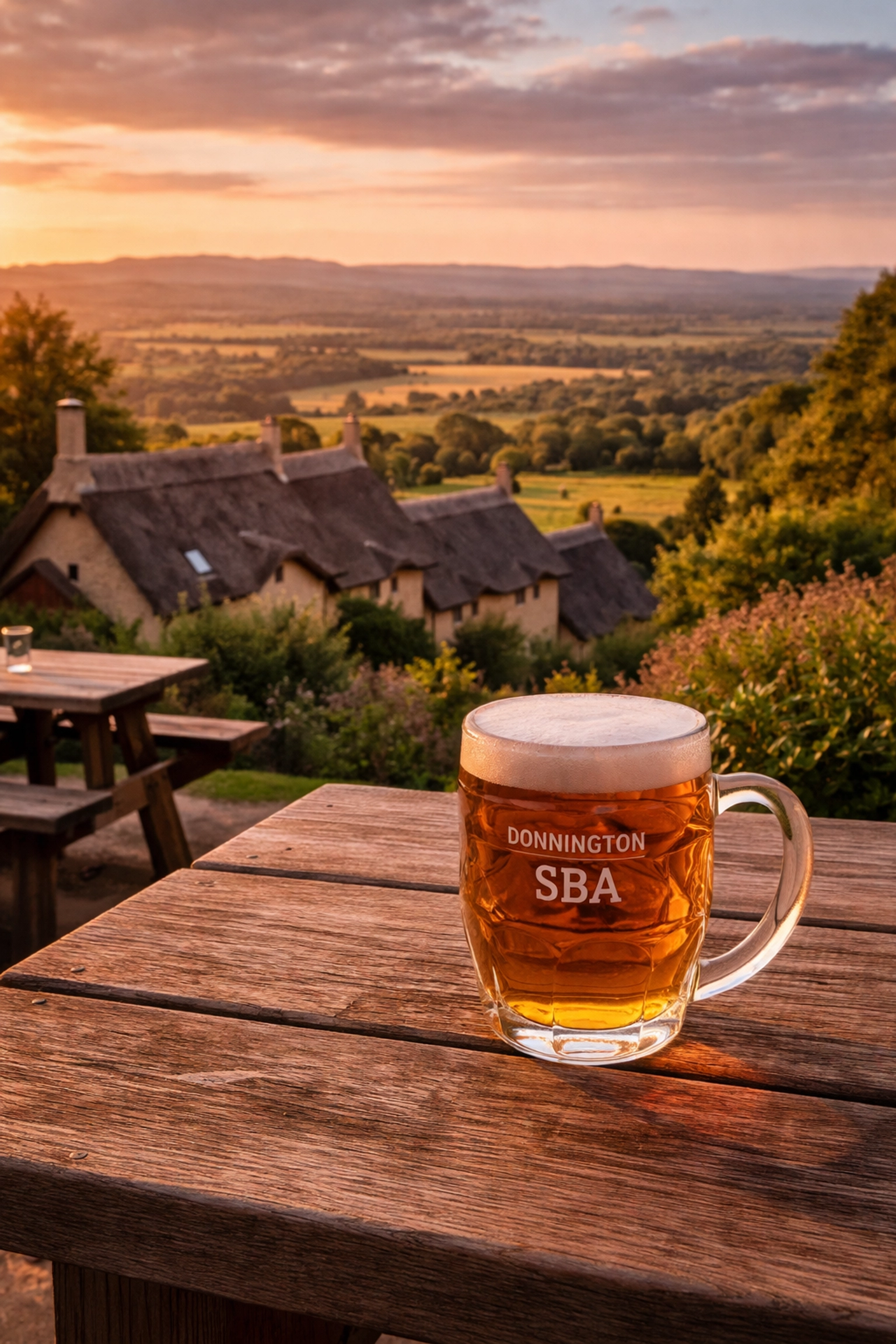
Don’t overthink it. Highlight the Donnington SBA. Donnington's flagship bitter. It pours a deep gold, almost tawny, with a head that clings to the glass. The taste is clean and balanced, with a hint of nuttiness and a dry finish that invites another sip. It's built for the ritual: lift, sip, breathe out, repeat.
The pub itself is modest. Stone floors, simple wooden furniture, a small beer garden where you can sit and watch the sheep graze on the hillside opposite. Nothing fancy. Everything right.
4. Stow-on-the-Wold — The Porch House and The King's Arms: Drinking in Deep Time, Then Coming Back to Yourself
Lunch is where the day either falls apart or locks into place. Stow is built for it: a market town with wind-worried streets and old stone that looks like it’s been sanded down by centuries of people just trying to get on with it.
The Porch House claims to be the oldest inn in England. The dating is contested: these things always are: but the building certainly goes back to 947 AD, when it was part of a Saxon settlement. The walls are made of stone that was ancient before the Normans arrived.
The beer selection leans toward well-kept cask ales, often including a proper English bitter or a pale ale from one of the regional breweries. But what you're really drinking here is atmosphere. The low beams. The uneven floors worn smooth by a millennium of feet. The sense that you're participating in something very, very old.
And then you step out and do the mid-day restorative at The King's Arms. A different room, different energy. The pint tastes like a reset button: something clean, pulled properly, served without drama. You feel your shoulders drop. The ritual does what it’s always done. It makes you ready for the road again.
5. Bourton-on-the-Water — The Mousetrap Inn: The Independent Spirit
Bourton-on-the-Water is the most visited village in the Cotswolds, which means it can feel overwhelming. The River Windrush runs through the centre, crossed by low stone bridges, and on summer weekends, the banks are packed with day-trippers.
You’re not here to conquer it. You’re here to find one good room and one well-kept pint.
The Mousetrap Inn offers refuge. It's a proper free house: independent, unchained: which means the beer selection reflects the landlord's taste rather than a corporate mandate. You might find a craft IPA alongside a traditional mild, a local cider next to something experimental from a microbrewery in Bristol.
The vibe is unpretentious. There's often a dog asleep near the bar. The regulars nod but don't intrude. You drink your pint and remind yourself that even in the busiest places, there are corners of authenticity if you know where to look.
6. Bibury/Arlington Row — The Swan: The Final Ritual
The day ends at Bibury, which William Morris once called the most beautiful village in England. Arlington Row: that famous line of weavers' cottages: appears on postcards and biscuit tins worldwide. But you're not here for the photographs.
The Swan is a seventeenth-century coaching inn on the banks of the River Coln. The terrace overlooks the water, where trout drift in the shallows and swans glide past with that peculiar dignity they have.
Order whatever calls to you. A golden ale, perhaps, something light and crisp to mark the end of the journey. Sit by the river. Watch the light fade. Think about the miles covered, the villages wandered, the pints consumed.
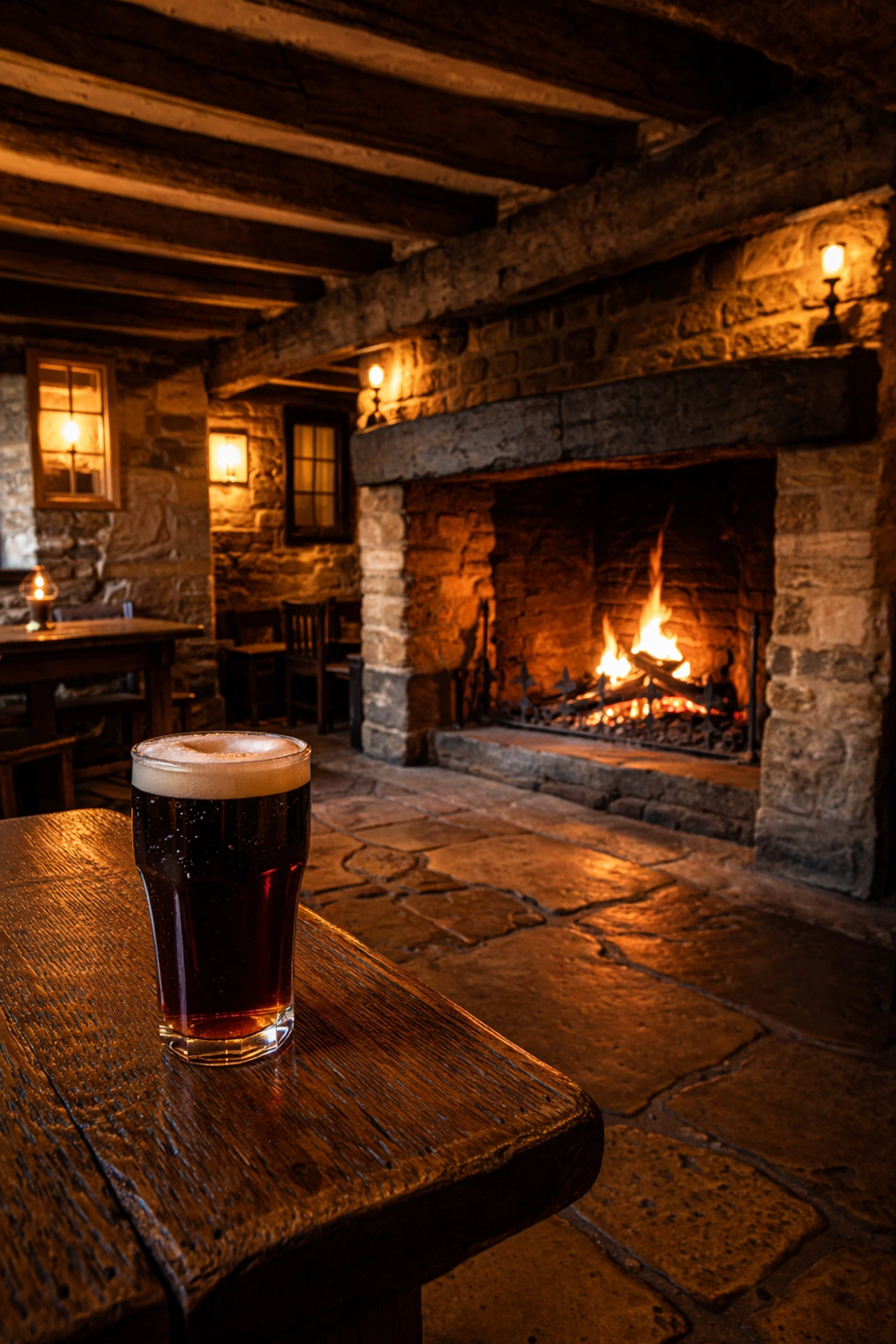
This is how it should be done. Not rushed, not crowded, not sanitised for mass consumption. Just you, a glass, and a series of rooms where people have been doing exactly this for longer than anyone can remember.
Our 16-seater coach makes it possible—especially Snowshill. That quiet taproom doesn’t belong to the big coaches. The lanes won’t take them. The turnarounds won’t forgive them. The whole point is that you can reach it only by travelling small and patient, slipping between hedgerows like you mean it.
Somewhere between villages, the road goes quiet. Lavender Farm drifts by in neat, perfumed geometry. Broadway Tower shows up on the horizon like a thought you can’t quite finish. Nobody’s narrating. The pint you had is still on your palate. This is part of the ritual too.
You just drink. And think. And watch the Cotswolds unfold, one pint at a time.