
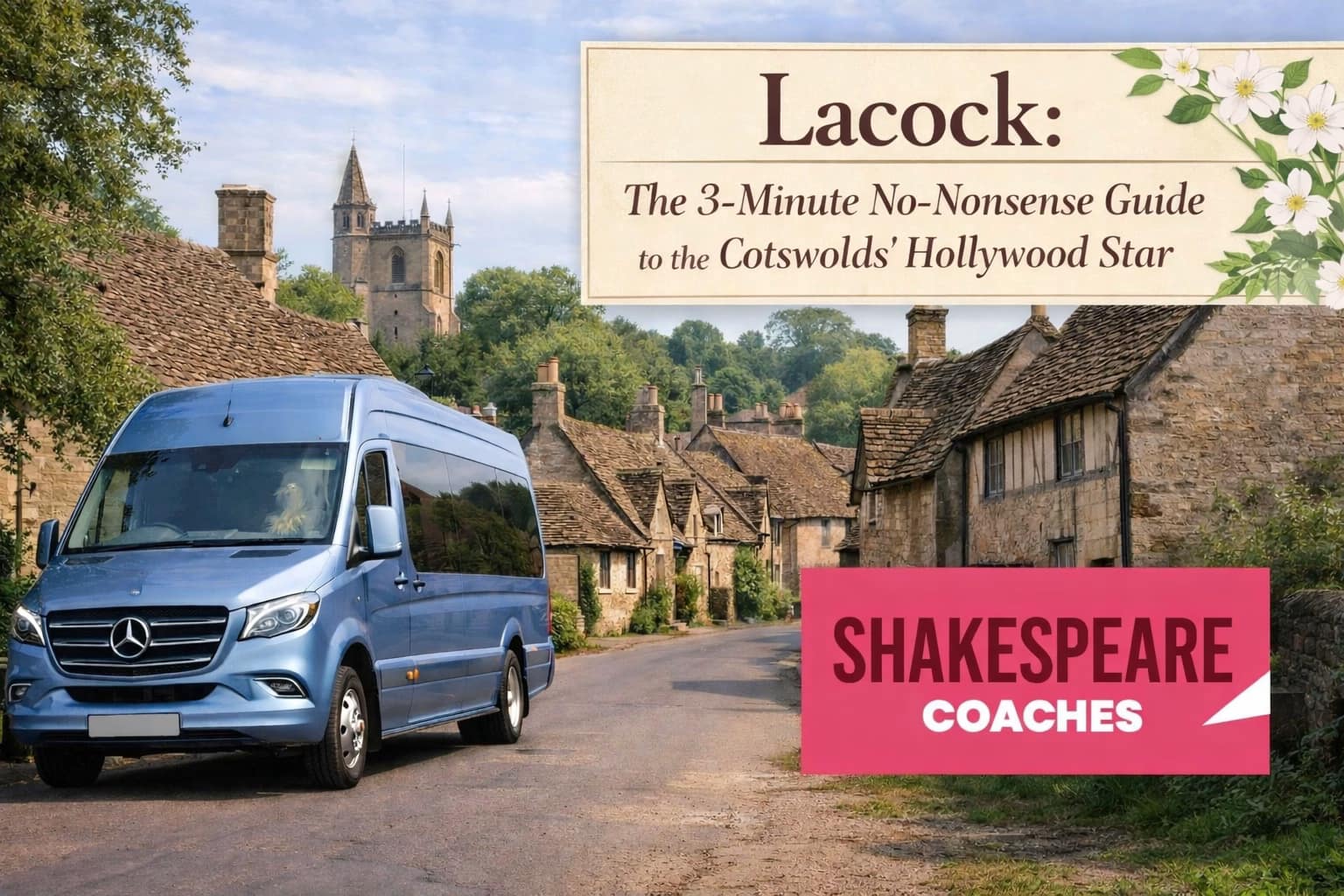

If you’ve ever sat on your sofa watching a period drama and thought, "I wish I could live in a place where the 21st century simply doesn't exist," then Lacock is your spot.
Walking into Lacock isn't just a day trip; it’s a literal step back in time. There are no overhead power lines, no yellow lines on the roads, and no satellite dishes stuck to the sides of medieval cottages. It is, quite arguably, the most preserved village in England. At Shakespeare Coaches, we’ve taken thousands of people across the Cotswolds, and Lacock always wins the "most likely to make you feel like a movie star" award.
Here is the no-nonsense guide to everything you need to know about this Wiltshire wonder.
The Secret to the Time Capsule: The National Trust
The first thing you need to understand about Lacock is that it’s not your average village. Almost the entire place: the houses, the land, the Abbey: is owned and managed by the National Trust.
Because of this, the village has been frozen in the 18th century. The residents (about 200 of them) are National Trust tenants. They can’t just go out and install a neon sign or a plastic front door. This strict preservation is exactly why Lacock is the first port of call for every major film director in the world.
The Hollywood Portfolio: Where Have You Seen This Before?
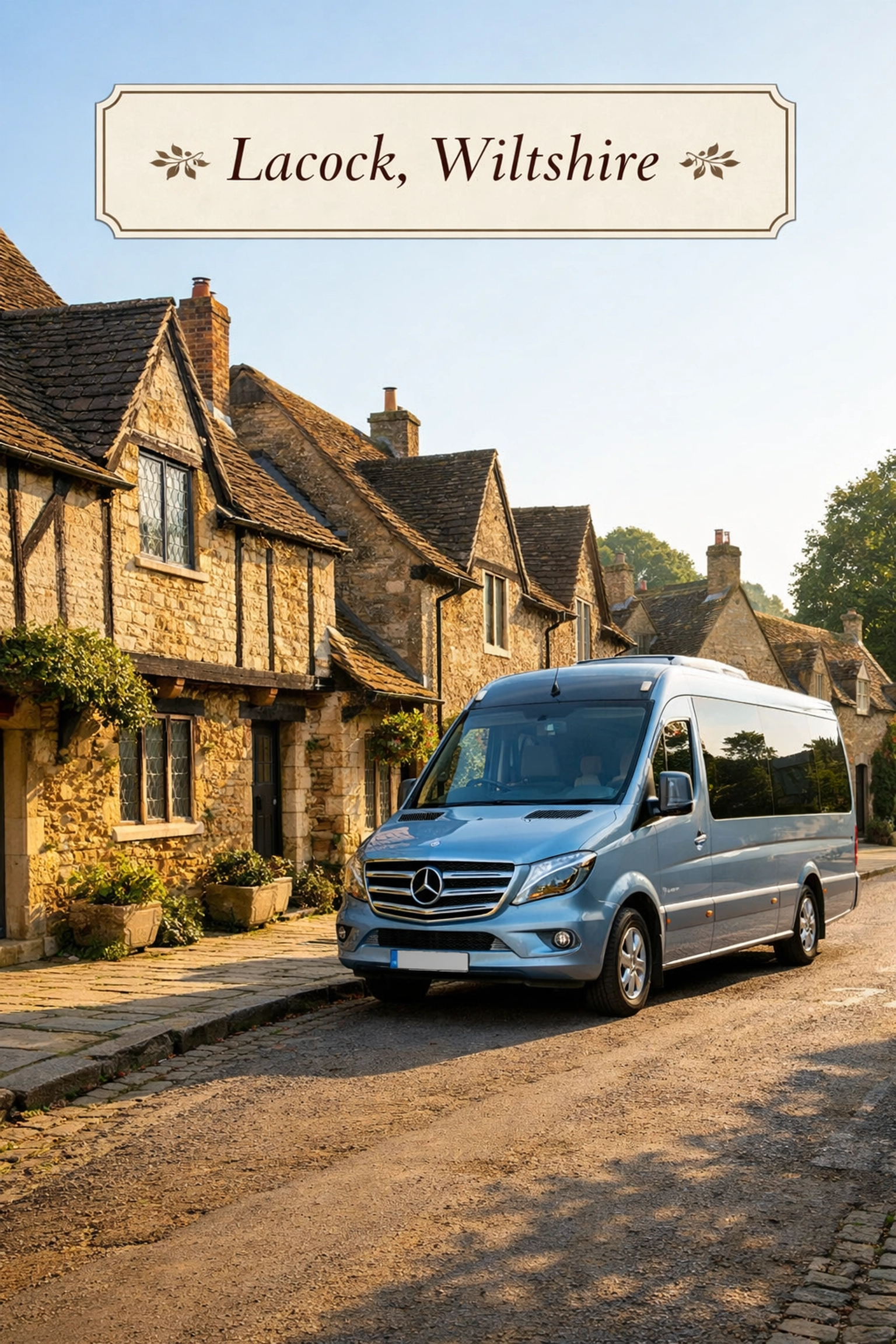
If you feel a sense of déjà vu while walking down Church Street, it’s because you’ve probably seen it on a 50-foot screen. Lacock is effectively a permanent film set. If you are looking for a Lacock guide that covers the "Greatest Hits," here is the filmography:
1. Harry Potter
The cloisters of Lacock Abbey served as the hallways of Hogwarts. You’ll recognize the specific spots where Harry, Ron, and Hermione walked between classes. Specifically, the Abbey’s Sacristy was used as Professor Snape’s Potions Class. If you stand in the quiet stone rooms, you can almost hear the "turn to page 394" echoing off the walls.
2. Pride & Prejudice (1995)
For the "real" Jane Austen fans (the ones who swear by the Colin Firth version), Lacock is the village of Meryton. This is where the Bennett sisters walked to look at ribbons and flirt with officers.
3. Downton Abbey
In the later seasons and the first feature film, Lacock’s streets were transformed into a livestock market. The village didn't even need much work; the crew just added some straw to the ground and moved the cars, and: presto: it was 1927.
4. Fantastic Beasts: The Crimes of Grindelwald
The wizarding world returned to Lacock to film scenes at the Abbey, further cementing its status as the spiritual home of British magic.
The Big Three: What to Actually See
You can walk the whole village in about 15 minutes, but if you want to do it right, you need to hit these three spots.
1. Lacock Abbey
Founded in 1232 as a nunnery, the Abbey has a wild history. It survived the Dissolution of the Monasteries when King Henry VIII sold it to a local bigwig who turned it into a country house. It’s a bizarre and beautiful mix of medieval stone and Renaissance luxury.
- Don't Miss: The cloisters. Even if you aren't a Harry Potter fan, the vaulted ceilings are incredible.
2. The Fox Talbot Museum
Lacock isn't just famous for movies; it’s actually the birthplace of photography as we know it. William Henry Fox Talbot, a former resident of the Abbey, created the first-ever photographic negative here in 1835. The museum is a fascinating look at how we went from painting portraits to taking selfies.
3. The 14th-Century Tithe Barn
Near the entrance to the village, you’ll find a massive stone barn with a timber roof. In the medieval days, this is where villagers brought a tenth of their farm produce as a tax to the church. It’s atmospheric, slightly spooky, and perfect for a photo op.
Why a Small Group Tour is the Only Way to See Lacock
Lacock is tiny. We’re talking "one main street and a few side lanes" tiny.
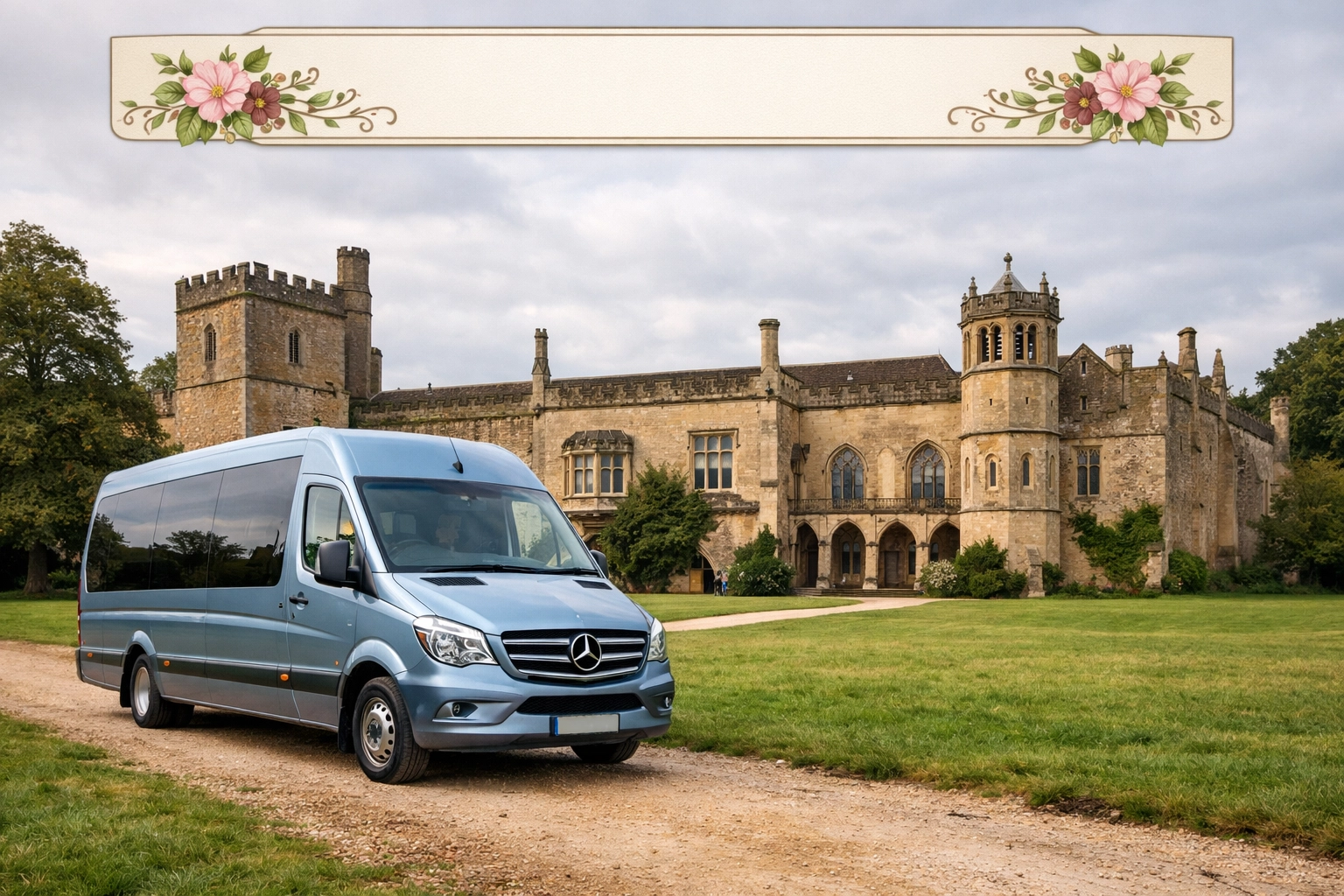
One of the biggest mistakes travelers make is trying to visit Lacock on a massive 50-seater coach. These giant buses can’t get into the heart of the village, and dumping 50 people at once into a quiet National Trust community ruins the very atmosphere you came to see.
At Shakespeare Coaches, we do things differently. Our Cotswolds Tours are capped at a 16–30 guests.
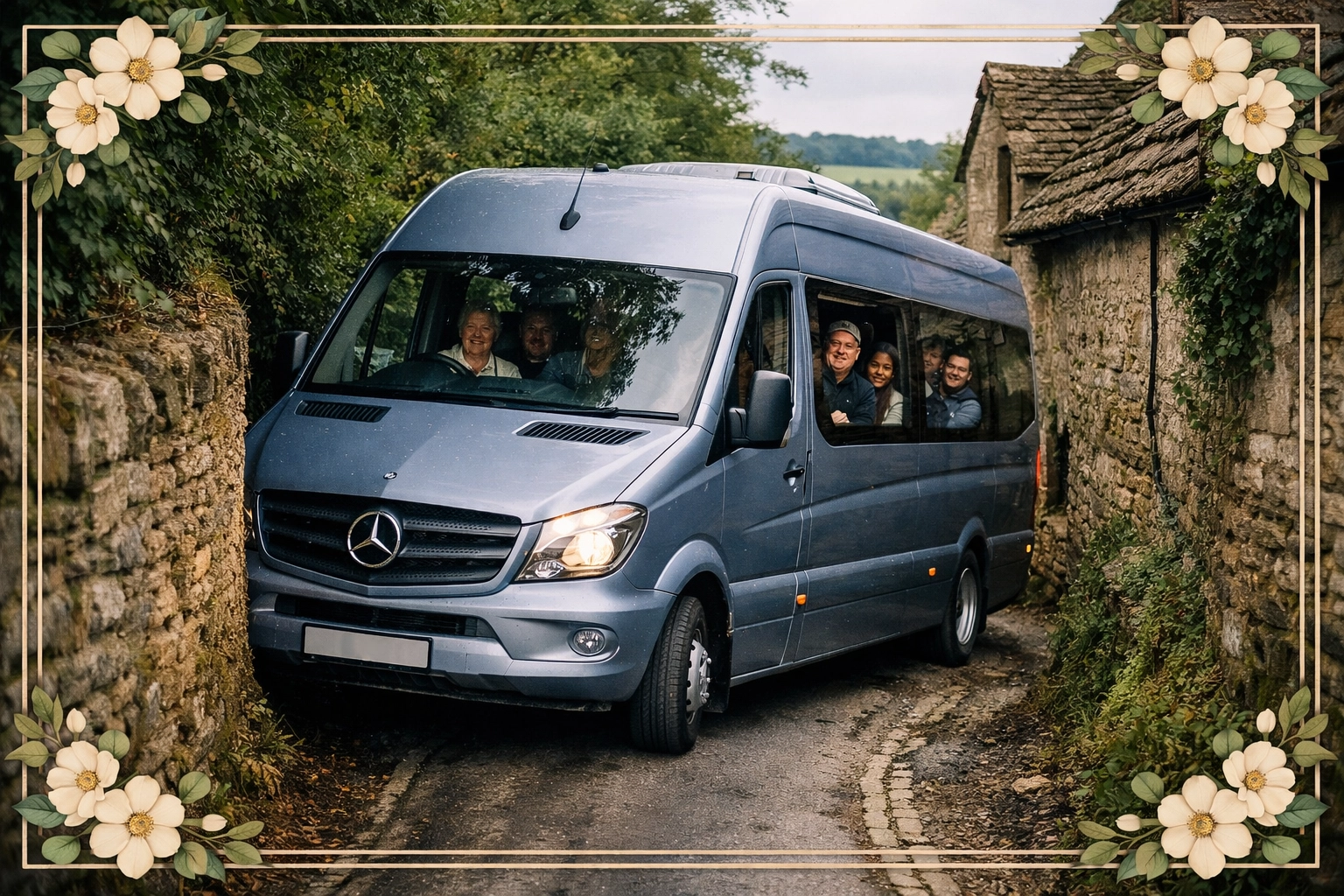
- Maneuverability: Our smaller coaches can navigate the narrow Wiltshire lanes that the big buses avoid.
- Intimacy: You get to hear the stories and local lore from our drivers without needing a headset.
- Access: We get you closer to the action, meaning less time walking from a distant car park and more time exploring the Abbey.
If you’re coming from London, our Cotswolds tour in a day is designed to give you the perfect balance of Lacock's history and its cinematic magic.
Eating and Drinking: The No-Nonsense Advice
If you’re hungry, you have a few classic options:
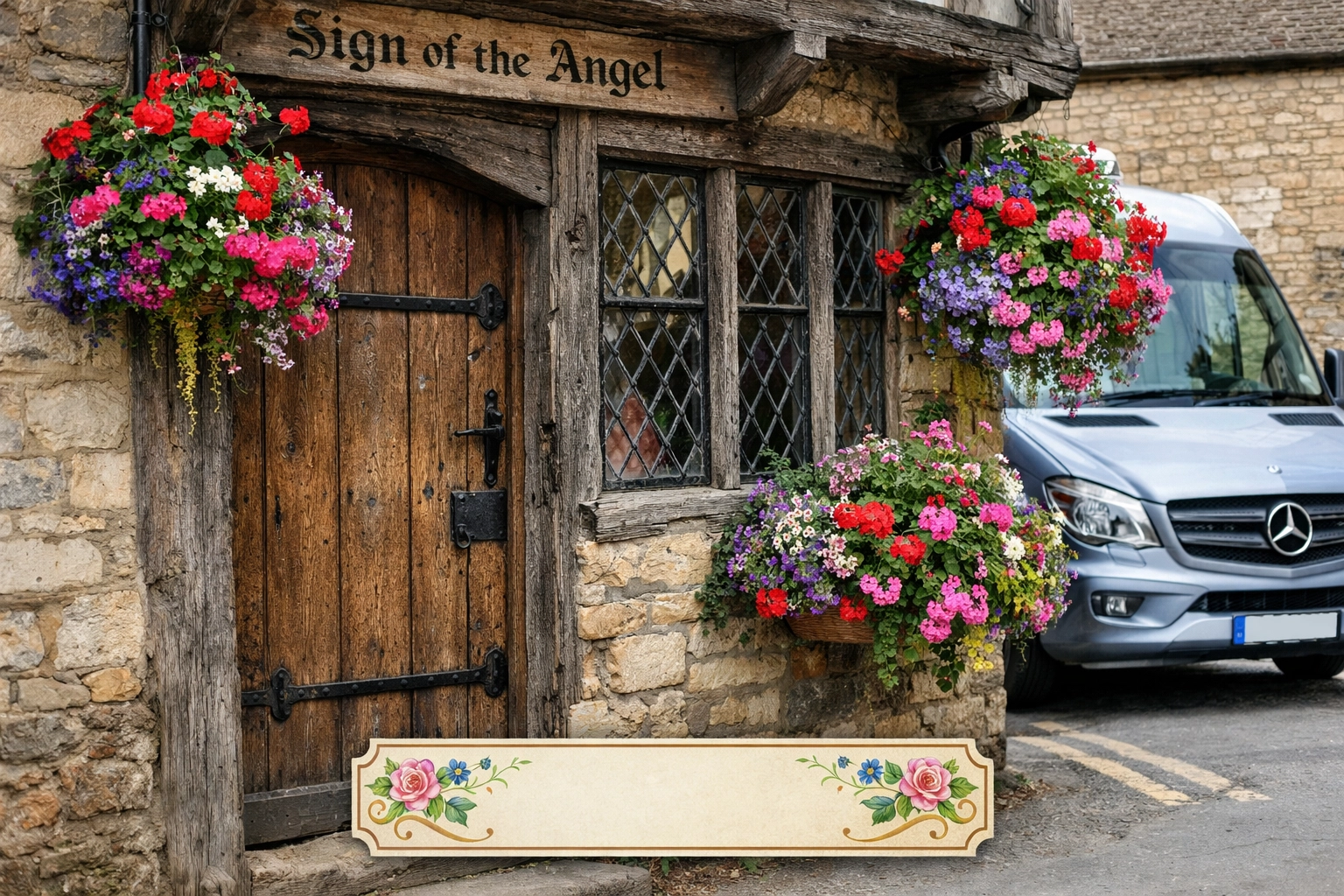
- The Sign of the Angel: A 15th-century coaching inn. It’s exactly what you imagine an English pub should look like: roaring fires, low ceilings, and uneven floors. Great for a proper sit-down lunch.
- The George Inn: Famous for its medieval "spit dog" fireplace (though don't worry, no dogs are used for cooking these days). It’s a great spot for a pint of local ale.
- The Bakery: Look for the local bakery window. Lacock is famous for its "honesty stalls" too: sometimes you’ll find locals selling cakes or jams on their doorsteps.
Practical Info for Your Visit
- Timing: Lacock gets busy during the middle of the day in summer. If you’re traveling with us, we try to time our visits to miss the biggest crowds.
- Footwear: Wear comfortable shoes. The streets are ancient, and the "pavement" is often just packed earth or uneven stone.
- National Trust Members: If you’re a member, bring your card! It gets you into the Abbey and the Fox Talbot Museum for free.
How to Book Your Lacock Adventure
Ready to see Hogwarts for yourself? Or maybe you just want to stand where Mr. Darcy stood? Either way, we’ve got you covered. We offer specialized group tours that depart regularly, ensuring you see the best of the Cotswolds without the stress of driving on the "wrong" side of the road.
Check out our Shakespeare’s Stratford-upon-Avon & Cotswolds Day Tour from London for a full day of history, or if you want something a bit more tailored, look into our 1-day private tours.
The Cotswolds Mega-Guide Series: The Top 25
Lacock is a heavy hitter, but it’s just one piece of the puzzle. We are ranking and reviewing the top 25 spots in the region. Check out the rest of our guides below:
- Bourton-on-the-Water – The Venice of the Cotswolds.
- Bibury – Home to the iconic Arlington Row.
- Castle Combe – Often called the prettiest village in England.
- Stow-on-the-Wold – The historic market town with the "Yew Tree Door."
- Chipping Campden – The jewel of the wool merchants.
- Lacock – (You are here!) The Hollywood star of Wiltshire.
- Broadway – The "Painted Lady" of the Cotswolds.
- Burford – The gateway to the region.
- Snowshill – Quaint, quiet, and full of quirks.
- Upper & Lower Slaughter – Twin villages of ultimate peace.
- Moreton-in-Marsh – The bustling market hub.
- Winchcombe – The walkers' paradise near Sudeley Castle.
- Painswick – The Queen of the Cotswolds.
- Tetbury – Royal connections and antique shops.
- Malmesbury – Ancient abbey and hilltop views.
- Cirencester – The "Capital" of the Cotswolds.
- Naunton – A hidden gem away from the tourists.
- Stanton – Pure, unadulterated honey-colored stone.
- Blockley – The filming home of Father Brown.
- Minster Lovell – Riverside ruins and thatched roofs.
- Woodstock – The doorstep to Blenheim Palace.
- Great Tew – Thatch as far as the eye can see.
- Chedworth – Roman history nestled in the valley.
- Wotton-under-Edge – Stunning views from the edge of the escarpment.
- Bampton – The village used for Downton Abbey’s outdoor scenes.
Want to see them all? Browse our destinations page to start planning your perfect English escape.