
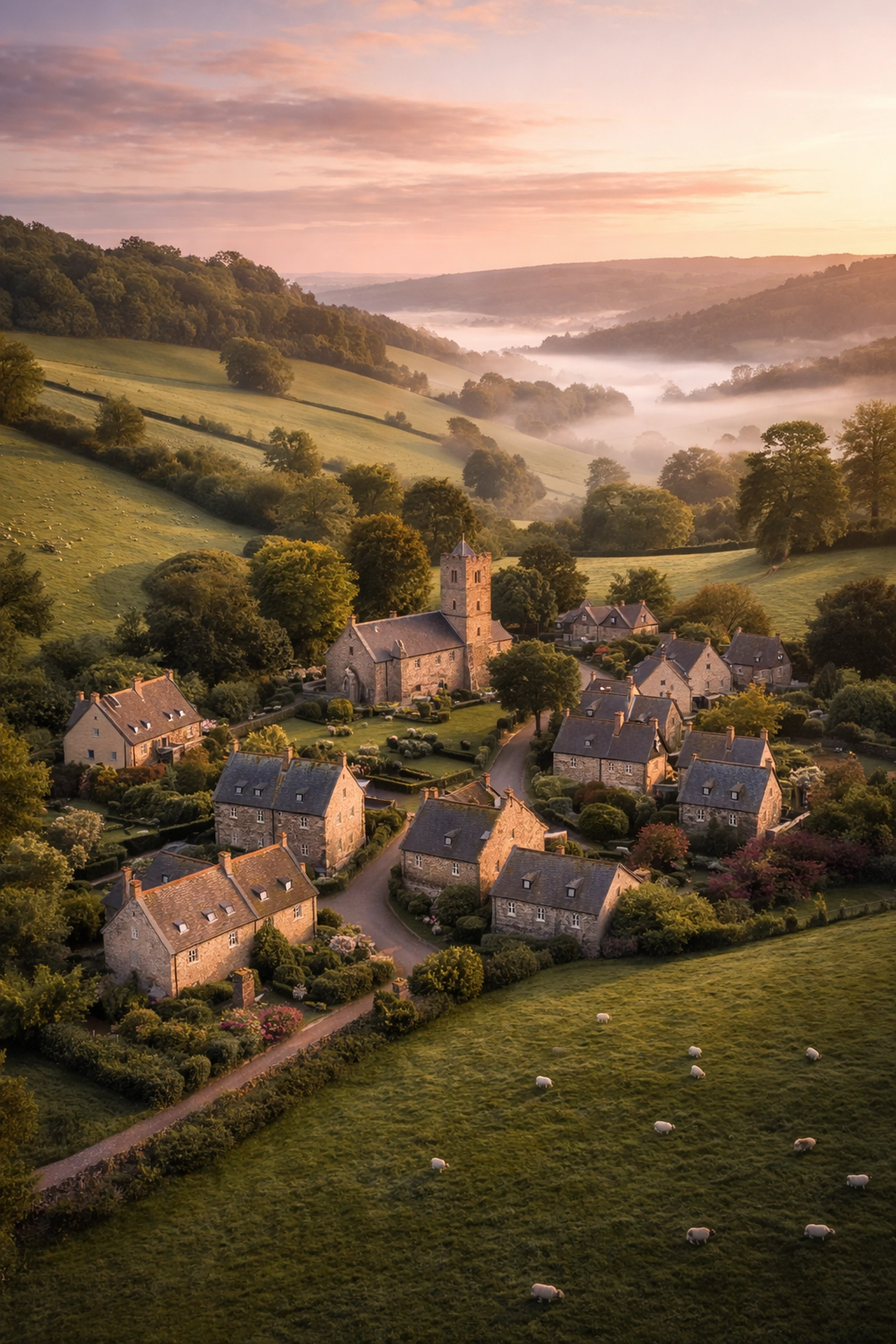
Here's the thing about the Cotswolds: you've already seen it. You've seen it on biscuit tins and jigsaw puzzles, on Instagram grids curated by people who spent forty-five minutes there, tops. You've seen the honey-colored stone, the thatched roofs, the roses climbing over doorways that look like they were designed by a committee of particularly sentimental grandmothers.
And here's the other thing: it's all real. Every bit of it. The problem isn't that the Cotswolds is a lie. The problem is that the postcard version is so aggressively, relentlessly pretty that it obscures the harder, stranger, more interesting truth underneath.
The truth is mud. The truth is sheep. The truth is four hundred years of backbreaking labor, wool fortunes, plague, enclosure, and the slow, stubborn survival of communities that refused to disappear when the money moved elsewhere. If you want the postcard, stay on the tour bus. If you want something that actually lands in your chest and stays there, you're going to have to get off the main road.
The Honey-Colored Trap
Let's address the stone. That famous Cotswold limestone: technically oolitic, if you care: glows like it's been soaked in late afternoon sun even at nine in the morning. It's gorgeous. It's also not an accident.
This stone came out of local quarries, pulled from the earth by men whose names are long forgotten, shaped and stacked into walls and churches and manor houses during centuries when the Cotswolds was one of the wealthiest regions in England. Wool money. Serious wool money. The kind of money that built Chipping Campden's impossibly elegant high street, funded its perpendicular Gothic church, and left behind almshouses that still function today.
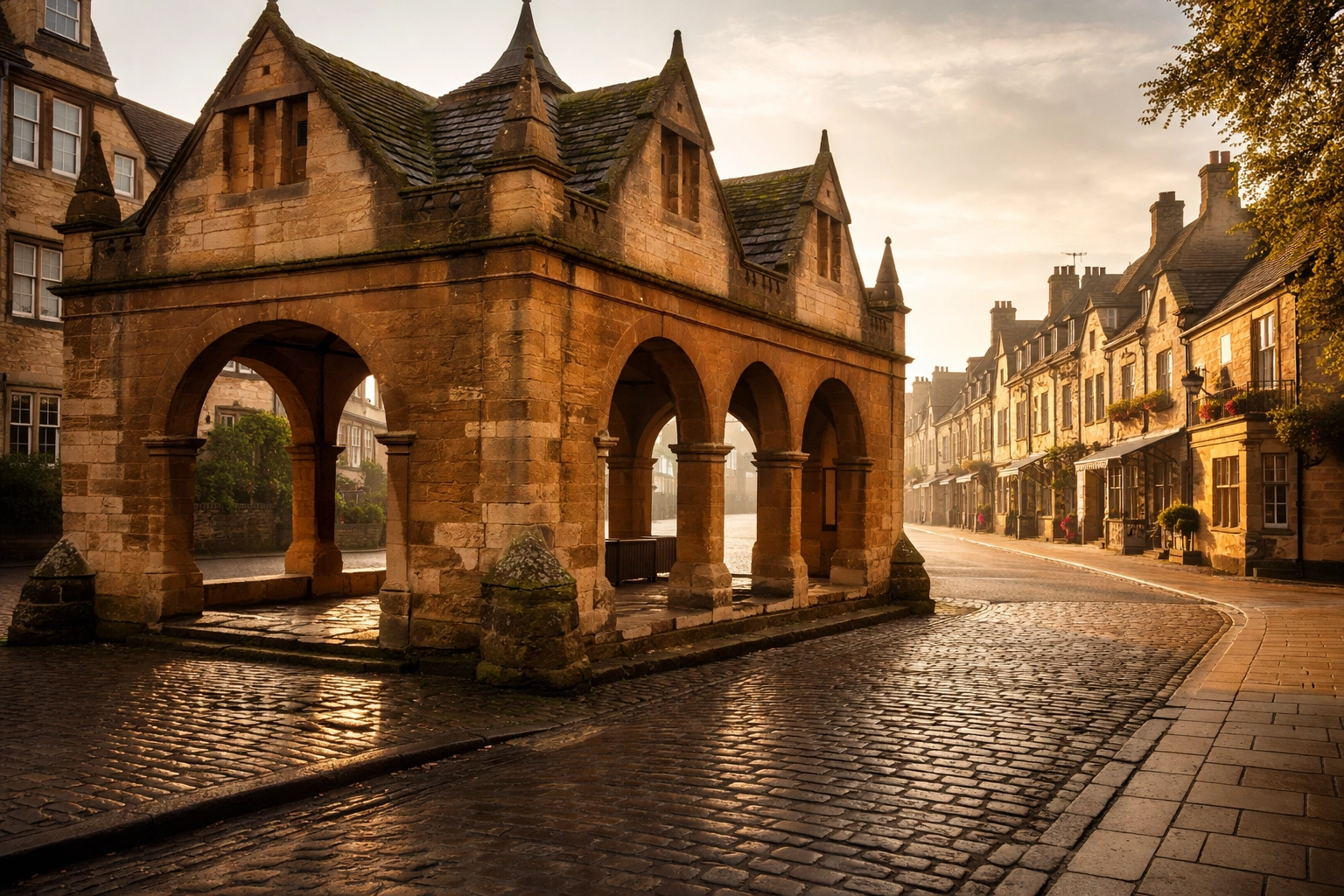
The "Chipping" in Chipping Campden means "market." This was a trading post, a hub where medieval wool merchants grew rich off the backs of sheep and the labor of everyone below them on the economic ladder. When you walk down that high street: past the old Market Hall standing on its stone legs since 1627: you're walking on wealth. Old wealth. The kind that seeps into the architecture and never quite leaves.
But the tour buses that run Cotswolds day tours from London don't tell you about the enclosure acts that pushed tenant farmers off the land. They don't mention the agricultural laborers who lived in those picturesque cottages, six to a room, through winters that would kill you. The beauty is real. The cost of that beauty is buried just beneath the surface.
Where the Big Buses Fear to Tread
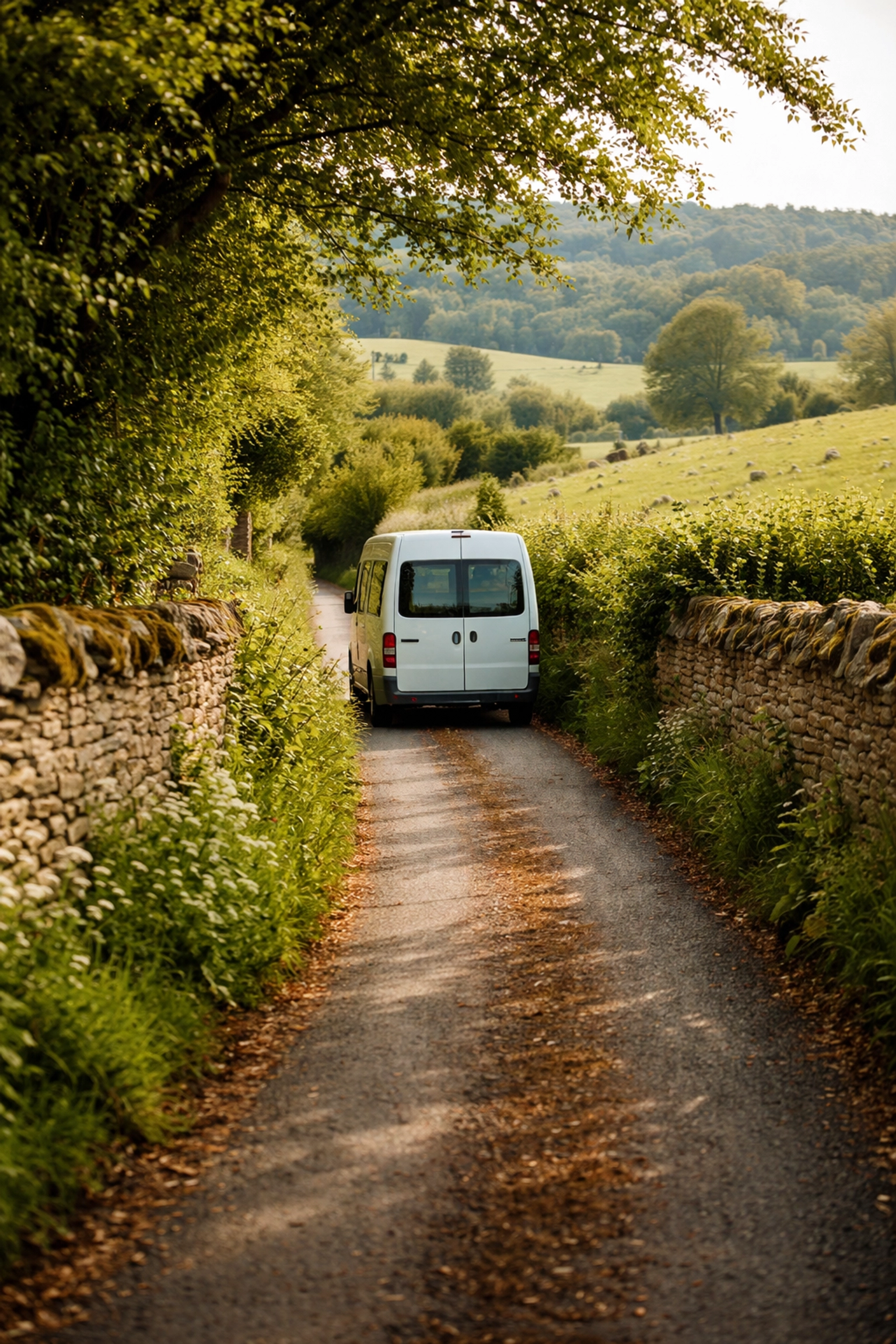
Here's a practical truth about the Cotswolds that will shape your entire experience: the roads are narrow. Absurdly, gloriously, terrifyingly narrow. Stone walls on both sides, blind corners, hedgerows scraping the windows. A full-sized coach has no business on most of these lanes, and the drivers know it.
Which means the big operators stick to the big villages. They hit Bourton-on-the-Water: lovely, sure, but so packed with day-trippers in summer that you can barely see the water for the crowds: and they call it a day. They never make it to the places where the Cotswolds actually breathes.
A executive vehicle, though? A executive vehicle can thread those lanes like a needle. It can take the back way from London to Chipping Campden, the route that winds through Blockley where you'll see more pheasants than people, where the only sound is your own footsteps and the distant complaint of sheep. This is where Cotswolds tours earn their keep: not in the famous spots, but in the forgotten ones.
Snowshill: The Sound of Nothing
You want silence? Real silence, the kind that makes your ears ring because you've forgotten what the absence of noise actually sounds like? Go to Snowshill.
It's a village so small it barely qualifies as one. A church. A manor house (eccentric, packed with the obsessive collections of a man named Charles Wade, worth a visit if you like the slightly unhinged). A handful of cottages. And nothing else. No gift shops. No tea rooms fighting for your attention. Just stone and sky and the smell of damp earth after rain.
Stand in the middle of Snowshill on a Tuesday morning in October and you will understand something essential about the Cotswolds: this landscape was not built for your entertainment. It exists because people lived here, worked here, died here. The silence isn't emptiness. It's the accumulated weight of centuries of ordinary life, compressed into stone and soil.
Stow-on-the-Wold: Low Ceilings and Long Memories
Stow-on-the-Wold, on the other hand, has a pulse. A small one, but persistent.
The market square sits at the intersection of old Roman roads, which tells you something about how long people have been passing through. The town was a wool trading center: eight annual fairs at its peak, twenty thousand sheep changing hands in a single day. Picture that. Picture the noise, the smell, the chaos of it. Picture the money.
Now picture the pubs.
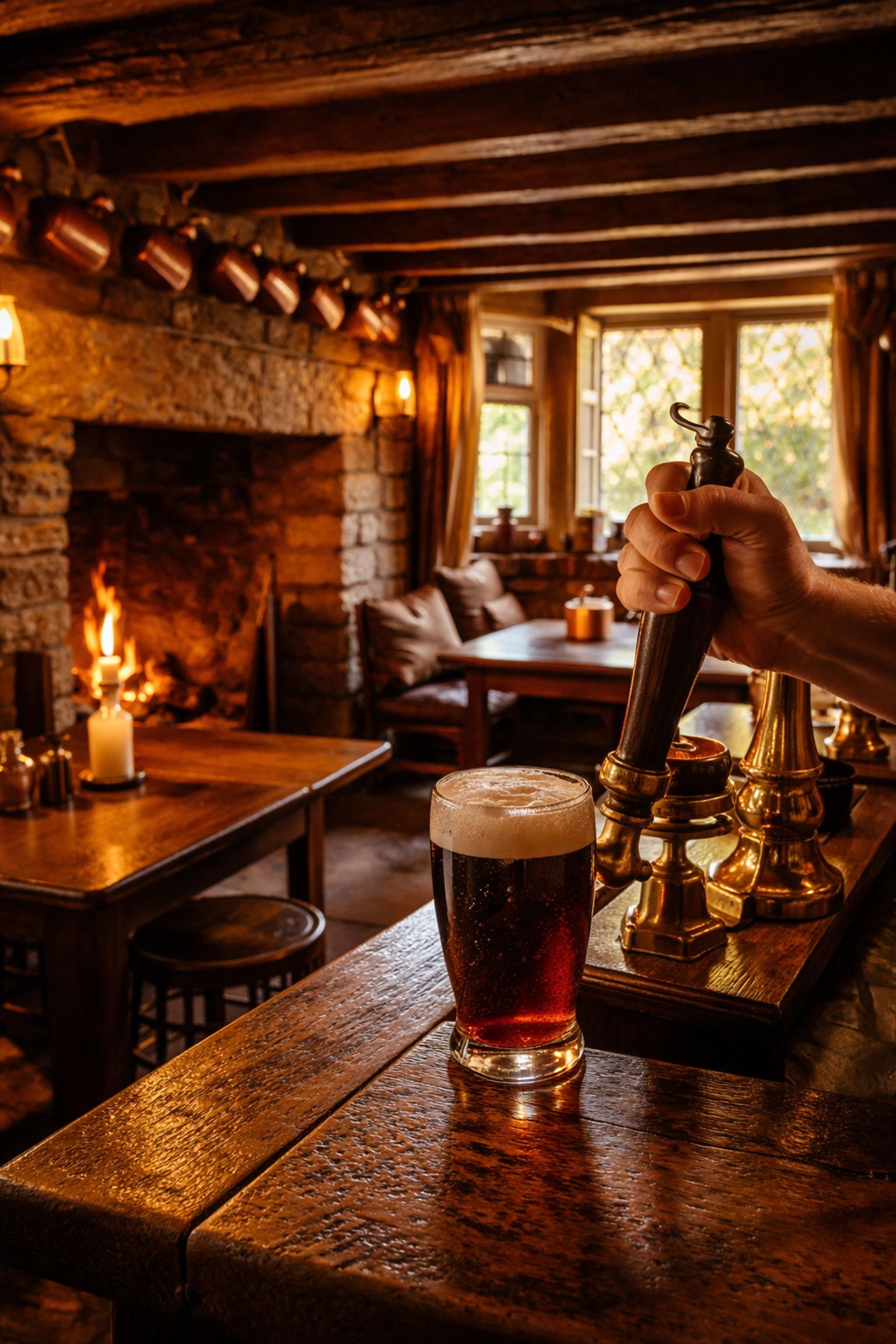
The pubs in Stow have low ceilings, the kind that force tall people to duck. They have fireplaces that have been burning through English winters since before your country probably existed. They have ale: real ale, cask-conditioned, pulled by hand, served at cellar temperature because that's how it's meant to be drunk. You sit by that fire, you wrap your hands around that glass, and you drink something that tastes like the earth it came from. Malt and hops and a faint mineral edge from the local water.
This is not a "charming experience." This is just life, the way it's been lived here for generations. The charm is incidental.
The Disneyfied Version and Its Opposite
Look, I understand the appeal of Bourton-on-the-Water. The River Windrush runs right through the village center, crossed by low stone bridges. It's genuinely beautiful. It's also, on a summer Saturday, approximately as peaceful as a theme park queue.
The Cotswolds has a Disneyfied version of itself: sanitized, gift-wrapped, stripped of anything that might complicate the narrative. Cream teas and lavender sachets and not a single mention of the agricultural depression that hollowed out these villages in the 19th century, or the wealthy Londoners who bought up the cottages in the 20th and turned working communities into weekend retreats.
The opposite of Disneyfied isn't ugly. It's honest. It's the rough texture of limestone under your palm, cold and slightly gritty. It's the smell of a working farm: manure and hay and diesel: drifting across a footpath. It's the understanding that these villages are not museum exhibits. People live here. They have opinions about parking and property prices and the tourists who block the lanes taking photographs.
The Roads We Know
Shakespeare Coaches has been running these routes long enough to know the difference between the A-roads and the lanes that don't show up on most maps. We know where to stop so you can actually see the Slaughters without fighting for pavement space. We know the timing: early morning arrivals, when the light is good and the crowds haven't materialized yet.
This isn't about "hidden gems." That phrase needs to be retired. It's about access. A small coach goes where the big ones can't. A driver who knows the territory takes the routes that make sense, not the routes that accommodate fifty-three passengers and a toilet.
The Cotswolds is not a single destination. It's a landscape, scattered with villages that each have their own weight, their own history, their own particular version of that golden stone. You can skim the surface in a day. Or you can go deeper, take the smaller roads, sit in the older pubs, and let the place reveal itself slowly.
The postcard is fine. But the thing behind the postcard? That's what you came for.
Ready to see the Cotswolds the way it's meant to be seen? Explore our tours and find the backroads waiting for you.
Explore our Cotswolds day tour from London for itinerary and booking details.