

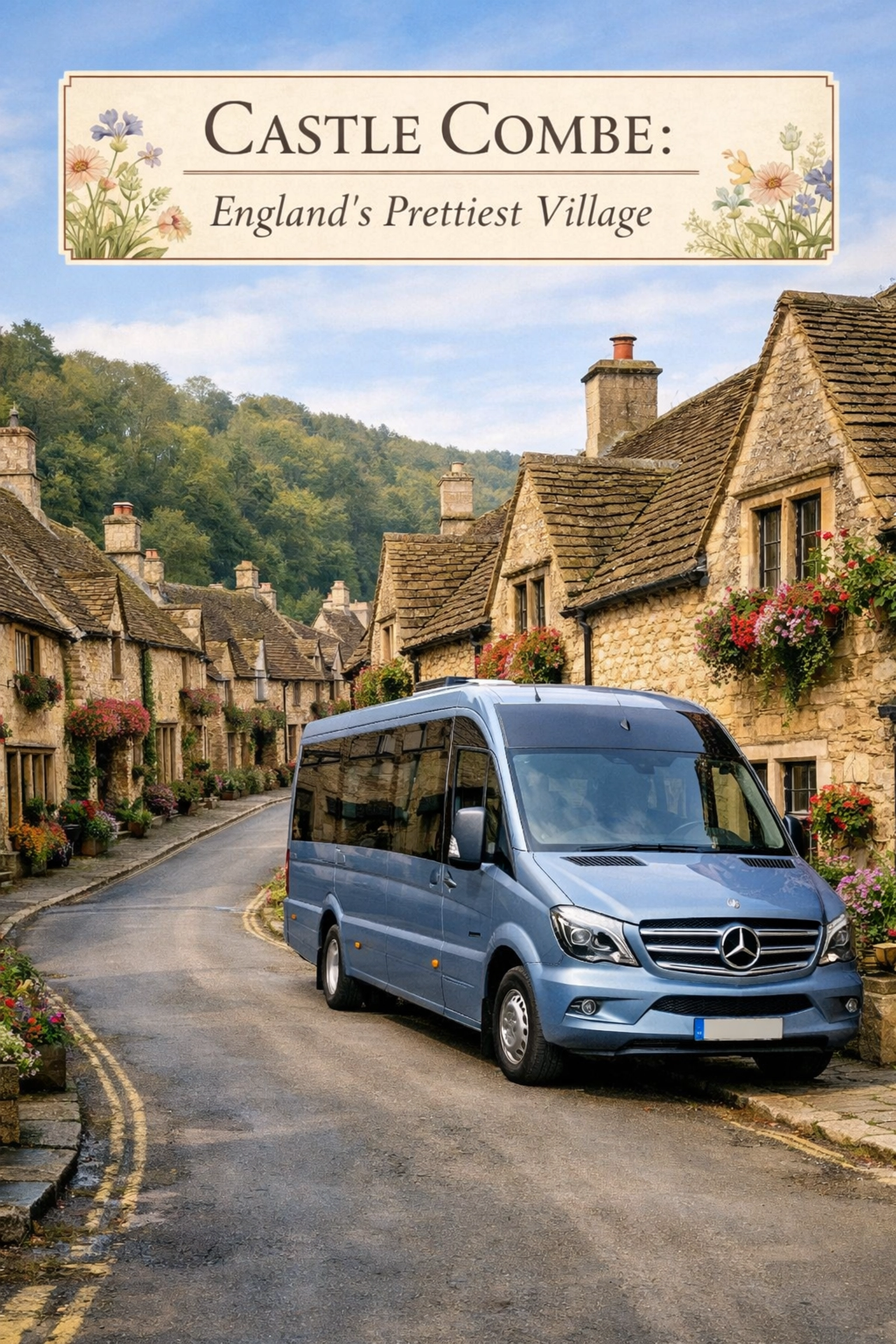
If you’ve ever scrolled through Instagram and seen a photo of a honey-colored stone village that looks like it was plucked straight from a fairy tale, chances are you were looking at Castle Combe. Often cited as the "prettiest village in England," it sits in the southern tip of the Cotswolds in Wiltshire, tucked away in a lush, wooded valley.
At Shakespeare Coaches, we’ve taken thousands of travelers through the Cotswolds, and Castle Combe remains the one place that consistently makes people gasp when they step off the bus. But don’t let the "pretty" label fool you: there is a lot of history, some Hollywood secrets, and a few logistical quirks you need to know before you visit.
Here is your no-nonsense, high-utility Castle Combe guide to help you make the most of your visit.
The 3-Minute Snapshot: Why Visit?
If you’re short on time, here is the "too long; didn’t read" version:
- The Aesthetic: It is perfectly preserved. No new houses have been built here since the 1600s. There are no streetlights and no ugly modern signage.
- The Fame: It’s a Hollywood darling. From Steven Spielberg’s War Horse to Neil Gaiman’s Stardust, the village is a living film set.
- The Size: It’s tiny. You can walk the main street in about 15 minutes, but you’ll want to stay for hours just to soak in the atmosphere.
- The Location: It’s perfectly situated for those looking for Cotswolds Tours that combine history with stunning photography.
A Walk Through History (Without the Boring Bits)
The name "Castle Combe" is a bit of a tease because, if you go looking for a massive stone fortress with turrets, you’re going to be disappointed. The "Castle" once stood on the hill above the village: a Roman fort later turned into a Norman castle: but it was abandoned centuries ago. Today, only earthworks remain.
The "Combe" part simply means "valley." The village you see today was built on the back of the medieval wool trade. In the 15th century, Castle Combe was a powerhouse of industry, famous for producing "Castlecombe Cloth," a heavy red and white fabric that was exported all over Europe and even used to clothe Henry V’s army.
Because the industrial revolution largely bypassed this valley, the village didn't modernize. It stayed exactly as it was: a cluster of 14th and 15th-century weaver’s cottages built from local oolitic limestone.
The Hollywood Connection: Why it Looks Familiar
If you get a sense of déjà vu while walking past the Market Cross, it’s because you’ve likely seen Castle Combe on the big screen. Directors love it because they don't have to do much "period dressing": the village already looks like 1840 or 1914.
- War Horse (2011): Steven Spielberg transformed the village into a bustling early 20th-century market town. He famously said Castle Combe was "the most beautiful village in England" during filming.
- Stardust (2007): The village stood in for "Wall," the gateway to the magical kingdom.
- Doctor Dolittle (1967): The original musical was filmed here, turning the village into the fictional fishing port of Puddleby-on-the-Marsh.
What to See: The "Must-Snap" Spots
Even though it's small, there are three spots you absolutely cannot miss:
1. The Market Cross
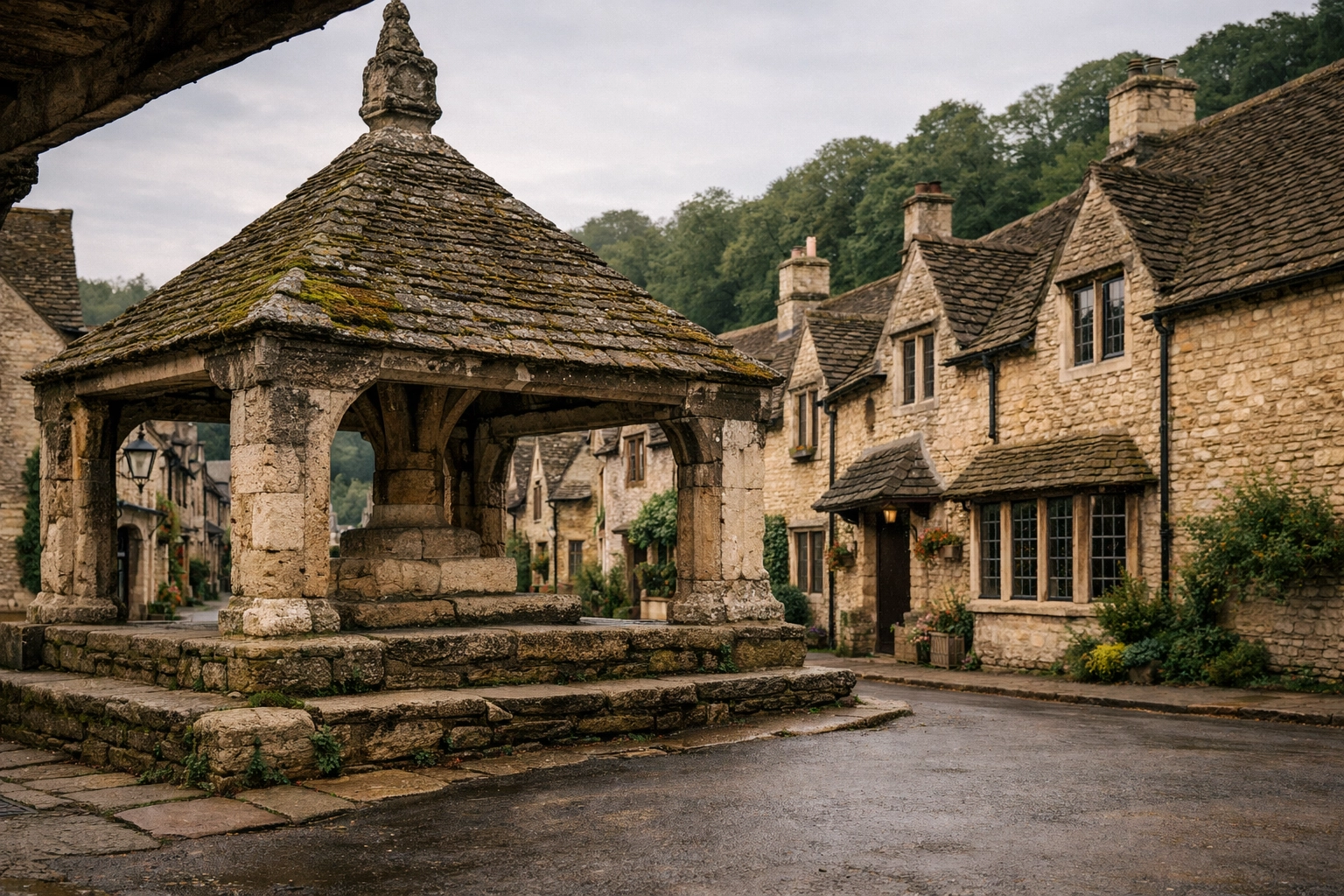
Standing at the junction of the three main streets, the 14th-century Market Cross is the heart of the village. This is where the weekly markets were held and where the local cloth was traded. Look closely at the stone steps: they were designed to help riders mount their horses easily.
2. St. Andrew’s Church
While most people focus on the cottages, the church is a hidden gem. It houses a 15th-century clock, which is believed to be one of the oldest working clocks in the world. You’ll also find the tomb of Sir Walter de Dunstanville, a local knight from the 13th century.
3. The By Brook Bridge
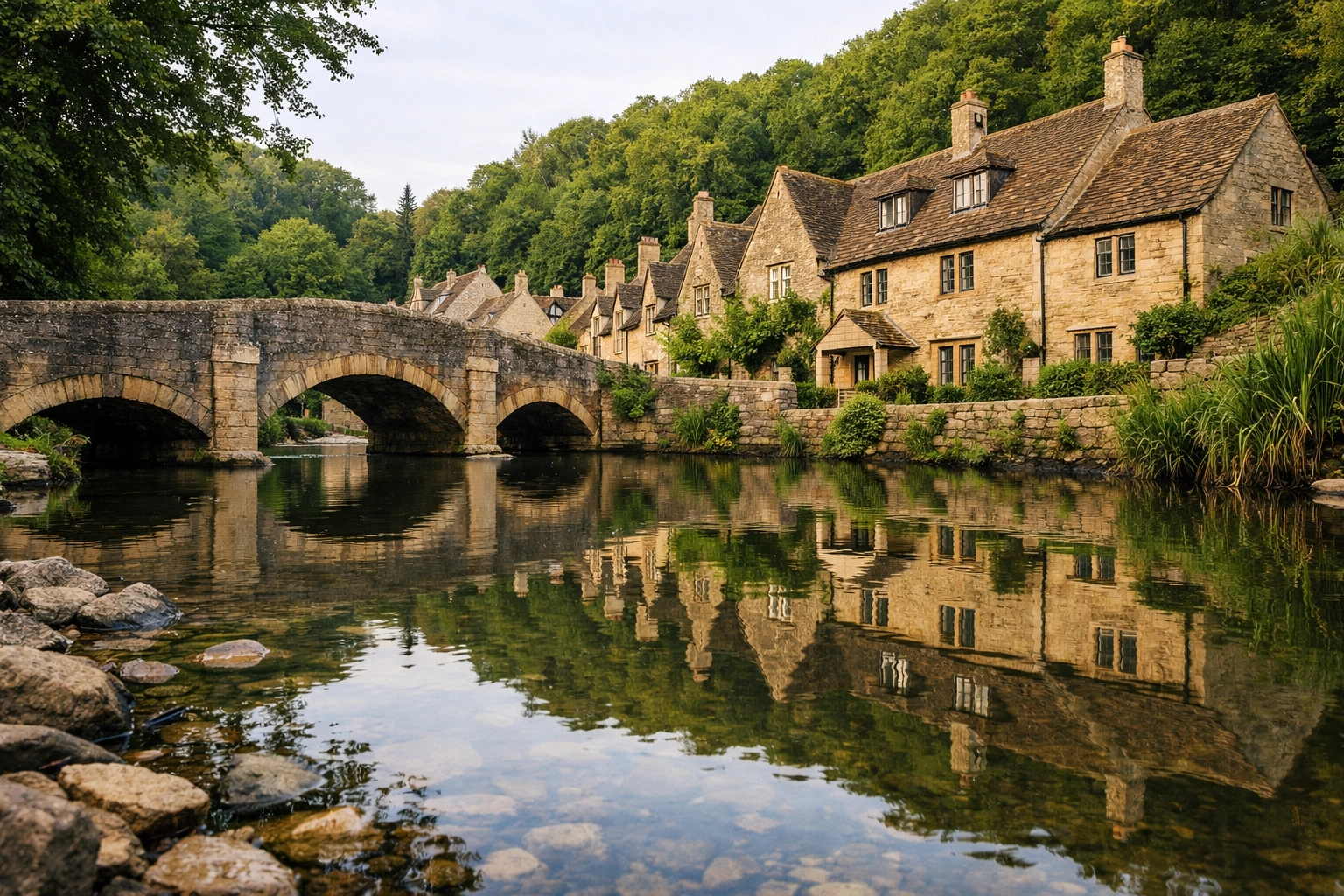
This is the view. If you walk down the hill past the village shops toward the river (the By Brook), you’ll find the stone bridge. Stand on the bridge and look back toward the village for the iconic shot of the weaver’s cottages reflected in the water.
Logistics: The Practical Stuff
Visiting Castle Combe can be a bit of a challenge if you don't plan ahead.
- Parking: There is strictly no visitor parking in the village center. There is a free car park at the top of the hill (Dunns Lane). It’s about a 10-15 minute walk down into the village.
- Quiet Hours: Remember that people actually live here! It’s a real community, not a theme park. Be respectful of residents' privacy when taking photos.
- The Race Circuit: Just outside the village is the Castle Combe Circuit. If you hear the roar of engines, that’s where it’s coming from. It’s a great contrast to the quiet of the village if you like motorsports!
How to Get There (The Shakespeare Coaches Advantage)
Getting to Castle Combe from London or Stratford-upon-Avon via public transport is, frankly, a headache. It usually involves multiple trains and a very unreliable bus schedule.
This is why our 1-Day Private Cotswolds & Shakespeare's Stratford Tour is so popular. We take the stress out of the navigation.
Why travel with us?
- Small Groups Only: We cap our tours at 16 people. This is crucial for Castle Combe. The streets are narrow, and large 50-seater coaches often can’t even get close. Our smaller executive vehicles allow us to drop you closer and provide a much more intimate experience.
- Expert Drivers: Our team knows the backroads and the best times to arrive to beat the crowds.
- Stress-Free: No worrying about parking at the top of the hill or catching the last train back to London. We handle the logistics; you handle the sightseeing.
The Cotswolds Mega-Guide Series
Castle Combe is a heavyweight in the beauty department, but the Cotswolds has so much more to offer. We are currently ranking and reviewing the top 25 destinations in the region to help you plan your perfect trip.
The Top 25 Cotswolds Rankings:
- Bourton-on-the-Water: The Venice of the Cotswolds
- Bibury: Home of Arlington Row
- Castle Combe: England’s Prettiest Village (You are here!)
- Stow-on-the-Wold: Ancient Market Square
- Chipping Campden: The Jewel of the Wool Towns
- Snowshill: The Quirkiest Hilltop Village
- Stratford-upon-Avon: Shakespeare’s Legacy
- Broadway: The High Street of Dreams (Coming Soon)
- Lower Slaughter: Romance by the River (Coming Soon)
- Burford: The Gateway to the Cotswolds (Coming Soon)
- Painswick: The Queen of the Cotswolds (Coming Soon)
- Upper Slaughter (Coming Soon)
- Tetbury (Coming Soon)
- Malmesbury (Coming Soon)
- Winchcombe (Coming Soon)
- Cirencester (Coming Soon)
- Moreton-in-Marsh (Coming Soon)
- Lechlade-on-Thames (Coming Soon)
- Blockley (Coming Soon)
- Stanton (Coming Soon)
- Stanway (Coming Soon)
- Lacock (Coming Soon)
- Corsham (Coming Soon)
- Minster Lovell (Coming Soon)
- Bampton (The Downton Abbey Village) (Coming Soon)
Plan Your Cotswolds Adventure
Looking to keep exploring? These two guides are a great next step for planning a wider Cotswolds trip:
- The Ultimate Cotswolds Village Guide
- Looking for the Ultimate Cotswolds Day Tour? 10 Things Only a Stratford Local Can Tell You
Ready to see the "prettiest village in England" for yourself without the hassle of driving? Check out our available tours and book your seat on our next small-group adventure!
Explore More of the Cotswolds
- Stratford-upon-Avon
- Chipping Campden
- Snowshill Village
- Stow-on-the-Wold
- Bourton-on-the-Water
- Burford
- Bibury
- Castle Combe
- Lower Slaughter
- Broadway
- Cirencester
- Malmesbury
- Lacock
- Upper Slaughter
- Painswick
- Blockley
- Winchcombe
- Tetbury
- Stanton
- Moreton-in-Marsh
- Great Tew
- Minster Lovell
- Naunton
- Northleach
- Woodstock