

The first thing that hits you isn't the architecture. It's the smell.
Sulfur. Mineral. Something ancient and slightly wrong: like the earth decided to bleed warm water through a crack it's been nursing for ten thousand years. You catch it drifting up from grates in the pavement, curling around the honey-colored stone, and suddenly you understand: Bath isn't a city built on the ground. It's a city built over something that's still alive.
Forget the Jane Austen tea rooms for a moment. Forget the gift shops selling lavender sachets and bonnets. There's a Roman ghost town under your feet, and the Georgians just built their party on top of it.
The Thing Bubbling Beneath
Over a million liters of water push up through the limestone every single day. Forty-six degrees Celsius. That's not lukewarm. That's not pleasant. That's water heated by the same geological processes that build volcanoes, filtered through rock that was old when the dinosaurs were young, arriving at the surface the same way it did when the first Celtic tribes knelt beside it and thought: this must be a god.
They called her Sulis. Goddess of the gap between worlds. The place where hot water meets cold air and something sacred happens in the steam.
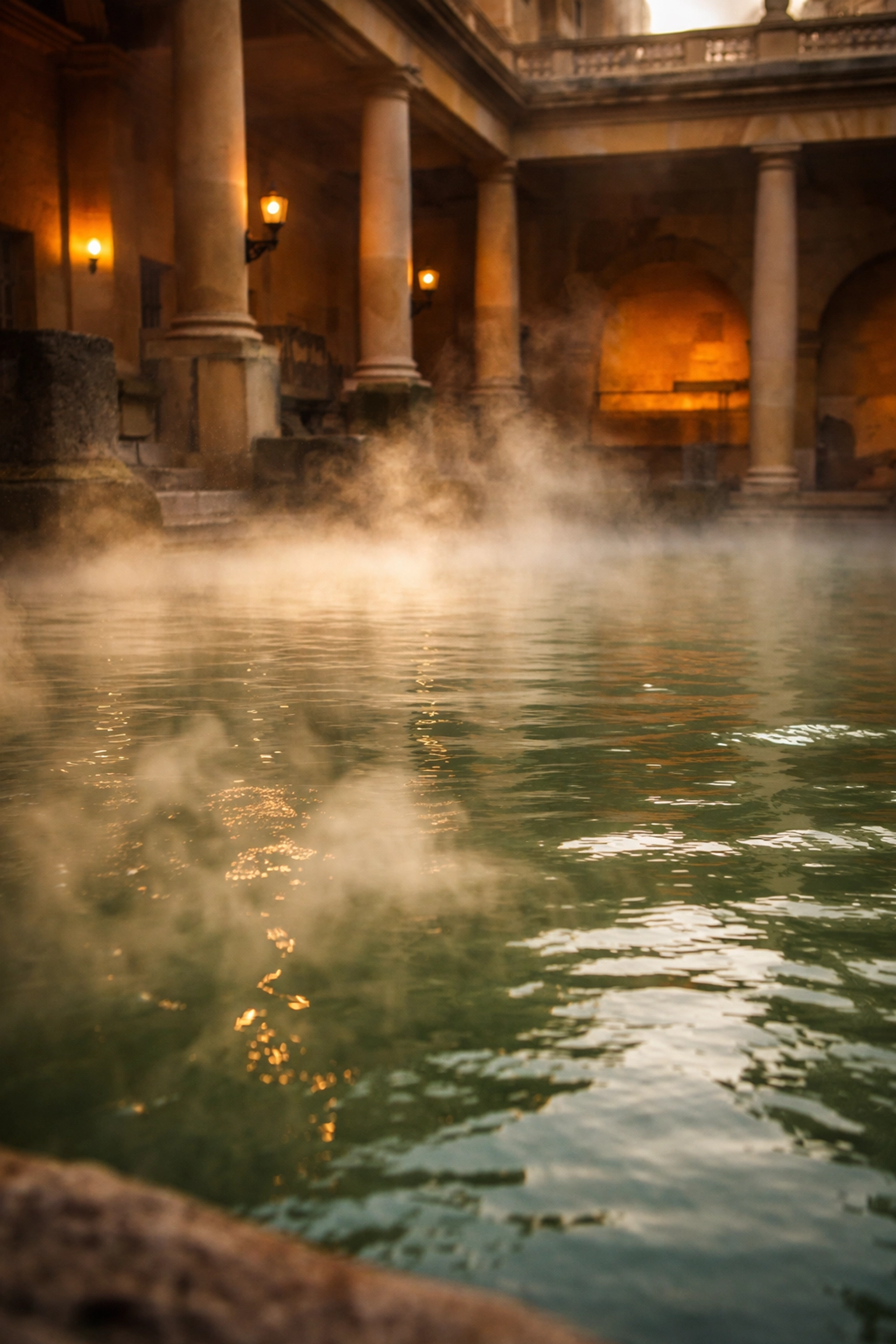
The Romans showed up around AD 43 and did what Romans do: they looked at a holy spring and saw infrastructure. Within thirty years, they'd built a reservoir lined with forty-five lead sheets, each one two inches thick, containing this geological miracle like you'd cork a bottle of wine you weren't ready to drink yet. They constructed the Great Bath: 1.6 meters deep, stone steps descending on all sides, the whole thing eventually enclosed in a barrel-vaulted ceiling that turned sunlight into cathedral light.
They built a temple to Sulis Minerva: hedging their bets by fusing the local goddess with their own: and for three hundred years, people came here to heal, to pray, to curse their enemies by scratching grievances onto lead tablets and throwing them into the sacred water.
This wasn't a spa day. This was religion. This was medicine. This was the desperate hope that something hot and strange rising from the deep earth might fix what couldn't otherwise be fixed.
The Georgian Veneer
Then the empire collapsed. The temple closed. The baths silted up and were eventually buried. For over a thousand years, the springs kept flowing: they don't care about the rise and fall of civilizations: but the city above forgot what lay beneath.
Enter the 18th century.
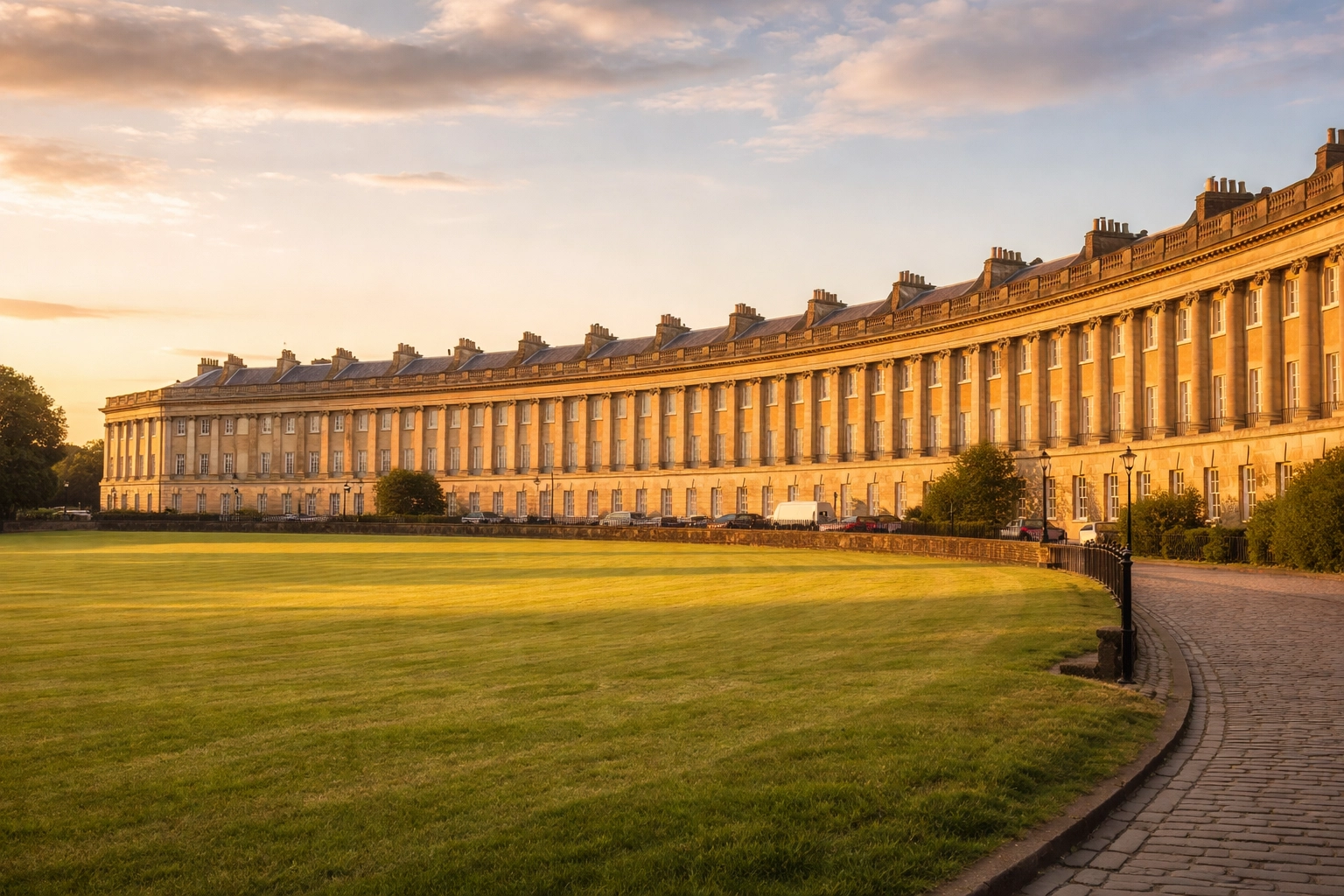
When Georgian society rediscovered Bath, they weren't interested in Celtic water goddesses or lead curse tablets. They wanted somewhere fashionable to take the waters, somewhere to be seen, somewhere to parade around in their best clothes and pretend that drinking mineral water was good for their gout.
So they built on top of the Roman bones. The Royal Crescent. The Circus. The Pump Room. Assembly Rooms where Beau Nash: a professional socialite, essentially: dictated who could dance with whom and what time everyone had to go home.
They used Bath Stone, quarried from the hills around the city. It's soft when you cut it, hardens when it hits the air, and turns that particular shade of golden honey that makes the whole city look like it's permanently bathed in late afternoon light. It's beautiful. It's elegant. It's also a mask.
The polite version of Bath: the one in the costume dramas, the one with Colin Firth emerging from lakes: is real enough. Jane Austen did walk these streets. She did hate it here, actually, if you read her letters. Found it shallow. Too much performance, not enough substance.
She wasn't wrong.
What You Actually Taste, Smell, and Hear
Here's the thing about a proper Bath city guide: most of them will tell you what to see. But Bath isn't really a seeing city. It's a sensing city.
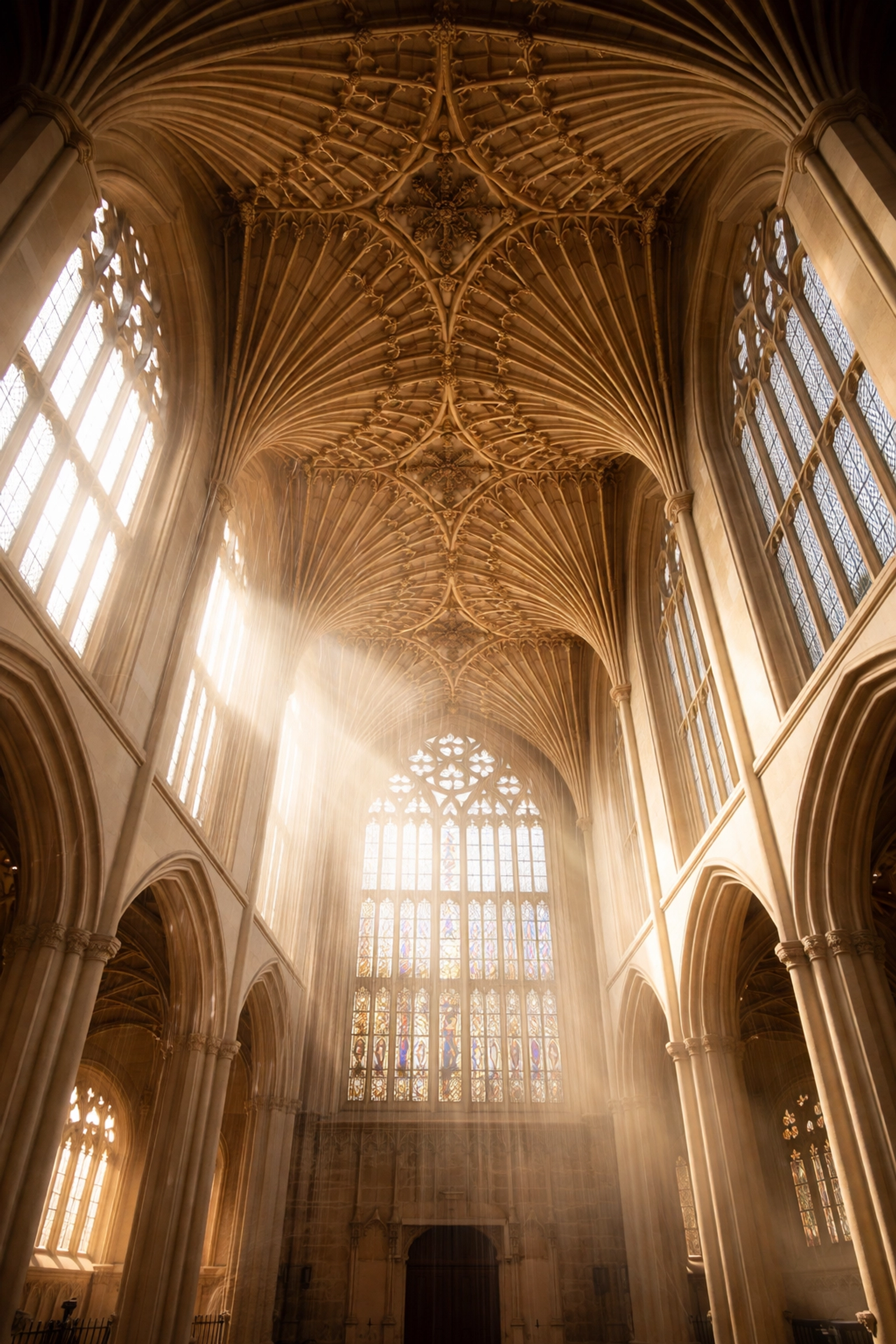
Walk into Bath Abbey and listen. The echo is different here than in other churches: something about the stone, the height, the way sound bounces off surfaces that have absorbed five centuries of whispered prayers and shuffling feet. It doesn't ring. It hums.
Go to the Pump Room and actually drink the water. They'll give you a small glass from the fountain: the same spring the Romans worshipped. It tastes like warm pennies and regret. Forty-three different minerals. It's not pleasant. It's not supposed to be pleasant. Medicine never is.
Stand over one of the street grates on a cold morning and feel the steam rise around your ankles. That warmth has been rising for thousands of years. It was rising when the Romans were here. It'll be rising when we're all gone.
The food matters too. Not the tourist traps selling cream teas at London prices, but the places where locals actually eat. A proper Bath bun: the original, with caraway seeds and crushed sugar on top, not the sanitized version. A pint in a pub built into the city walls. Cheddar from just down the road, because you're in Somerset now, and Somerset does cheese the way the Cotswolds do wool.
The Problem With Big Coaches
Here's where I'll be honest about something practical.
Bath wasn't built for fifty-seater tour buses. The Royal Crescent is a crescent: a curve of thirty townhouses with a lawn in front and streets that were designed for horses, not hydraulic brakes. The hills are steep. The lanes are narrow. The parking is a nightmare.
Most Bath day tours from London involve sitting in traffic on the outskirts, being dropped at a car park half a mile from anything interesting, and shuffling through the Roman Baths in a group of forty people who all need to use the toilet at the same time.
That's not travel. That's logistics.
Shakespeare Coaches runs tours to Bath in a 16-seater Mercedes mini-coach: small enough to actually navigate the city, to drop you where the walking is good, to stop when something interesting appears around a corner. The driver knows the back routes. The guide knows the stories. You're not herded. You're accompanied.
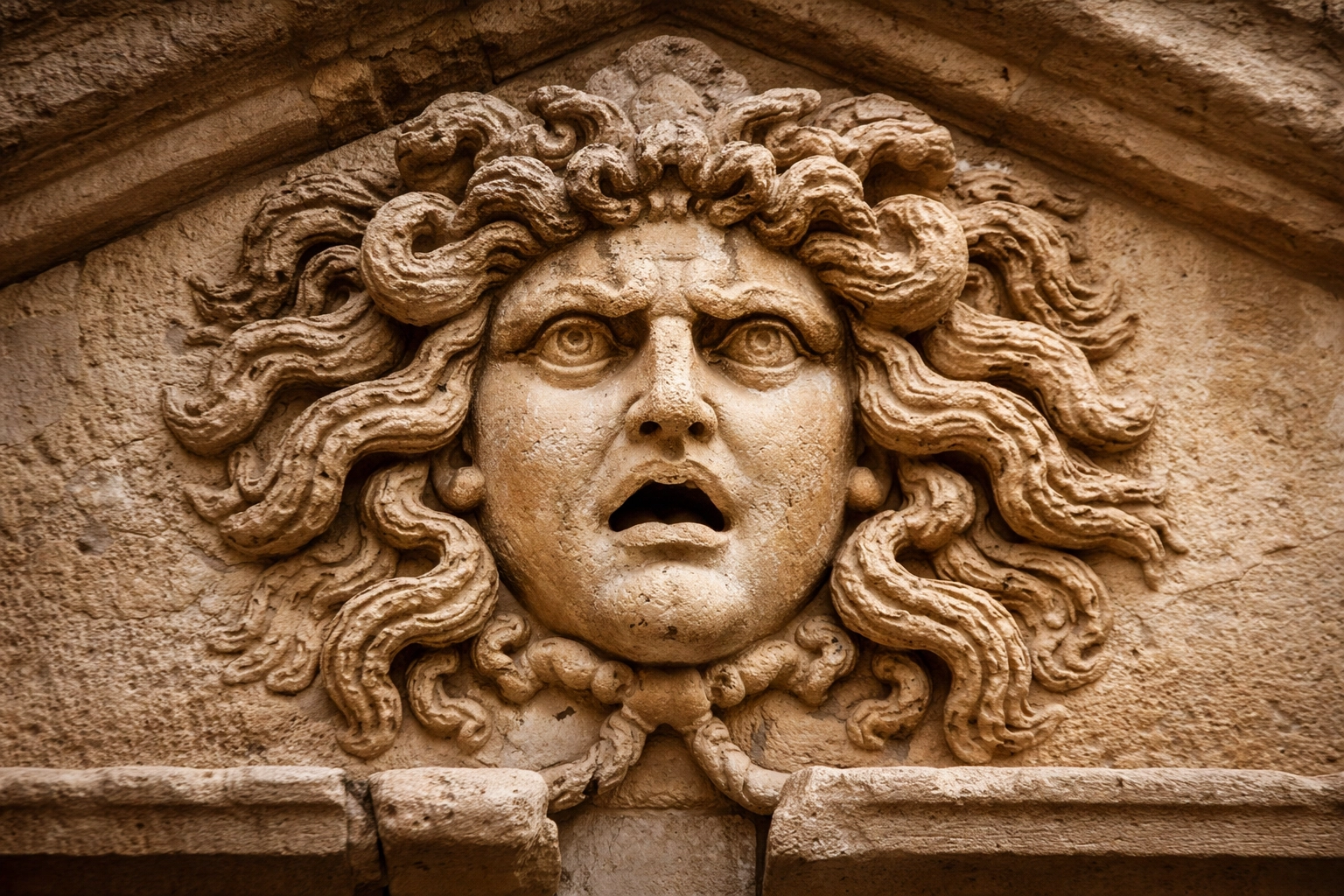
A Roman Baths tour done properly takes time. You need to stand in front of the Gorgon's head carved on the temple pediment and actually look at it: that weird, fierce, possibly male face with snakes for hair that scholars still argue about. You need to read some of the curse tablets. "May the person who stole my bathing tunic lose their eyes and their mind in the goddess's temple." These people were specific in their grievances.
You need to understand that when you look down into the green water of the Great Bath today, you're looking at the same water that touched Roman skin, Celtic offerings, Georgian invalids desperate for a cure. The water doesn't care about centuries. It just keeps coming.
The Honest Version
Bath is beautiful. That's not marketing: it's limestone and light and the accident of hot water in exactly the right place. But beautiful isn't the same as honest, and if you only see the Georgian postcard version, you'll miss the point.
The point is the steam. The point is what bubbles up from below. The point is that every civilization that found this place looked at it and thought: there's something here that matters.
The Romans built a temple. The Georgians built a social scene. The Celts just knelt in the mud and prayed.
Maybe they all had the right idea. Maybe Bath is a place where the earth speaks, and we keep building different ways to listen.