

There’s a kind of quiet you only get outside London, after the last round of emails, after the last slammed Underground door, when the city finally loses its grip on your shoulders. The Cotswolds trades in that quiet—hedgerows, damp stone, narrow lanes that seem to have been laid down by habit more than by plan.
And threaded through it all is the pub. Not as a theme, not as an attraction—more like an old agreement. You come in from the weather. You warm your hands. You order something simple. You sit. For a while, the world stops asking you to explain yourself.
This post follows the pub stops along our Shakespeare’s Stratford-upon-Avon & Cotswolds Day Tour—not a conquest, not a checklist. Just seven recommendations tied to six stops, with time to sit down and actually be there.
Stratford-upon-Avon: The Garrick Inn
Stratford carries its famous name like a well-worn coat. You can feel the pull of the story—half-timbered streets, people moving through them with the careful attention of museum visitors.
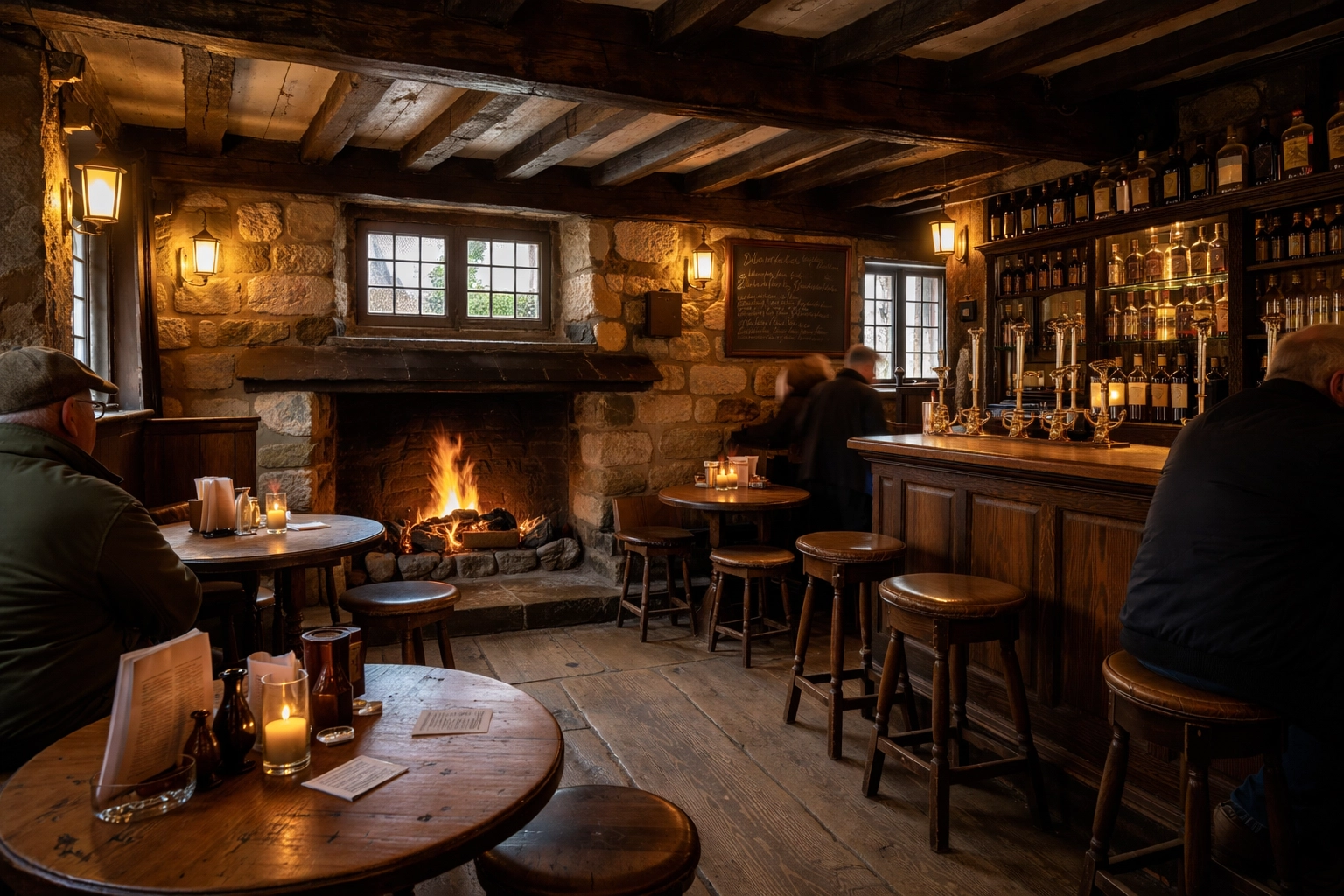
Then you step into The Garrick Inn and the theatre quiets down. Low beams. Dark wood. The soft smell of old building—smoke, polish, beer that’s been poured into the same kind of glass for longer than anyone can count.
You order. You wait. You listen to the room. That’s the ritual. Nothing flashy, nothing urgent—just a pint and the sense that time has been moving like this for centuries.
Chipping Campden: The Eight Bells
Chipping Campden looks like it was built to be admired—golden stone, tidy lines, the kind of place you expect to see under glass. But the village has always been more than a picture. Wool money once ran through these streets; hard labour did, too. Prosperity has a weight to it when you remember what paid for it.
The Eight Bells gives you the human scale of the place. You push the door, and the air changes—warmer, heavier, carrying the smell of ale and wood and food coming in waves. A few voices. A chair scraping. The ordinary sounds of people taking shelter.
Between stops, the road does its own quiet work. Fields stitched together by dry-stone walls. A glimpse of purple at the Lavender Farm, neat rows that look calm from a distance, like someone ironed the countryside. And further on, Broadway Tower on its rise, a landmark that reminds you how long people have been looking out across this landscape, measuring distance by sightline and weather.
Snowshill Village: The Snowshill Arms
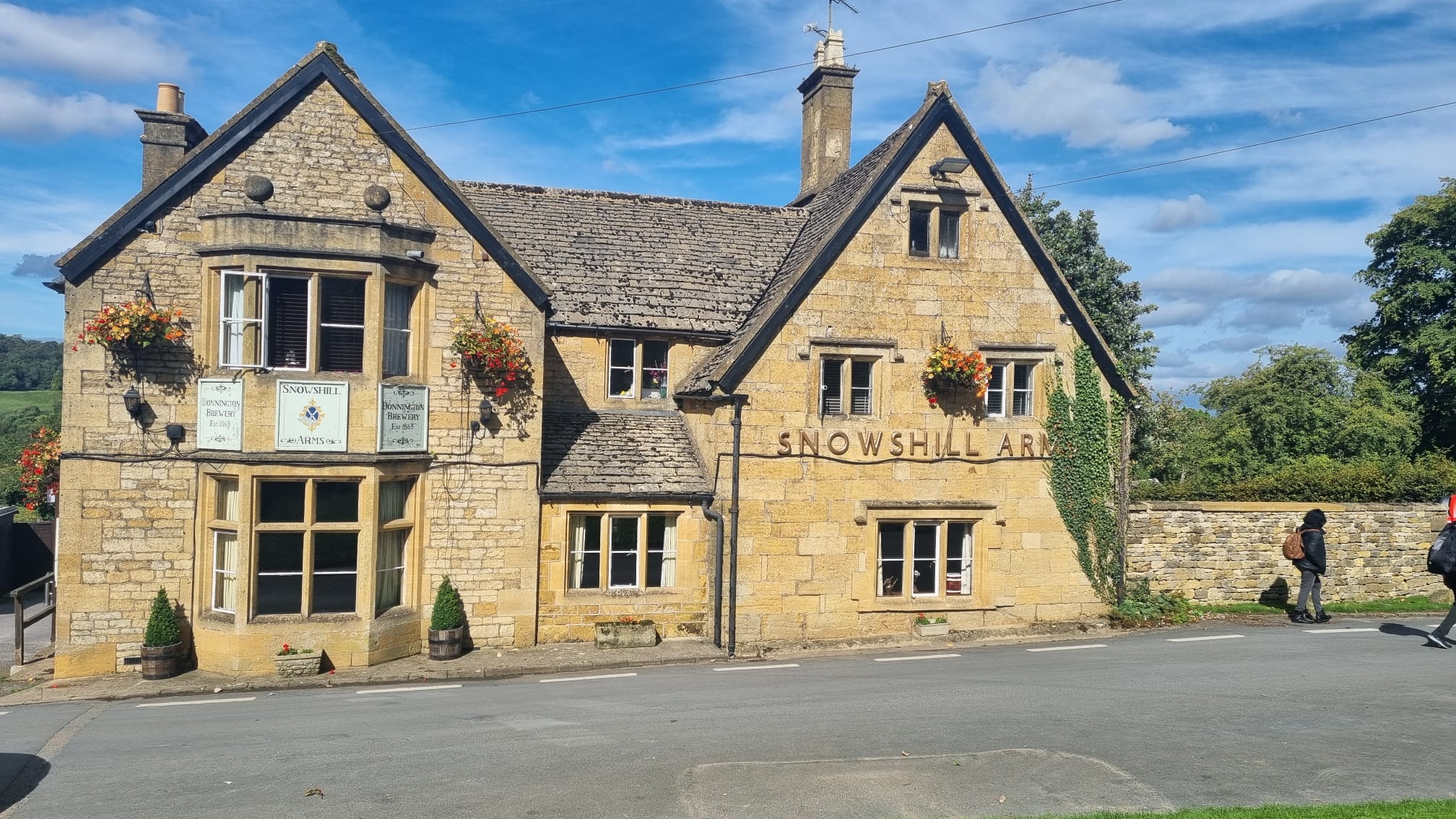
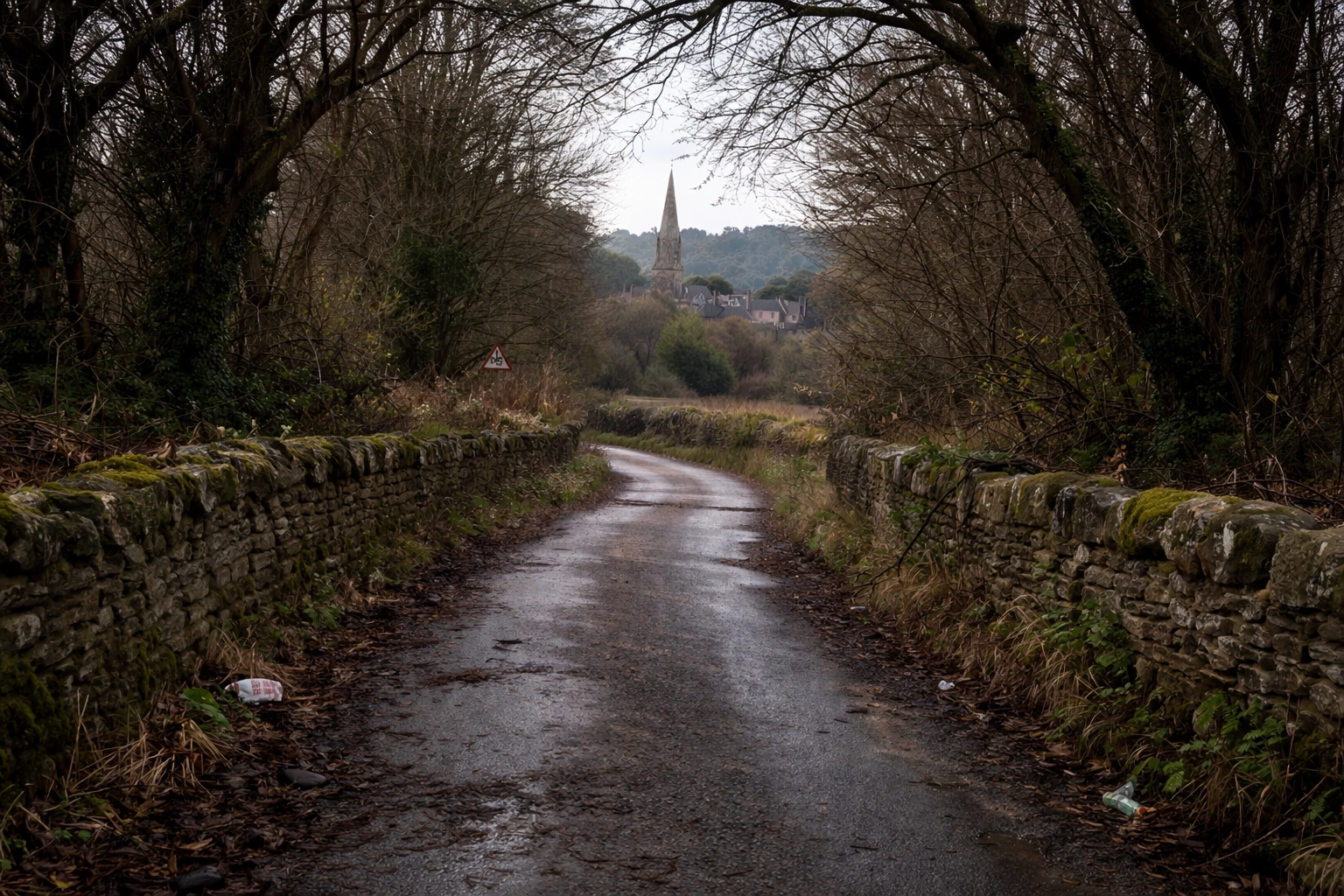
Snowshill is small. Not “cute” small—actual small. A place of lanes and bends and stone boundaries, where the road feels more like a suggestion than an instruction. Snowshill isn’t a place you conquer; it’s a place you briefly enter.
This is also where the 16-seater luxury mini-coach matters most. Larger groups in massive coaches can’t comfortably do Snowshill without changing it—without turning a quiet lane into a problem to solve. With sixteen seats, you move differently. You can take the narrow roads as they are. You can arrive quietly. You can experience the village without making it perform.
Inside The Snowshill Arms, the countryside feels close enough to touch. A warm edge to the air. Timber. The low murmur of a room that’s been doing this job for generations: letting people stop.
Stow-on-the-Wold: The Porch House + The King’s Arms
Stow-on-the-Wold has always been a place where people pass through—roads meeting, goods changing hands, travellers stopping because they have to. History here isn’t romantic. It’s practical. Commerce, weather, work.
This is the long stop—the one where you can let lunch happen at a human pace.
First choice is The Porch House: thick walls, low ceilings, corners worn smooth by repetition. You sit down and the room does what it’s always done—gives you a place to be still, to eat, to let the morning’s miles settle into your legs.
Second recommendation, if you want a different feel for the same lunch window, is The King’s Arms. Another old-room kind of stop—warmth, conversation, the steady clink of cutlery—where you can sit near the window and watch Stow’s crossroads life move past without having to join it.
Bourton-on-the-Water: The Mousetrap Inn
Bourton has water running through it like a living thread, and people follow it. Sometimes that makes the village feel busy, even when the light is soft and the day is quiet. But you don’t have to fight the crowd if you know where to step.
The Mousetrap Inn offers the simplest kind of relief: a door that closes, a table that holds steady, a glass that sweats gently in your hand. The soundscape shifts—less street, more room. It’s not an escape from Bourton so much as a different way of being in it.
You notice things you missed outside: the grain of the wood, the comfort of low conversation. The pub returns the village to its proper scale.
Bibury/Arlington Row: The Swan
Bibury is famous, and fame does odd things to a place. It can flatten it into a single image—stone cottages, river, postcard perfection—until you forget it’s a village where people have lived real lives, worked real hours, and endured real winters. Arlington Row, especially, looks like it was built for an illustration—stone, steep roofs, the hush of water nearby.
Then you end the day at The Swan, a 17th-century coaching inn right by the River Coln. Coaching inns weren’t built for nostalgia; they were built for movement—horses, mud, tired bodies, the economy of the road. That old purpose still lingers in the sense of arrival.
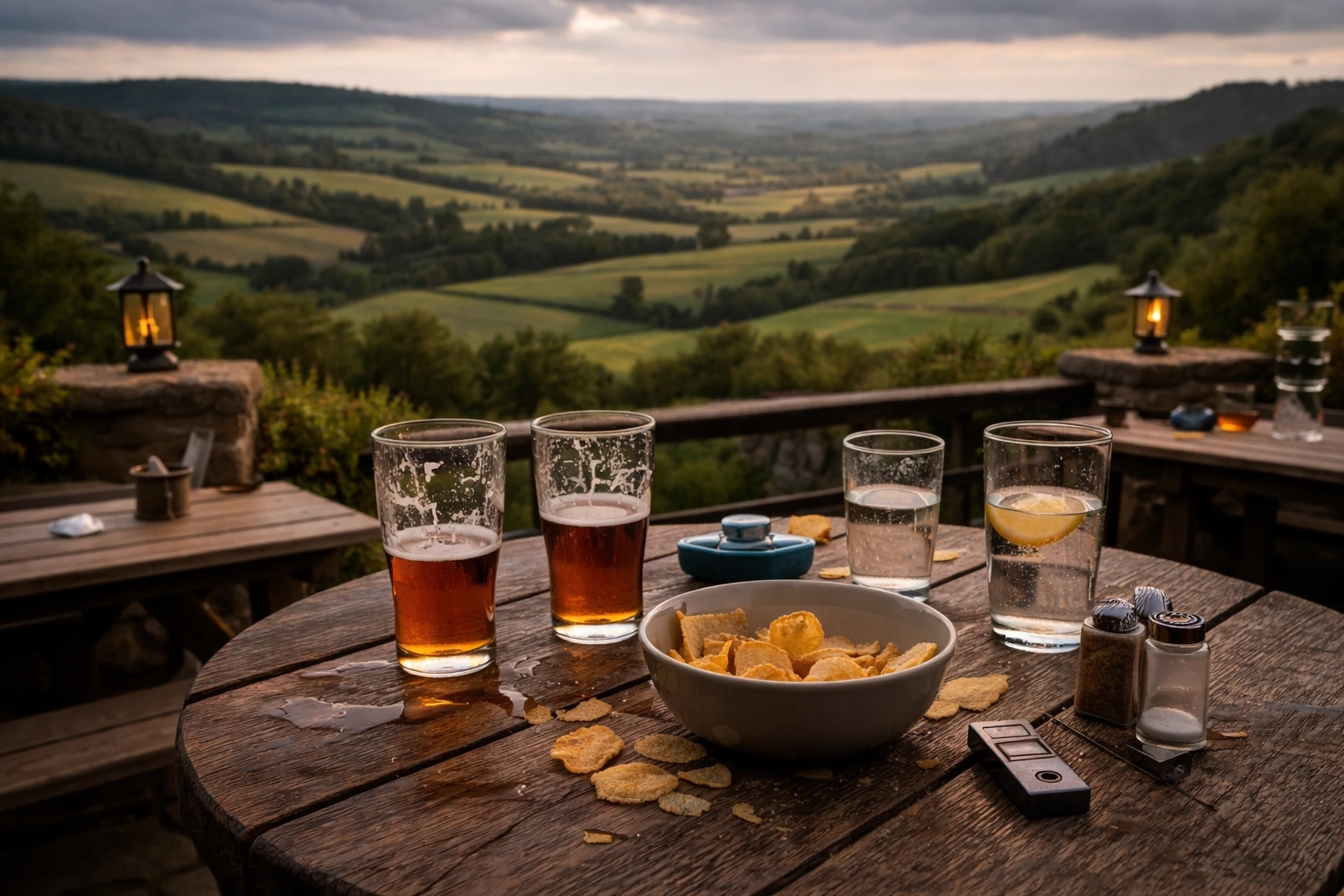
It’s a final drink kind of place. You sit close to the river. The light thins. The day folds itself away, calmly, and you’re ready to head back.
A Note on Getting There
The countryside keeps its most intimate corners behind small roads and awkward turns. That’s part of the point. It’s also why group size matters.
A 16-seater luxury mini-coach lets you move through these places without overwhelming them—especially in Snowshill, where bigger vehicles and bigger groups simply don’t fit the spirit of the village. You arrive with less noise, less disruption, and more room for the still moments: the pause at a gate, the smell of damp stone after rain, the first warmth of a pub when you step inside.
If that’s your kind of day, start here: Shakespeare’s Stratford-upon-Avon & Cotswolds Day Tour.
Pubs on this itinerary: The Garrick Inn, The Eight Bells, The Snowshill Arms, The Porch House + The King’s Arms (Stow lunch stop), The Mousetrap Inn, The Swan.