
Here's the truth nobody in the tour industry wants to admit: most group tours are designed around logistics, not people. They're optimized for maximum bodies per square foot, for schedules that serve the operator, for stops at places where the kickbacks are good. You're not a traveler. You're cargo with a credit card.
And look, I get it. There's a place for the budget bus tour. When you're twenty-two and broke and just need to see the thing everyone talks about, you squeeze onto that 52-seater with strangers from six countries and you make do. That's part of the adventure when you're young enough to sleep anywhere and don't mind eating lunch standing up in a parking lot.
But at some point, you grow up. Your knees grow up. Your expectations grow up. And you start to realize that the difference between seeing a place and experiencing it often comes down to one simple question: who's in control?
The Tyranny of the Group Schedule
You've been on this tour before. Maybe you didn't book it, but you've lived it. The wake-up call at 6 AM because forty-seven other people need to shower. The breakfast buffet where you're jockeying for scrambled eggs with a tour group from Stuttgart. The bus idling in the car park while someone, always someone, is late getting back from the gift shop.
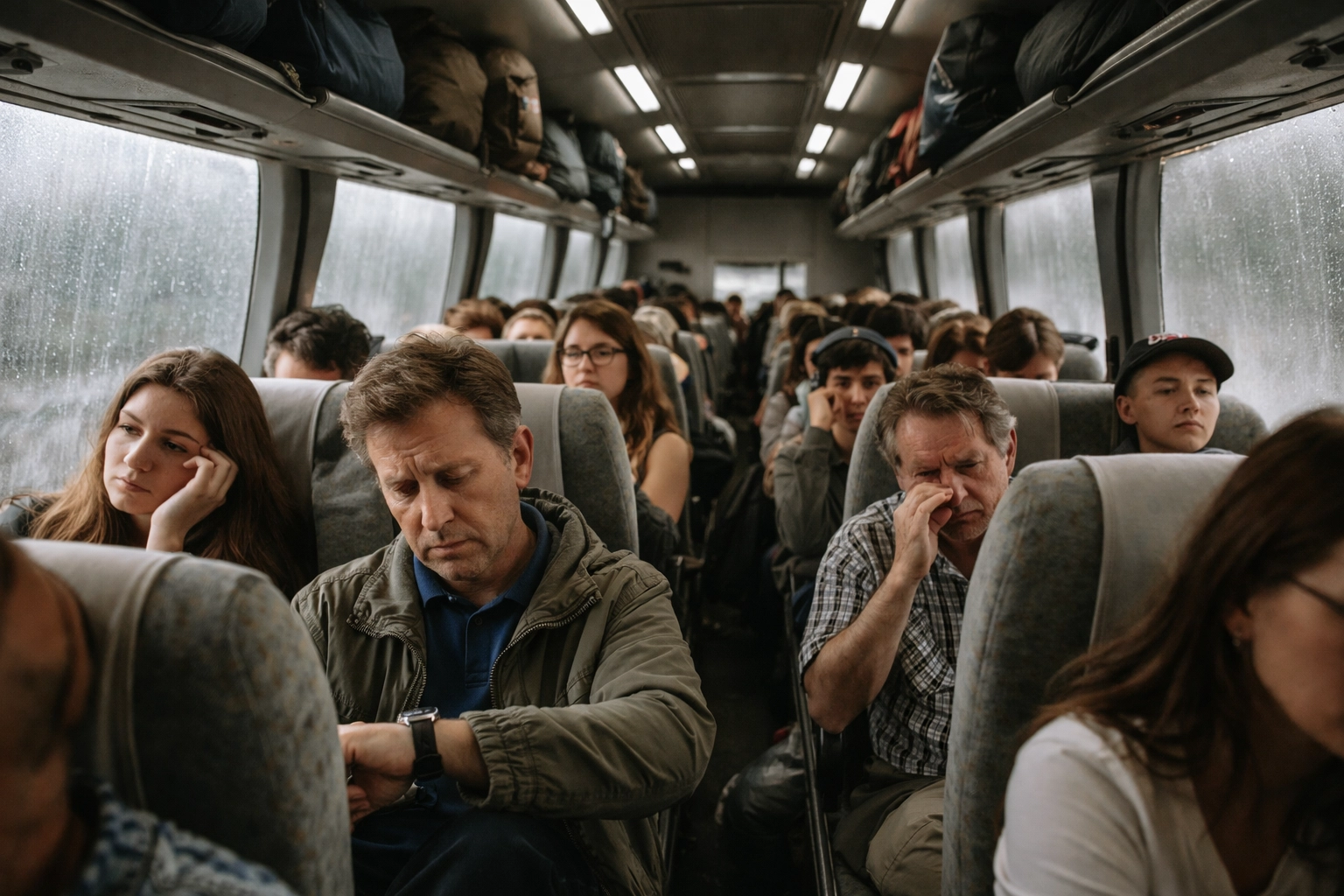
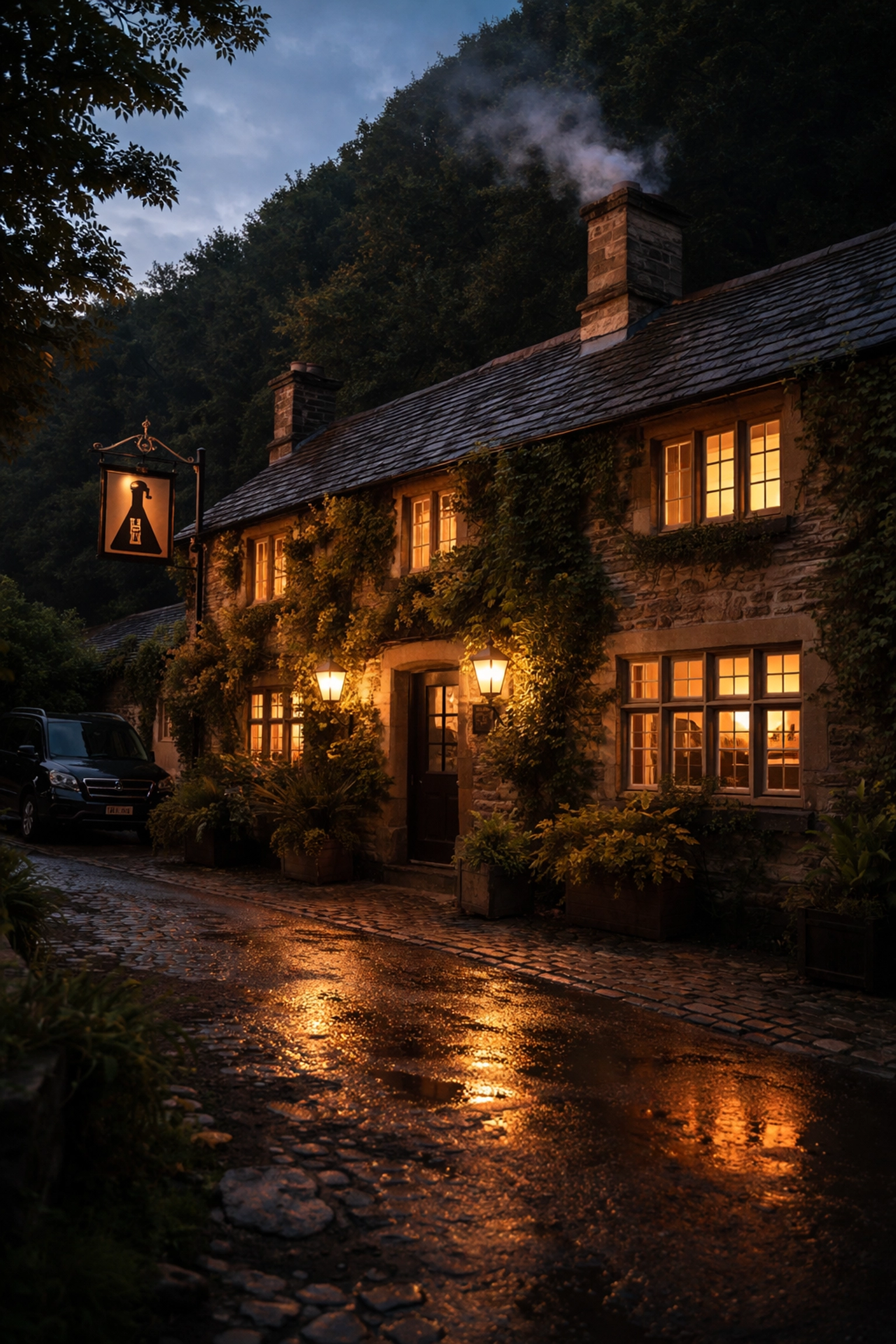
Then there's the itinerary itself. Fifteen minutes at a village that deserves an hour. An hour at a tourist trap that deserves fifteen minutes. Lunch at a motorway services because it's the only place that can seat everyone at once. And forget about that pub you spotted from the window, the one with the wood smoke curling from the chimney and the handpump ales visible through the leaded glass. The schedule says no.
The schedule always says no.
This is the fundamental problem with commodified travel: it treats every passenger as interchangeable. Your interests, your pace, your hunger, your bladder, all subordinate to the algorithm of efficiency.
The Private Vehicle as Liberation
Now imagine something different. Imagine a executive vehicle Mercedes: just you, the people you actually want to spend time with, and a driver who works for you. Not the tour company. Not the gift shop commission. You.
You want to stop because the light is doing something extraordinary to the honey-colored stone of a Cotswolds village? You stop. You want to skip the Shakespeare museum because your kids are melting down and need to run around a park for twenty minutes? You skip it. You discover that your driver knows a gastropub three miles off the main road where the lamb comes from the farm you can see from the window? You go there.
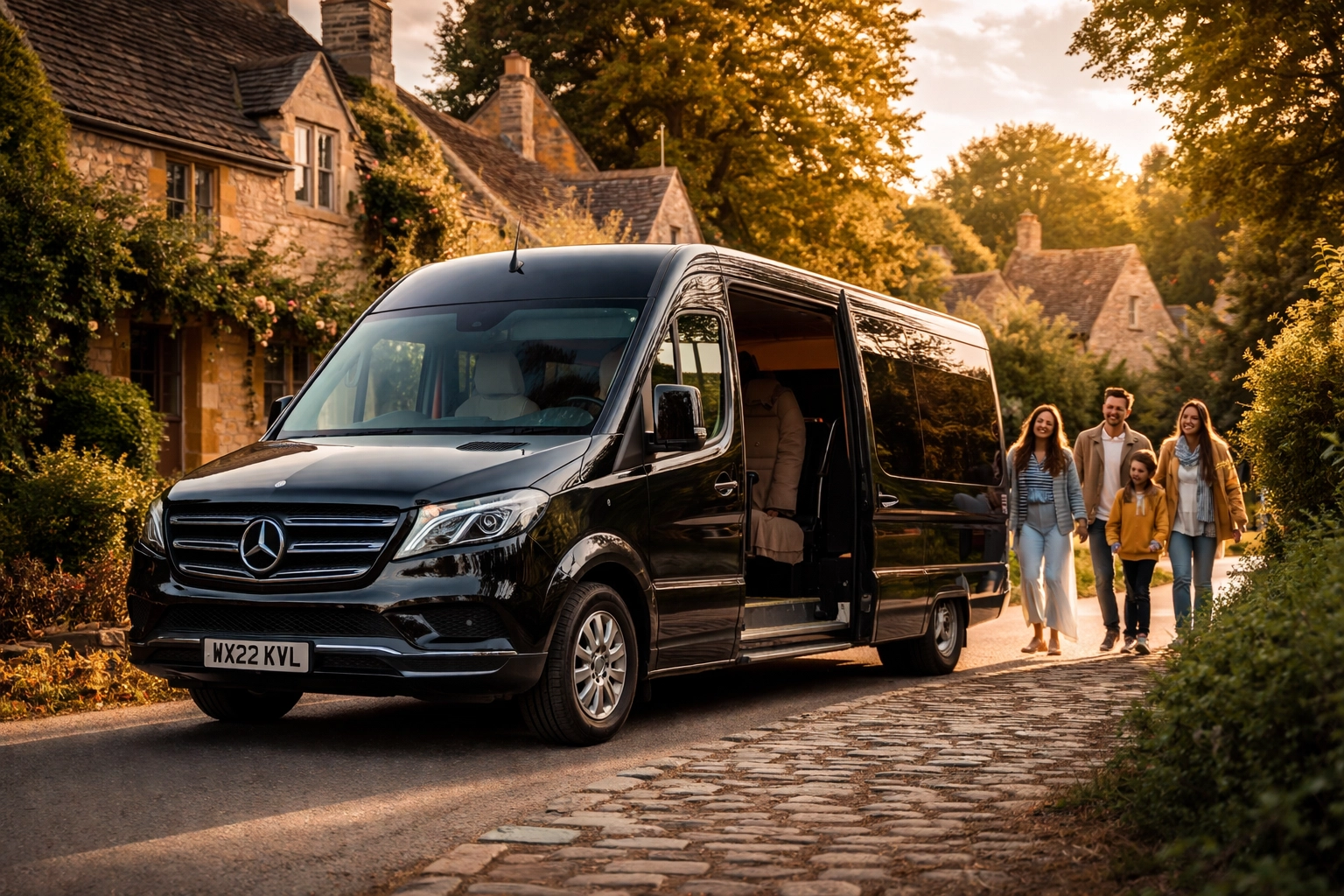
This is what private touring actually means. Not luxury in the sense of champagne and gold leaf: though you can have that if you want it. Luxury in the sense of sovereignty. The radical act of traveling according to your own rhythm, your own curiosities, your own needs.
The wealthy have always understood this. It's why they had chauffeurs and private rail cars and yachts. Not because the public options were physically inadequate, but because time and autonomy are the real currencies. When you have enough money, you stop buying things and start buying freedom.
The Intimacy Factor
There's something else that happens when you take a private tour with people you love. Something that gets lost in the shuffle of group dynamics with strangers.
You actually talk to each other.
On a packed bus, everyone retreats into their headphones, their phones, their own private bubbles. It's a defense mechanism. You're surrounded by people you didn't choose, making small talk that goes nowhere, negotiating armrest territory with someone whose name you'll forget by tomorrow.
In your own vehicle, the conversation flows differently. The landscape becomes a shared experience rather than a backdrop to individual isolation. Your father finally tells the story about his grandmother emigrating through Dover. Your teenager looks up from their screen because something outside the window caught their attention and they want to share it. Your partner reaches for your hand as you wind through the Cotswolds villages you've talked about visiting for years.
These moments can't be scheduled. They can't be manufactured. They can only be allowed to happen: and they need space and privacy and the absence of forty strangers to breathe into life.
The Playlist Problem (and Other Small Freedoms)
Let's talk about something seemingly trivial that turns out to matter enormously: the audio environment.
On a group tour, you're subjected to whatever the driver plays, the guide's microphone crackling through cheap speakers, the audio tour that may or may not match the landscape you're passing. You have no say. It's part of the package.
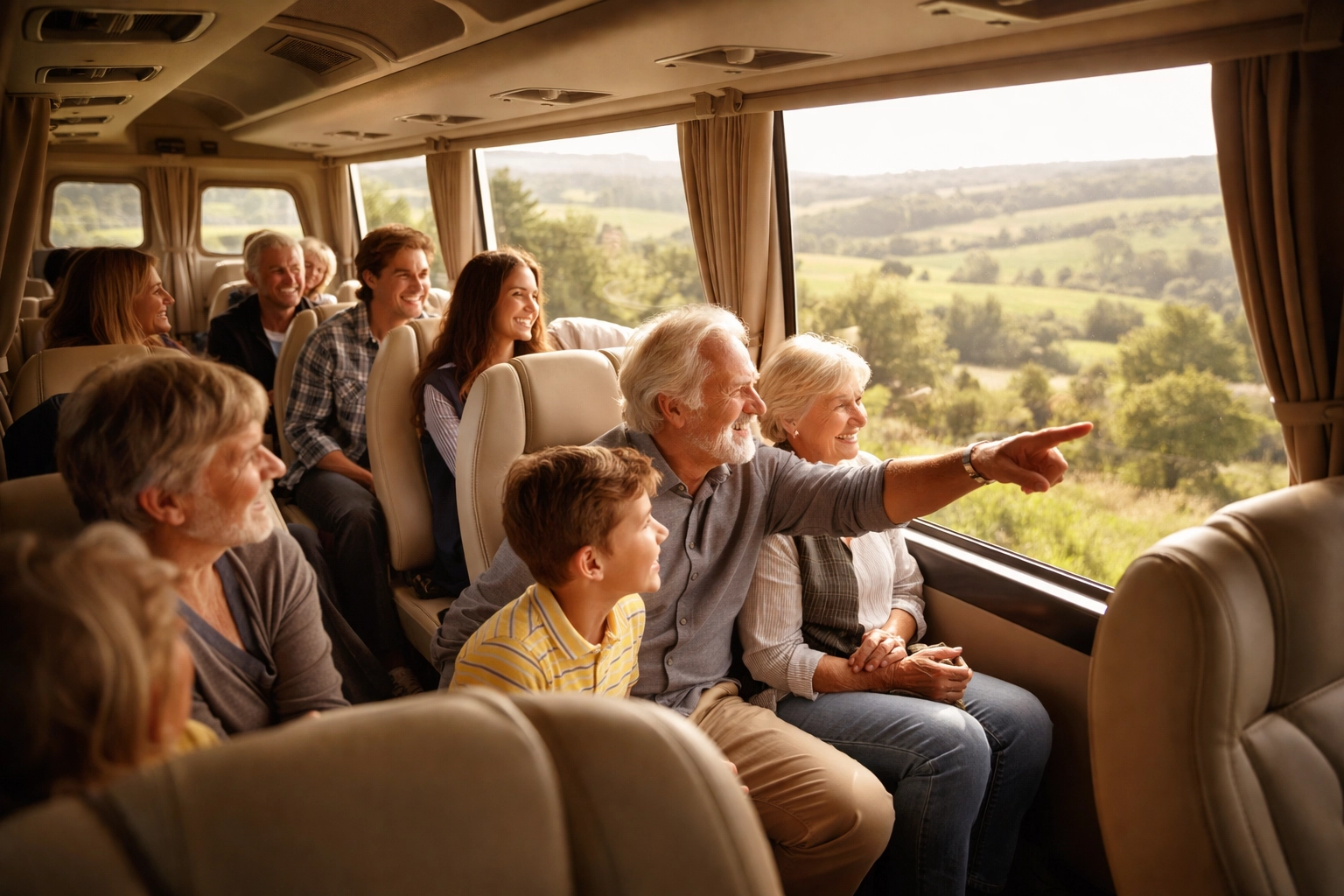
On a private tour, you control the soundtrack. Maybe you want Radio 4 because you're obsessed with British panel shows. Maybe your kids want to blast their playlists during the boring stretches of motorway. Maybe you want silence: actual silence: to watch England scroll past like a film you've waited your whole life to see.
The same principle applies to temperature, to stops, to how long you linger over lunch, to whether you detour to Stratford-upon-Avon or push on to Chipping Campden before dark. These micro-decisions accumulate. By the end of the day, they're the difference between feeling like you've been processed through a tourism machine and feeling like you've actually traveled.
The Economics of Private Touring
Here's where most people make a calculation error. They see the per-person price of a group tour, compare it to the flat rate of a private charter, and assume private is only for the rich.
Do the math differently.
A executive vehicle for a family of six, or eight friends traveling together, or a three-generation reunion: suddenly the per-person cost starts looking competitive. Especially when you factor in what you're not paying for: the overpriced group lunch at a mediocre restaurant chosen for its bus parking, the gift shops where you're herded like cattle, the hotel transfers you'd otherwise need to book separately.
More importantly: what's the value of a day that actually works? A day where nobody's frustrated, nobody's waiting, nobody's compromising on everything they wanted to do? What's that worth?
The luxury travel industry figured this out years ago. The smartest operators stopped selling itineraries and started selling control. Not because travelers got pickier, but because they got honest with themselves about what they actually wanted.
The Driver Makes the Tour
One more thing, and it matters more than anything else I've said: the person behind the wheel.
A good driver-guide isn't a chauffeur who happens to know some facts. They're a fixer, a concierge, a local expert, and: when everything's working right: a temporary member of your family for the day. They know which lanes to avoid, which pubs have real ale versus the fizzy corporate stuff, which viewpoints catch the light in late afternoon, which villages are overrun and which are sleeping.
They read the room. They sense when you need narration and when you need quiet. They adjust on the fly when plans change, when someone gets carsick, when you discover something wasn't what you expected and you need a pivot.
This relationship: between your group and your driver: is the engine of the whole experience. Get it right, and you've got a trusted guide through an unfamiliar country. Get it wrong, and you've just rented an expensive taxi.
At Shakespeare Coaches, we've built everything around this principle. The executive vehicle isn't just a vehicle; it's a vessel for whatever kind of day you want to have. Whether that's a deep dive into Canterbury and the Dover coast or an unhurried meander through villages most tour buses couldn't reach if they tried.
The Bottom Line
Group tours exist because they're efficient for the operator. Private tours exist because they're efficient for you.
That's really all there is to it. The question isn't whether you can afford private touring. The question is whether you can afford to spend your limited days on this planet experiencing places according to someone else's schedule, someone else's priorities, someone else's idea of what you should see and how long you should see it.
Your time. Your people. Your journey.
Everything else is just logistics.
Explore our private group tours for itinerary and booking details.