
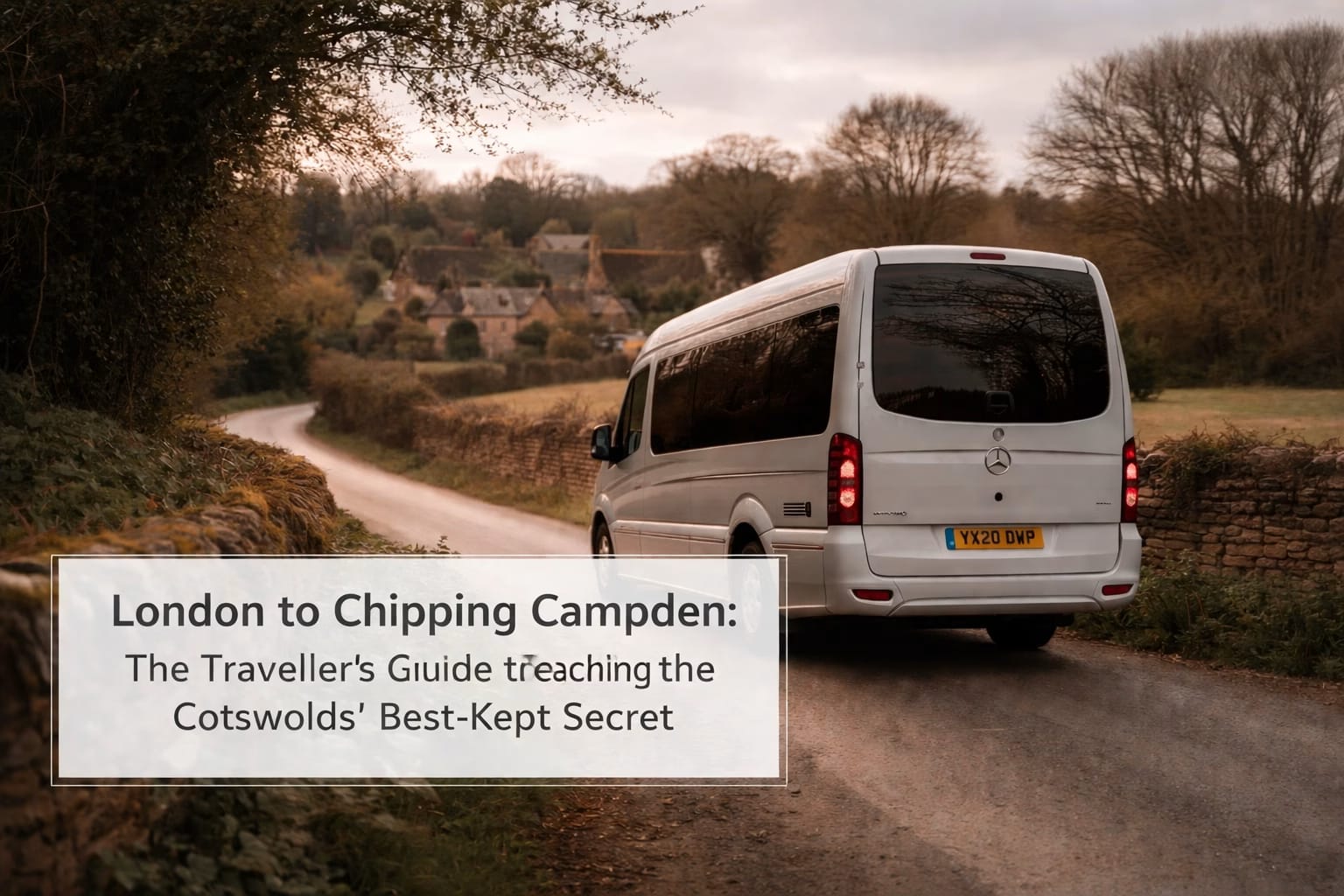
Chipping Campden doesn't shout. It doesn't have to. This honey-coloured market town at the northern tip of the Cotswolds has been quietly doing its thing since the wool merchants built their grand houses here in the 14th century. No gift shops stuffed with Union Jack tat. No tour buses clogging the High Street. Just a single main road lined with limestone buildings that glow amber at sunset, a church that took 200 years to build, and the kind of silence that makes London feel like a fever dream.
The problem? Getting there from the capital is an exercise in frustration that defeats most travellers before they've even started.
The Hard Truth About Reaching Chipping Campden
Here's what the travel blogs won't tell you: Chipping Campden has no train station. The nearest one is Moreton-in-Marsh, about six miles away. And six miles in the Cotswolds isn't the same as six miles in a city with Ubers on every corner.
The maths looks simple enough on paper. Train from London Paddington to Moreton-in-Marsh takes around ninety minutes. Then you just need to cover that final stretch. Easy, right?
Wrong.

Getting a taxi from Chipping Campden to Moreton-in-Marsh is virtually impossible. This isn't an exaggeration for dramatic effect. There are maybe two taxi operators in the entire area, and they're booked solid by locals who know the score. You can stand outside Moreton-in-Marsh station refreshing taxi apps until your phone dies. Nothing will come. The bus service exists, technically, but it runs with the kind of frequency that suggests the timetable was designed by someone who actively dislikes tourists.
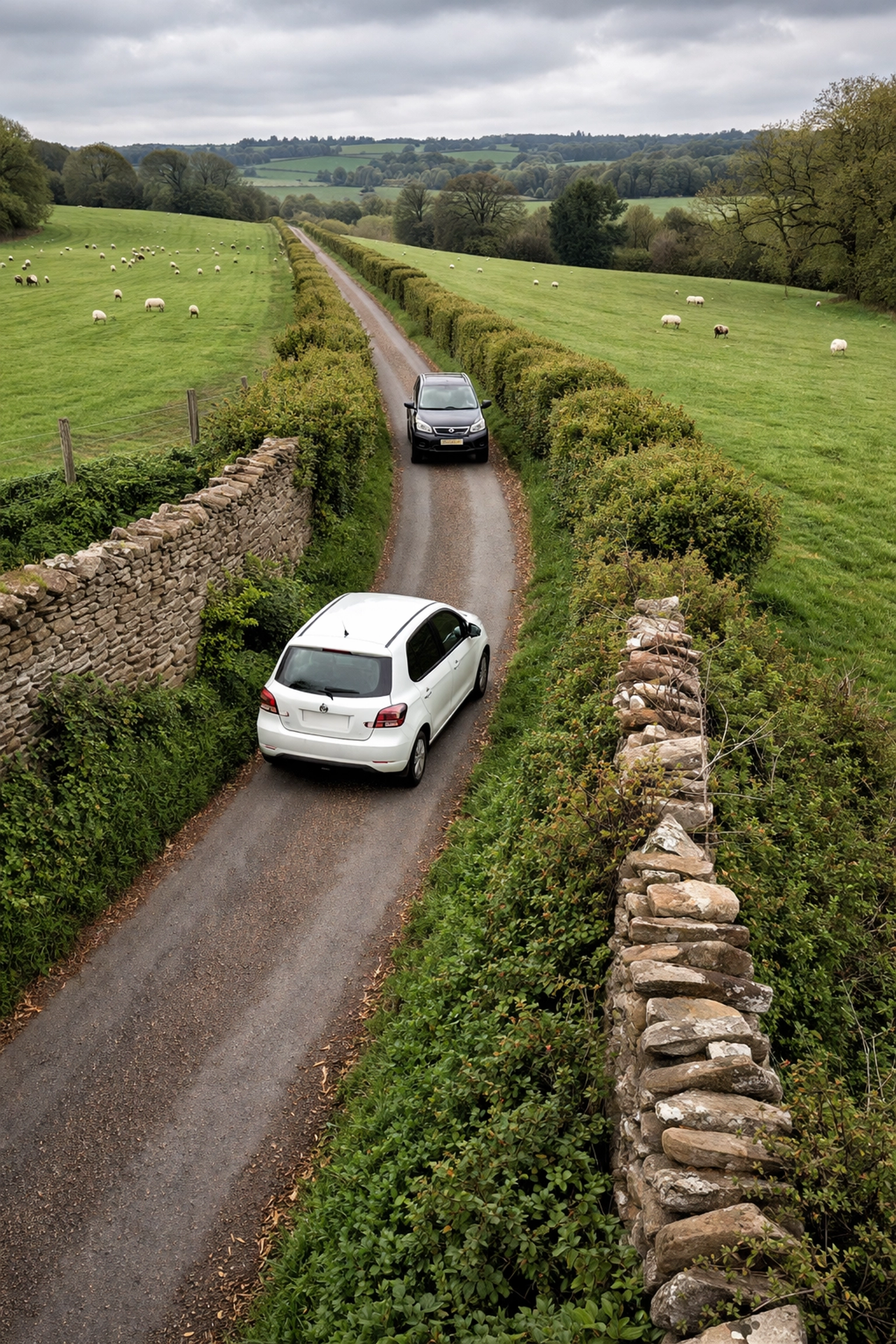
So you've got a choice. Rent a car and white-knuckle it down lanes so narrow that wing mirrors become a liability. Or accept that this particular corner of England wasn't built for casual visitors.
There is a third option.
The London to Chipping Campden Transfer: No Stress, No Guesswork
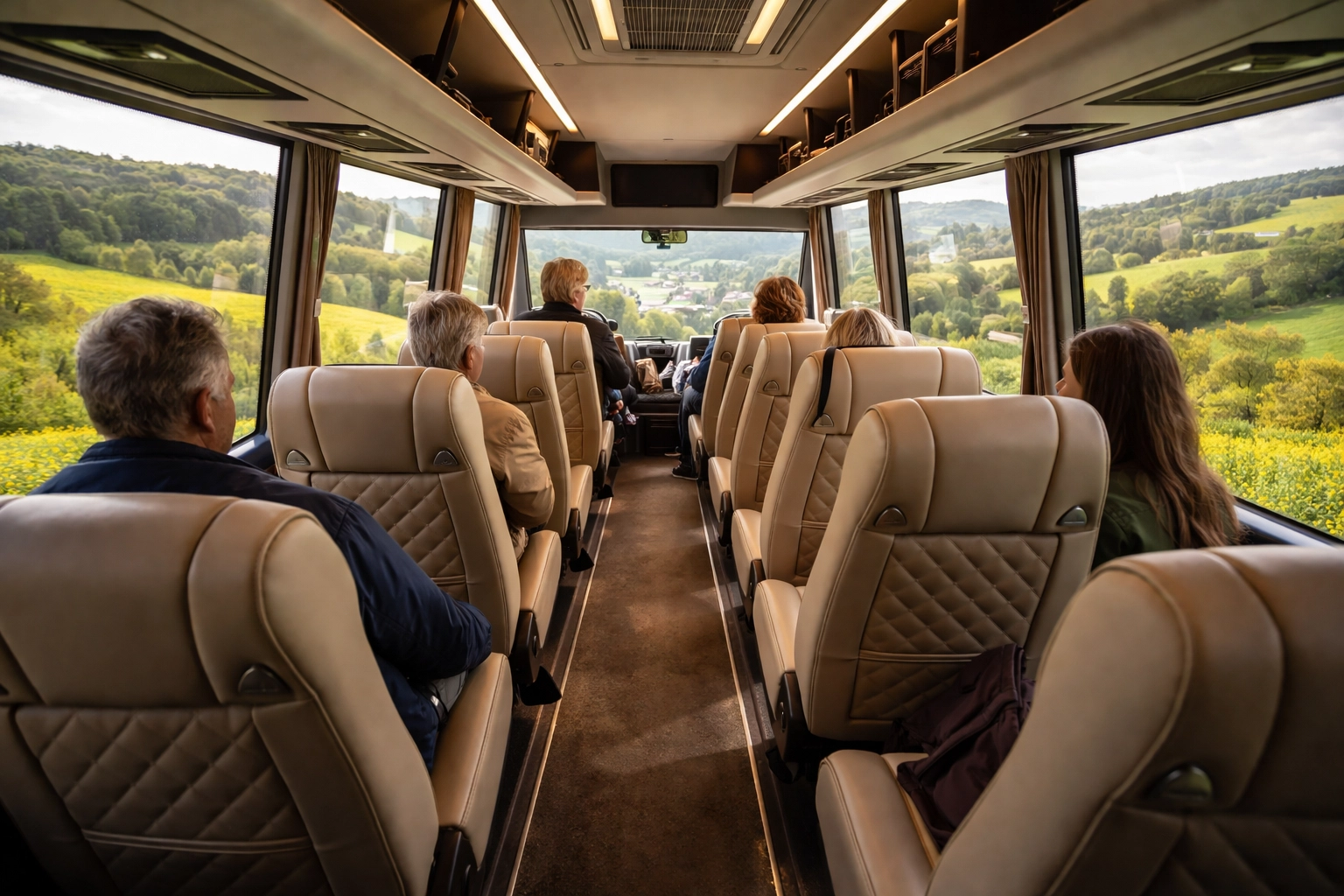
The London to Chipping Campden transfer solves the problem that Google Maps pretends doesn't exist. A executive vehicle luxury mini-bus collects you from central London and deposits you in Chipping Campden without the sweaty panic of missed connections or the existential dread of reversing into a drystone wall.
This isn't a budget coach packed with sixty strangers and their luggage fighting for overhead bin space. It's a small group. Comfortable seats. Climate control that actually works. And a driver who knows every blind corner and single-track road between here and the Cotswolds.
Here’s the outbound itinerary, spelled out, so you know exactly what you’re doing and when:
Pick-up: London Paddington at 7:30 am
You’re on the road early, before the city fully wakes up and starts throwing elbows.
Stratford-upon-Avon stop: 1 hour
You get a short, sharp taste of Shakespeare’s hometown: old streets, low stone, the tourist gloss sitting on top of something older and stranger. It breaks up the drive and gives you a proper pivot from London noise to countryside quiet before you go deeper into the Cotswolds.
Drop-off: Chipping Campden at 11:00 am
That’s the point. You step off in the town itself, not at a station six miles away with “maybe a taxi” as your plan.
The journey time depends on traffic, but the shape of the morning doesn’t change: Paddington, Stratford for an hour, then Chipping Campden. No apps. No transfers. No standing in a car park hoping someone answers your call.
Why Chipping Campden is Worth the Effort
Before we go further, let's talk about what you're actually getting when you reach this place.
Chipping Campden was built on wool money. In the medieval period, this was one of the richest towns in England. The merchants who made their fortunes here didn't spend it on anything flash, they built solid, beautiful buildings designed to outlast them by centuries. And they have.
The Market Hall, open-sided and held up by stone pillars, has stood in the middle of the High Street since 1627. St James' Church at the north end took so long to complete that architectural styles changed between laying the foundations and finishing the tower. The almshouses, built for the town's elderly poor, are more handsome than most London flats selling for seven figures.
But the real draw is simpler than all that. Chipping Campden feels like somewhere time forgot to ruin. No chain coffee shops. No souvenir tat. Just a proper English market town that looks essentially the same as it did when your great-great-grandparents were alive.
The Return Journey: A Cotswolds Tour Built Into Your Transfer
Getting to Chipping Campden is one thing. Getting back to London is where things get interesting.
The Transfer-Tour from Chipping Campden to London Paddington isn't just transport. It's a full afternoon exploring the Cotswolds villages that most day-trippers never see, because they're stuck on a coach doing loops around Bourton-on-the-Water with forty other people.
Pick-up: Chipping Campden at 12:00 pm
The mini-bus collects you after you've had a proper morning in town. Time for breakfast at one of the local cafes. Time to walk the High Street without rushing. Time to actually experience the place rather than just photograph it.
The Itinerary
From Chipping Campden, the route heads south through the heart of the Cotswolds:
Snowshill Village (20 minutes) , A tiny hamlet of golden stone cottages clustered around a green. No crowds. No coaches. Just the kind of village that looks like it was designed by someone who'd never heard of the twentieth century.
Lavender Farm (Drive By) , In summer, the fields turn purple and the air smells like Provence. Even from the road, it's something.
Broadway Tower (Drive By) , A folly built on the second-highest point in the Cotswolds. On a clear day, you can see thirteen counties from the top. The view from the road isn't bad either.
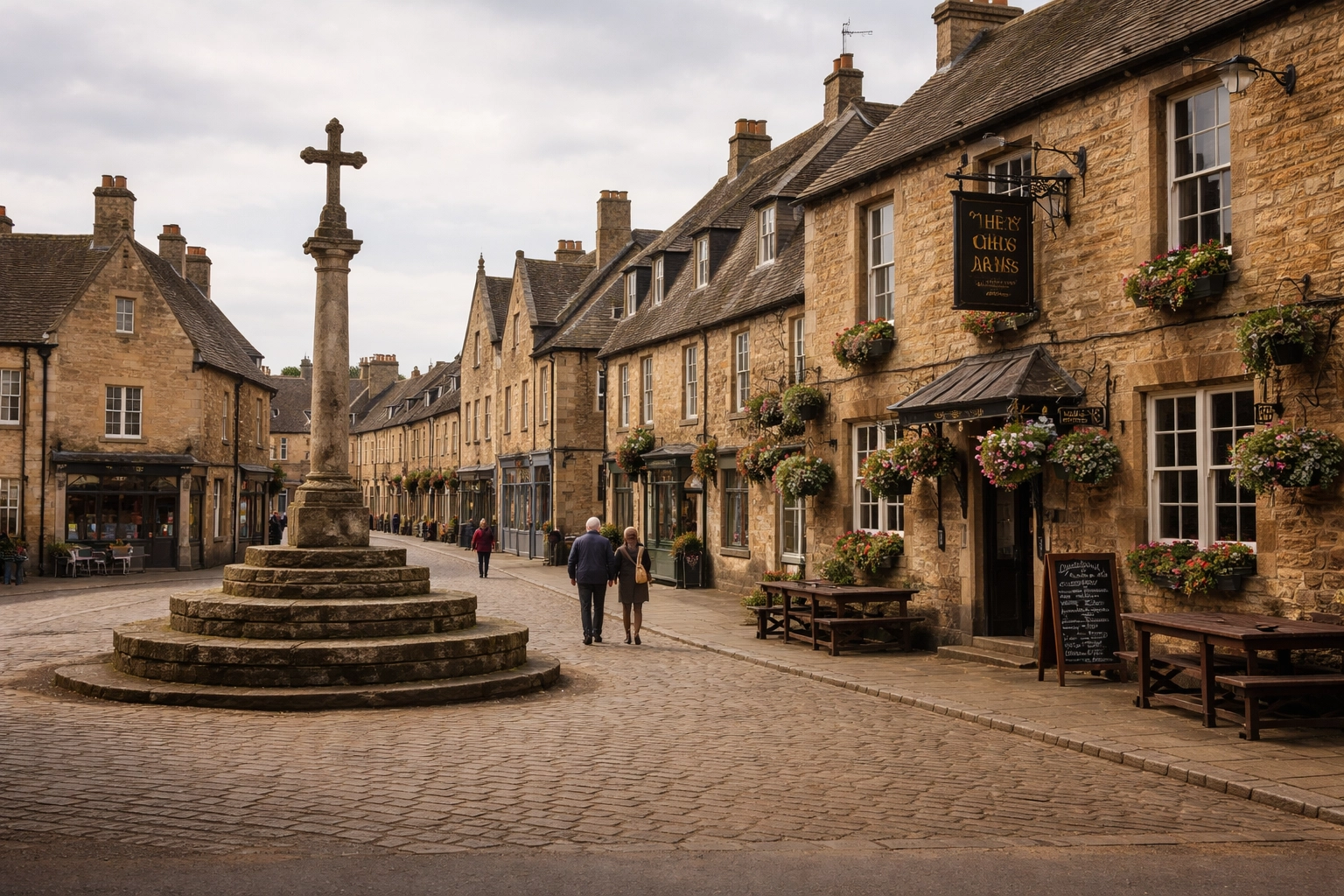
Stow-on-the-Wold (25 minutes , Lunch) , The highest town in the Cotswolds, built around a market square where they once traded 20,000 sheep at a time. Now it's antique shops and tea rooms. Good spot for lunch. The kind of place where the pubs serve proper pies.
Bourton-on-the-Water (60 minutes) , Yes, it's popular. Yes, there's a reason. The River Windrush runs through the centre of the village, crossed by low stone bridges. An hour gives you time to wander without feeling herded.
Bibury/Arlington Row or Burford (30 minutes) : Depending on the day, you'll stop at either Bibury: home to Arlington Row, possibly the most photographed cottages in England: or Burford, a medieval wool town with a high street that drops down to a Norman church by the river.
Plus 5 Secret Villages : The kind of places that don't make the guidebooks. Hamlets with populations smaller than a London bus. Stone crosses on village greens. Churches older than most American universities. The driver knows where they are because he's spent years finding them.
Drop-off: London Paddington at 6:00 pm
You're back in central London in time for dinner, with a full Cotswolds tour under your belt and none of the stress of trying to piece together public transport connections that don't actually connect.
Why This Beats Every Other Option
Let's be honest about the alternatives.
Driving yourself means negotiating roads designed for horse carts and sheep, not rental cars with unfamiliar steering columns. It means parking anxiety. It means not being able to have a glass of wine at lunch.
Public transport means that train-and-bus combination that works beautifully in theory and falls apart the moment you actually try it. Remember: taxis don't exist here. Not in any meaningful sense.
Big coach tours mean rushing through villages on someone else's schedule, sharing photo spots with fifty strangers, eating lunch at whatever chain restaurant has space for a 52-seater.
The executive vehicle mini-bus is the only way to see the real Cotswolds without the stress of narrow lanes or unreliable local transport. Small group. Flexible pace. Access to villages that big coaches can't physically reach.
Making It Work
Book the London to Chipping Campden transfer for your outbound journey. Spend a night: or two: in one of the town's pubs or guesthouses. Then catch the Transfer-Tour back to London Paddington and see more of the Cotswolds in one afternoon than most visitors manage in a week.
Chipping Campden has survived the wool trade collapse, the industrial revolution, two world wars, and the rise of mass tourism. It's still standing. Still beautiful. Still worth the effort.
You just have to know how to get there.
Explore our Cotswolds day tour from London for itinerary and booking details.